Why are there such tough stages on the Northern Way?
The Northern Way is considered by many to be the most physically demanding route. This itinerary is a constant up and down; you face accumulated elevation gains that can exceed 1,000 metres, with ascents to hills and steep descents towards the coast.
Another important factor is the climate. Being a route close to the sea means that rain, wind and fog are constant. On the other hand, the infrastructure is more limited than on the French Way: there are fewer hostels and services, and the distances between towns are greater.
Stage from Irún to San Sebastián
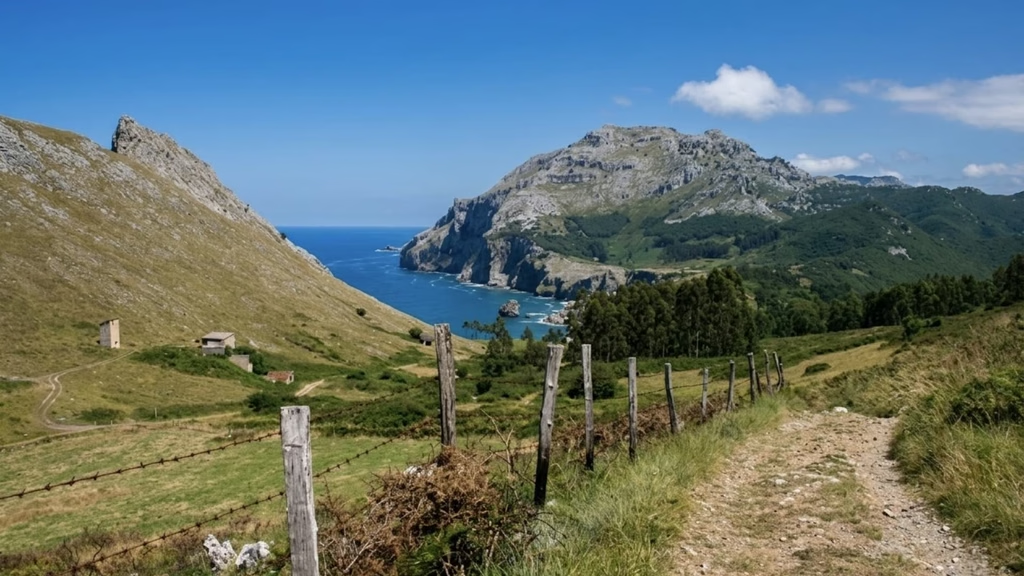
The first stage of the Northern Way is one of the toughest. From Irún, the route ascends to Monte Jaizkibel, a pass of almost 500 metres in altitude, which demands a significant effort. You find a progressive but constant ascent, and the terrain is uneven, with trails and track sections.
The descent towards San Sebastián is not simple: the downhill is steep and can punish the knees. Most pilgrims recommend splitting this stage into two days, sleeping at the hostel in Pasajes de San Juan and not arriving exhausted in San Sebastián.
Stage from Deba to Markina-Xemein
The ascent to Monte Calvario, with 600 metres of elevation gain, is demanding, but the biggest problem is the terrain: the paths are muddy, and the descents are slippery and technical. The stage is approximately 25 kilometres. The arrival in Markina-Xemein, with its historic centre, is a well-deserved relief. It is a stage that requires being in good physical shape and wearing appropriate footwear.
Stage from Gernika to Bilbao
Ascending Monte Oiz, with its 1,000 metres of altitude, is a great challenge, and the subsequent descent to Bilbao is long and technical, with sections of steep slope that can be dangerous with wet terrain.
Most pilgrims choose to split this stage, sleeping at the hostel in Lezama or in some intermediate towns, so as not to tackle the more than 30 kilometres all at once.
Stage from Llanes to Ribadesella
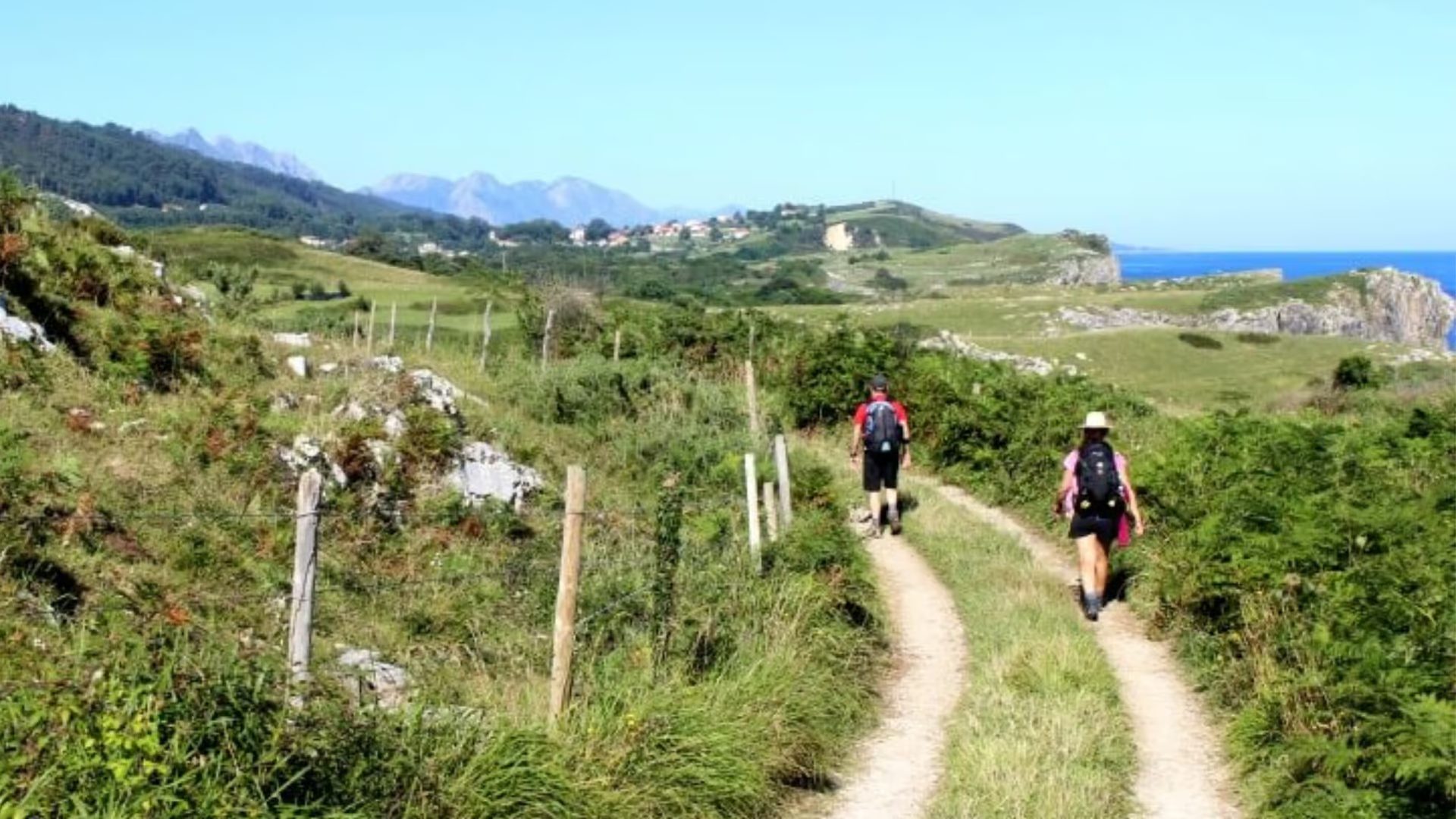
This stage is one of the longest on the Northern Way, with more than 30 kilometres of route. In addition, the distance and the constant up and down along the cliffs make it a demanding day. It has varied terrain: beaches, cliffs, forests and meadows. The beauty of the area compensates for the effort invested.
Stage from Baamonde to Sobrado dos Monxes
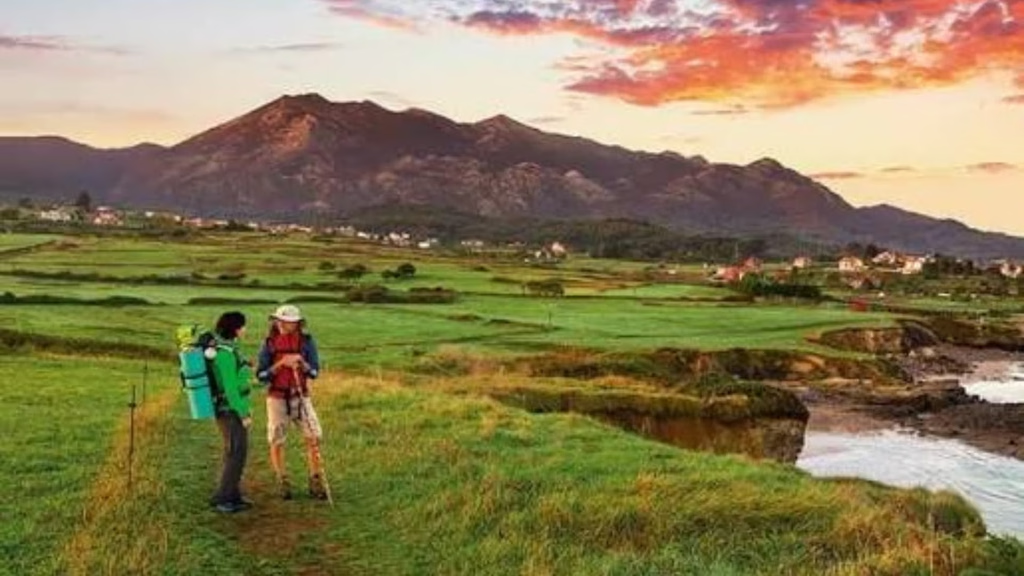
This stage is the transition from the Northern Way to the French Way. Although it does not have great elevation changes, its difficulty lies in the distance and the terrain: more than 30 kilometres with sections of forest track and road, and a final ascent to the Sobrado plateau.
The reward of this stage is the Monastery of Sobrado dos Monxes, a 12th-century Cistercian monastery that offers hostel accommodation to pilgrims.
Tips for conquering the toughest stages of the Northern Way
Tackling the Northern Way requires preparation and strategy, especially on some stages. These are the most important tips:
- Split the stages into shorter sections: If a stage is too demanding, split it into two days.
- Set off early: Getting up early provides the coolest hours of the day and guarantees a bed in the hostel.
- Hydration and nutrition: Drink water before you get thirsty and eat something every hour to maintain your energy.
- Listen to your body: Pain is a warning sign.
- Backpack transport: If the stage is too demanding, you can hire a backpack transport service.
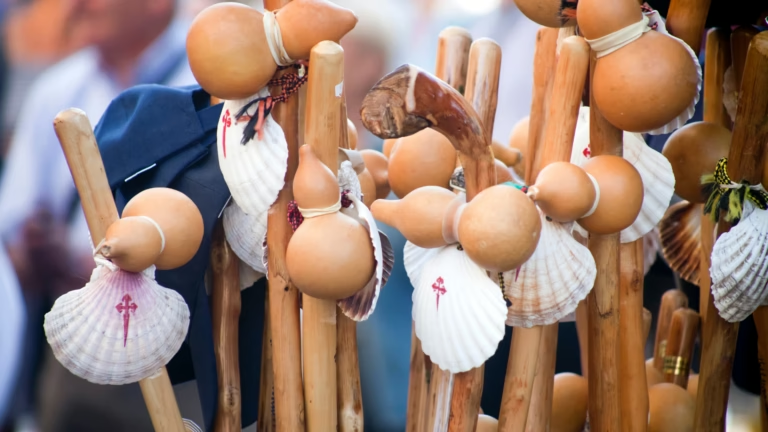
- Use poles: Trekking poles reduce the load on your knees and help maintain balance.