Brief history: From a small mausoleum to the grand Santiago de Compostela Cathedral
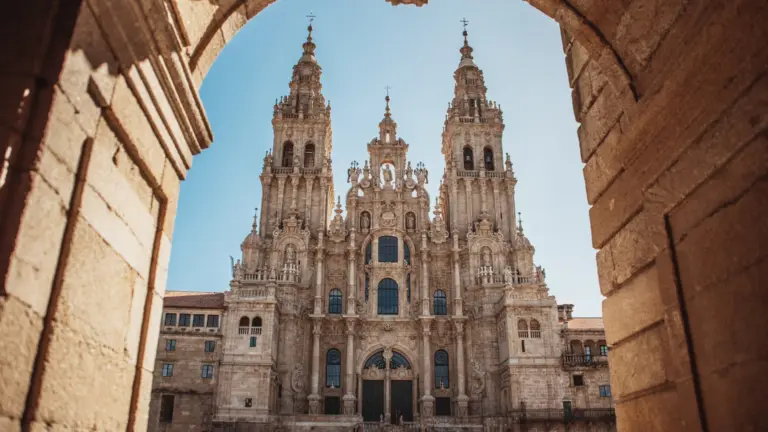
The Santiago de Compostela Cathedral emerged in the 9th century, when the hermit Pelayo discovered the tomb of the Apostle Saint James. Upon finding the tomb, the Asturian king Alfonso II “the Chaste” ordered the construction of a stone and mud church to protect the relics and provide shelter for the first worshippers.
However, this place in Galicia became Christianity’s third great center of pilgrimage, behind Jerusalem and Rome. In the 11th century, under the leadership of Bishop Diego Peláez, due to the overcrowding of pilgrims, construction began on the majestic Romanesque Cathedral we know today.
The architecture of the Santiago de Compostela Cathedral
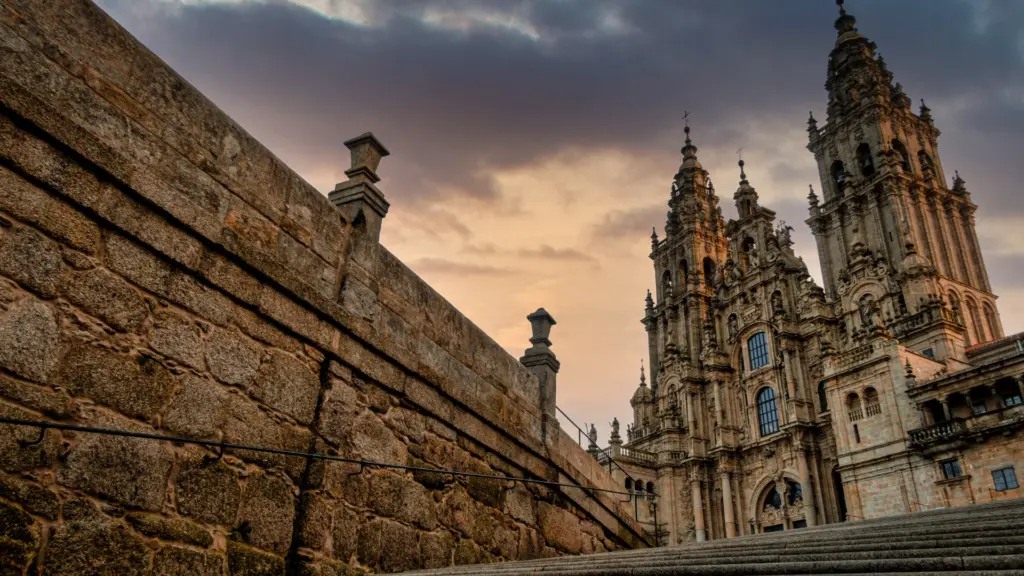
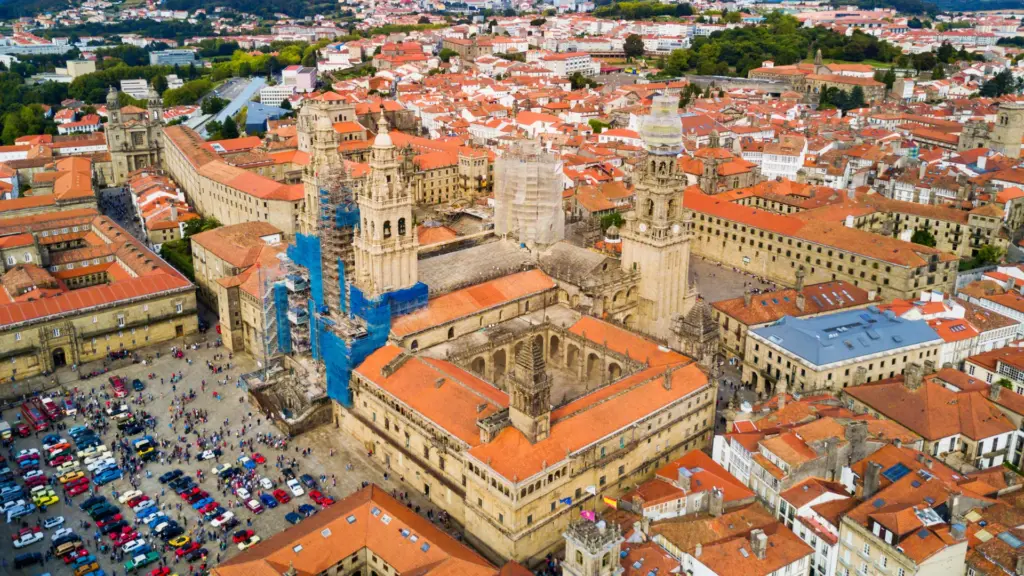
The Santiago de Compostela Cathedral stands out for its “pilgrimage church” design. It features a Latin cross floor plan, composed of three longitudinal naves and a transept that intersects at the center.
On an architectural level, highlights include the barrel vault of the central nave, the triforium (a gallery running along the upper part of the temple), and the ambulatory: a semicircular walkway that allowed pilgrims to pass behind the High Altar to venerate the relics without disrupting the mass.
On the other hand, the Obradoiro façade is a Baroque layer, built centuries later with the aim of protecting the original portico from the rain and giving the plaza a more monumental appearance.
What to see inside the Santiago de Compostela Cathedral
The Santiago de Compostela Cathedral is a space filled with history, art, and symbolism, where you will find several key points to see.
The Portico of Glory
The portico, carved by Master Mateo in the 12th century, was the first thing pilgrims saw when entering through the old main façade. It contains more than 200 granite figures representing the history of salvation. Today, following a restoration, it is possible to admire the portico with its original colors practically recovered.
The High Altar
The High Altar is the heart of the Santiago de Compostela Cathedral. It features a Galician Baroque style, with Solomonic columns and lavish ornamental details. This is where the famous Romanesque sculpture of the Apostle Saint James is located.
The most famous tradition of the Camino is fulfilled by climbing the stairs located behind the altar to embrace or place your hands on the shoulders of the sculpture of the Apostle Saint James.
The Crypt and the tomb of the Apostle Saint James
Beneath the High Altar you will find the tomb of the Apostle Saint James. Situated in a small, bare-stone underground space, this is where the remains that inspired the construction of the Santiago de Compostela Cathedral rest. The relics are kept inside a 19th-century silver urn. The crypt can be accessed free of charge and with a fairly steady, smooth flow of visitors.
The Holy Door
The Holy Door is located at the back of the Cathedral, facing the Plaza de la Quintana. This door is one of the most special entrances to the Cathedral, as it remains walled up and closed, opening only during Xacobeo Holy Years. Crossing the door during a Jubilee Year grants a plenary indulgence.
The Botafumeiro
The Botafumeiro is a silver-plated brass censer that weighs over 50 kilos when empty. It is swung by eight men called “tiraboleiros,” reaching speeds of nearly 70 km/h as it disperses its characteristic scent of incense throughout the Cathedral.
In the past, it served to mask the bad odor of the pilgrims who had gone weeks with poor hygiene; today, it is a symbol of purification.
Tickets, opening hours, and prices to visit the Santiago de Compostela Cathedral
Entering the main naves (High Altar and the Apostle’s crypt) is completely free, with continuous opening hours from 7:00 AM to 9:00 PM. On the other hand, to visit the Portico of Glory, the Museum, or to take the rooftop tour, you will need to buy a ticket (prices range between €12 and €20) and book it online several days in advance.