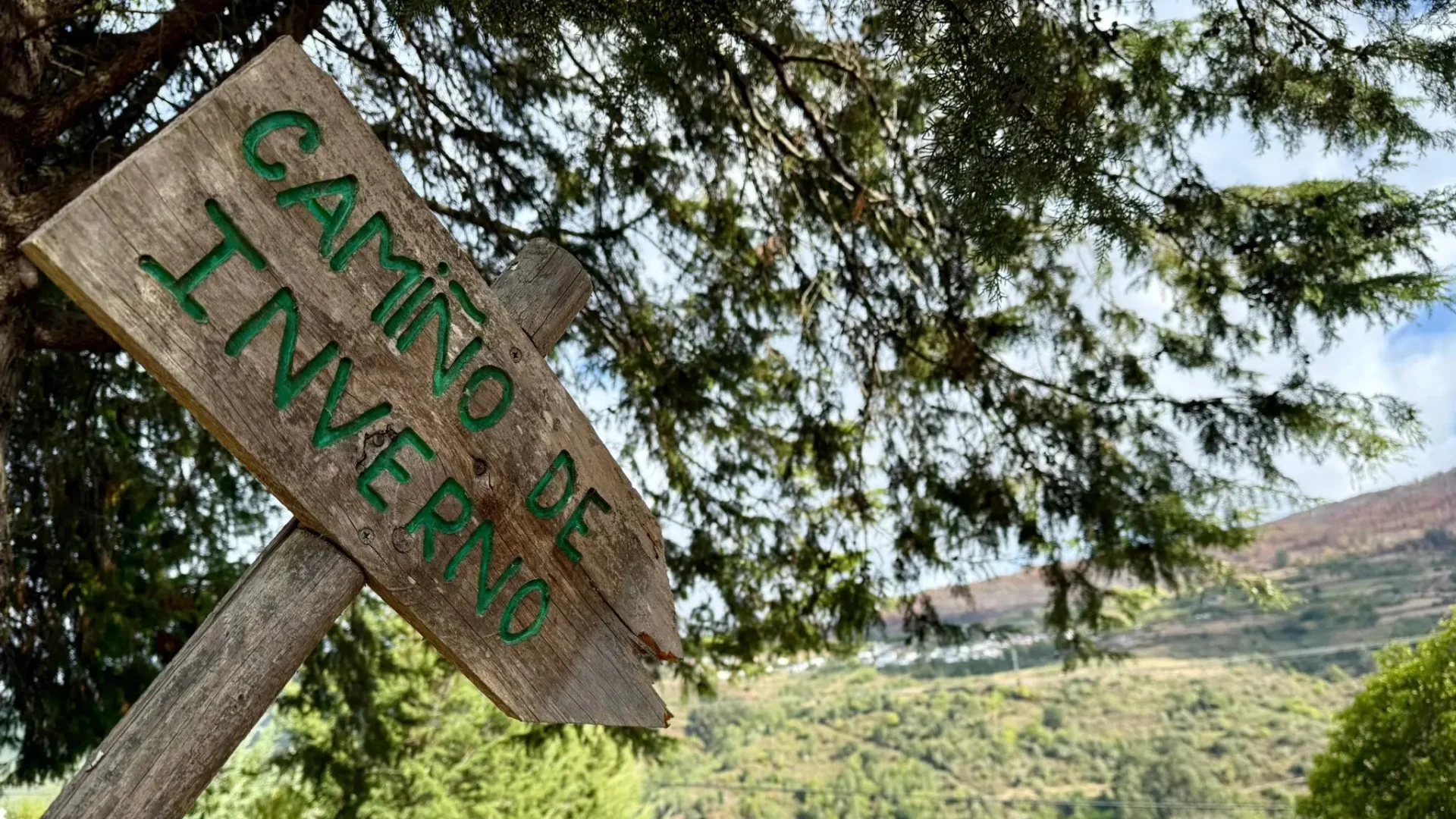
What is the Winter Way?
The Winter Way is a Jacobean route of approximately 260 kilometers that links the Leonese region of El Bierzo with Santiago de Compostela. The main geographical characteristic of this route is that it follows the natural course of the Sil River, making it the only route that passes through all four Galician provinces.
The Winter Way features a leg-breaking profile, alternating between hard-packed dirt paths, Roman roads, and secondary roads with zero traffic. It is an ideal route to do at any time of the year, thanks to the fact that it runs at lower altitudes than other northern ways.
What is the historical origin of the Winter Way?
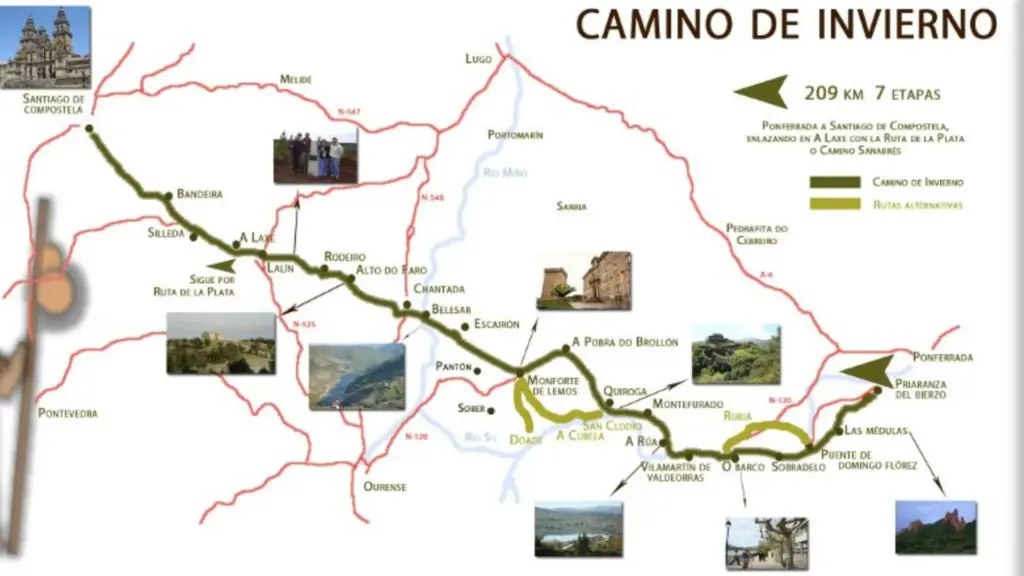
The historical origin of the Winter Way dates back to the era of Roman rule, utilizing the tracks of the ancient Vía Nova to connect gold mining operations. On the other hand, its consolidation as a Jacobean route took place in the Middle Ages, originating as a strategic detour for winter use.
By detouring south through the Sil Valley, pilgrims found a sheltered path at a lower altitude that allowed them to advance more safely toward Santiago de Compostela. Despite its historical importance, the pacification of the plains and the centralization of services caused this route to fall into disuse starting in the 19th century.
Route, distances, and kilometers: The stages of the Winter Way
For pilgrims planning the route based on distances and profiles, the Winter Way on foot is usually divided into 9 or 10 days. From a cycling perspective, the route would be structured into 4 or 5 stages, depending on physical fitness and luggage weight.
- Stage 1: Ponferrada – O Barco de Valdeorras (53 km)
- Stage 2: O Barco de Valdeorras – A Rúa de Valdeorras – Quiroga (41 km)
- Stage 3: Quiroga – Monforte de Lemos (35 km)
- Stage 4: Monforte de Lemos – Chantada (30 km)
- Stage 5: Chantada – Rodeiro (26 km)
- Stage 6: Rodeiro – Lalín (22 km)
- Stage 7: Lalín – Silleda – Bandeira (31 km)
- Stage 8: Bandeira – Santiago de Compostela (32 km)
What is the infrastructure of hostels and services like on the Winter Way?
On the Winter Way, the hostel network covers the main towns well—such as O Barco, Quiroga, Monforte, or Chantada—guaranteeing a spot without too many crowds. However, in smaller villages, the availability is scarce, so you will need to plan your daily destination and bring a sleeping bag.
In terms of services, most are concentrated in the regional capitals. The most challenging section is the Sil Canyons (Ribeira Sacra), where there are stretches of more than 25 kilometers without any services or working water fountains, making it necessary to set out with water bottles and food.
Places and monuments of the Winter Way
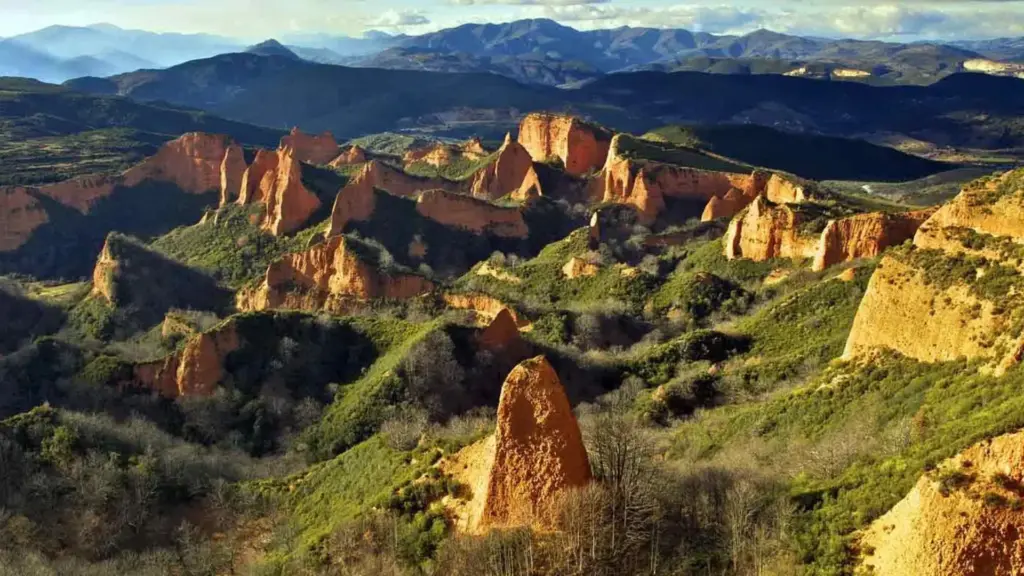
Along the Winter Way, you will find a series of monuments and places; every bit of effort invested in the tough climbs is rewarded at every step.
- Las Médulas Archaeological Site: Located at the beginning of the route, this is an open-pit gold mining site from the Roman Empire.
- Cornatel Castle: An 11th-century medieval fortress perched on a cliff that guarded the entrance to the Galician valleys and once belonged to the Knights Templar.
- Montefurado Roman Tunnel: A 2nd-century piece of Roman engineering where the course of the Sil River was diverted by drilling through a rock mountain to wash and extract gold sediments.
- Sil Canyons and the Ribeira Sacra: A natural environment characterized by deep limestone gorges flanked by vineyards and Romanesque monasteries hidden among the forests.
- San Vicente del Pino Monumental Complex (Monforte de Lemos): A medieval historical complex located at the top of a hill, made up of the Palace of the Counts of Lemos and the Monastery of San Vicente.
- Camba Manor House (Rodeiro): An 18th-century stately and noble manor house (pazo) of the Galician countryside, surrounded by oak groves and stone walls.