What is the Wool Route and what is its historical origin?
The Wool Route is one of the oldest documented Jacobean paths. Its origin stems from a historical commercial network: the utilization of old roads, royal livestock droves (cañadas reales), and trails used to transport wool from La Mancha to the great trade fairs of Medina del Campo and Burgos.
This route became a pilgrimage route to Santiago thanks to the journey made in 1624 by Francisco Patiño, his wife, and children, who set out from Alicante on a pilgrimage to Santiago. This journey was documented, laying the foundations for this itinerary that crosses the peninsula from southeast to northwest.
Route, Kilometers, and Stages: Where Does It Start and Which Places Does It Pass Through?
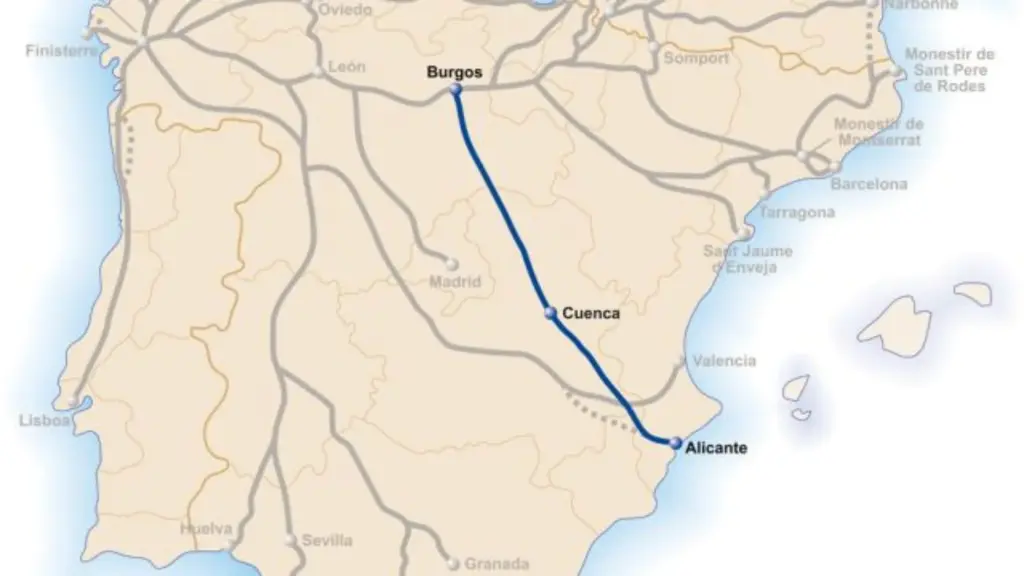
The Wool Route has its starting point in Alicante and ends in the city of Burgos, where it joins the French Way. In total, the route spans approximately 675 kilometers.
Pilgrims usually divide this journey into about 27 stages, due to the distances between towns. Below, we will detail the structure of the traditional stages of this route:
- Stage 1: Alicante – Novelda (32 km)
- Stage 2: Novelda – Villena (33 km)
- Stage 3: Villena – Almansa (38 km)
- Stage 4: Almansa – Alpera (22 km)
- Stage 5: Alpera – Alatoz (25 km)
- Stage 6: Alatoz – Casas-Ibáñez (29 km)
- Stage 7: Casas-Ibáñez – Villamalea (21 km)
- Stage 8: Villamalea – El Peral (21 km)
- Stage 9: El Peral – San Clemente (40 km)
- Stage 10: San Clemente – Las Pedroñeras (23 km)
- Stage 11: Las Pedroñeras – El Toboso (32 km)
- Stage 12: El Toboso – Belmonte (28 km)
- Stage 13: Belmonte – Los Hinojosos (16 km)
- Stage 14: Los Hinojosos – Quintanar de la Orden (25 km)
- Stage 15: Quintanar de la Orden – La Puebla de Almoradiel (12 km)
- Stage 16: La Puebla de Almoradiel – Villamayor de Santiago (22 km)
- Stage 17: Villamayor de Santiago – Uclés (24 km)
- Stage 18: Uclés – Huete (34 km)
- Stage 19: Huete – Vellisca (15 km)
- Stage 20: Vellisca – Buendía (28 km)
- Stage 21: Buendía – Sacedón (26 km)
- Stage 22: Sacedón – Trillo (44 km)
- Stage 23: Trillo – Cifuentes (20 km)
- Stage 24: Cifuentes – Mandayona (31 km)
- Stage 25: Mandayona – Sigüenza (21 km)
- Stage 26: Sigüenza – Atienza (31 km)
- Stage 27: Atienza – Retortillo de Soria (23 km)
- Stage 28: Retortillo de Soria – San Esteban de Gormaz (34 km)
- Stage 29: San Esteban de Gormaz – Quintanarraya (31 km)
- Stage 30: Quintanarraya – Santo Domingo de Silos (27 km)
- Stage 31: Santo Domingo de Silos – Covarrubias (18 km)
- Stage 32: Covarrubias – Burgos (42 km)
How is the infrastructure and the hostels on the Wool Route?
The Wool Route does not have the same infrastructure as the hyper-developed Jacobean routes. The network of specific hostels for pilgrims is scarce and, in many cases, is managed on a voluntary basis by local city councils. Since it is not a crowded route, it is necessary to plan your days in advance. Although there may be drawbacks, you will enjoy traditional hospitality: locals who help you, hostels all to yourself, and a complete absence of crowds or stress.
Places and Monuments of the Wool Route
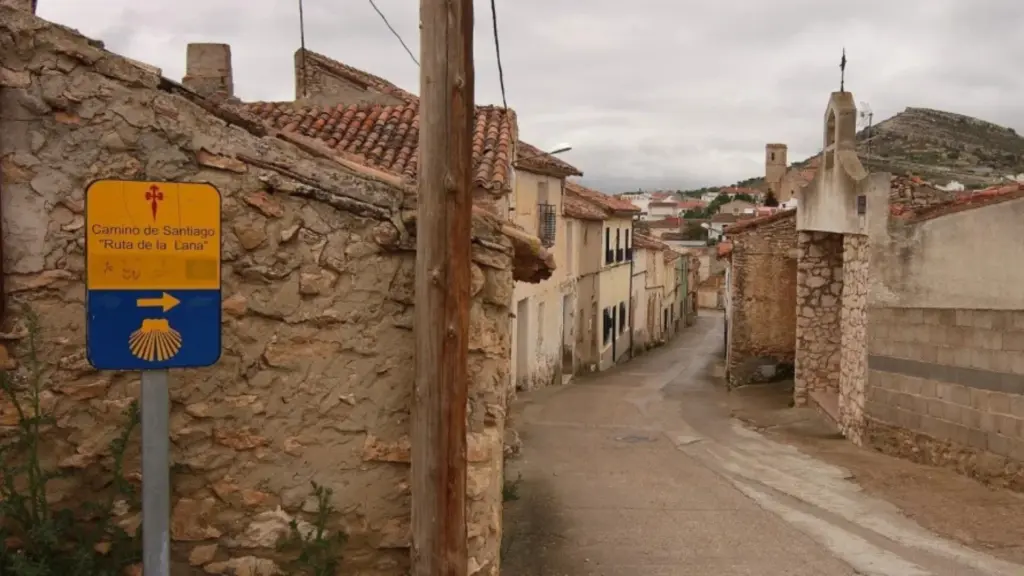
The Wool Route can be considered an open-air museum; you will be able to discover a monumental, historical, and architectural heritage that remains safe from mass tourism.
If you decide to walk this route, these are the historical monuments you must see:
- The Stone Colossi (Villena and Almansa): At the beginning of the journey, you will see the Atalaya Castle in Villena (Alicante) and the Fortress of Almansa (Albacete).
- El Toboso (Toledo): Heading north, you will see the cobblestone streets of the adoptive homeland of Miguel de Cervantes’ Dulcinea.
- Uclés Castle (Cuenca): Known as the “Escorial of La Mancha,” this defensive complex was the headquarters of the Order of Santiago.
- Sigüenza (Guadalajara): Crossing its gates into the historic center means contemplating its fortress-cathedral (where the sculpture of the Doncel rests).
- Santo Domingo de Silos (Burgos): Standing before the gates of the Benedictine Monastery and listening to the monks’ Gregorian chants is an unforgettable experience.
- Covarrubias (Burgos): This walled town will show you the gates of traditional Castilian half-timbered architecture.