What are the forgotten monuments of the Camino de Santiago?
It can be said that the forgotten monuments of the Camino de Santiago are historical vestiges that were once an active part of the Camino de Santiago’s assistance and spiritual network, but that over time fell into abandonment. We are talking about medieval hospitals, hermitages, monasteries and castles.
Most of these monuments are located on the “Forgotten Way”, a historical route that ran along the southern slope of the Cantabrian Mountain Range and was used by the first pilgrims. Currently, many of these monuments are being recovered, thanks to the work of associations and volunteers.
Different forgotten monuments of the Camino de Santiago
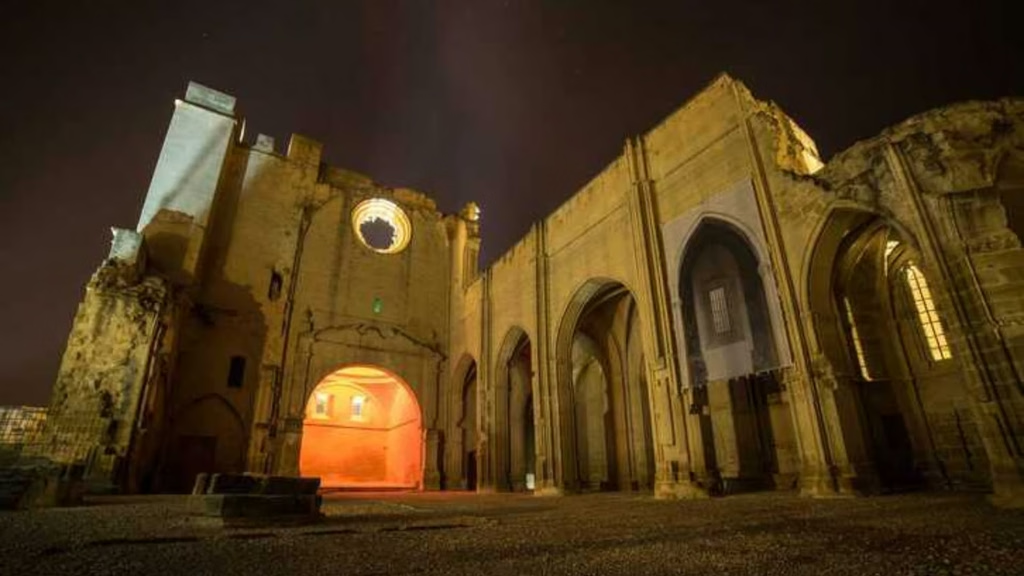
Monastery of Bargota (Navarre)
The ruins of the Hospital of San Juan de Jerusalén de Bargota are located between Puente la Reina and Estella, right on the French Way. It emerged in the 12th century under a commandery of the Order of Saint John of Jerusalem. It fell into decline from the 16th century and was partially demolished in the 18th century. Currently, archaeological interventions have been carried out for its recovery, being one of the few female hospitaller hospitals of the Order of Saint John on the Peninsula.
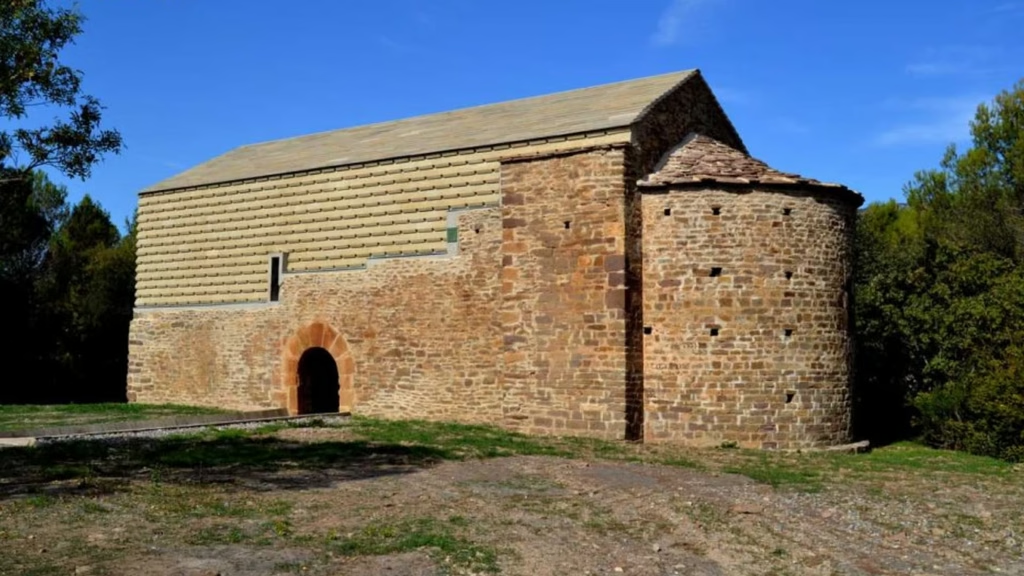
The Hermitage of San Juan de Ruesta (Zaragoza)
Situated on the French Way, there is the 16th-century hermitage that housed the 12th-century Romanesque paintings now kept in the Diocesan Museum of Jaca. After years of abandonment, the Ebro Hydrographic Confederation began its restoration in 2019 as part of the Yesa Reservoir Restoration Plan. The recovery work has received the Hispania Nostra Award 2021 and the FAD Architecture Award 2024.
The Castle of Castrojeriz (Burgos)
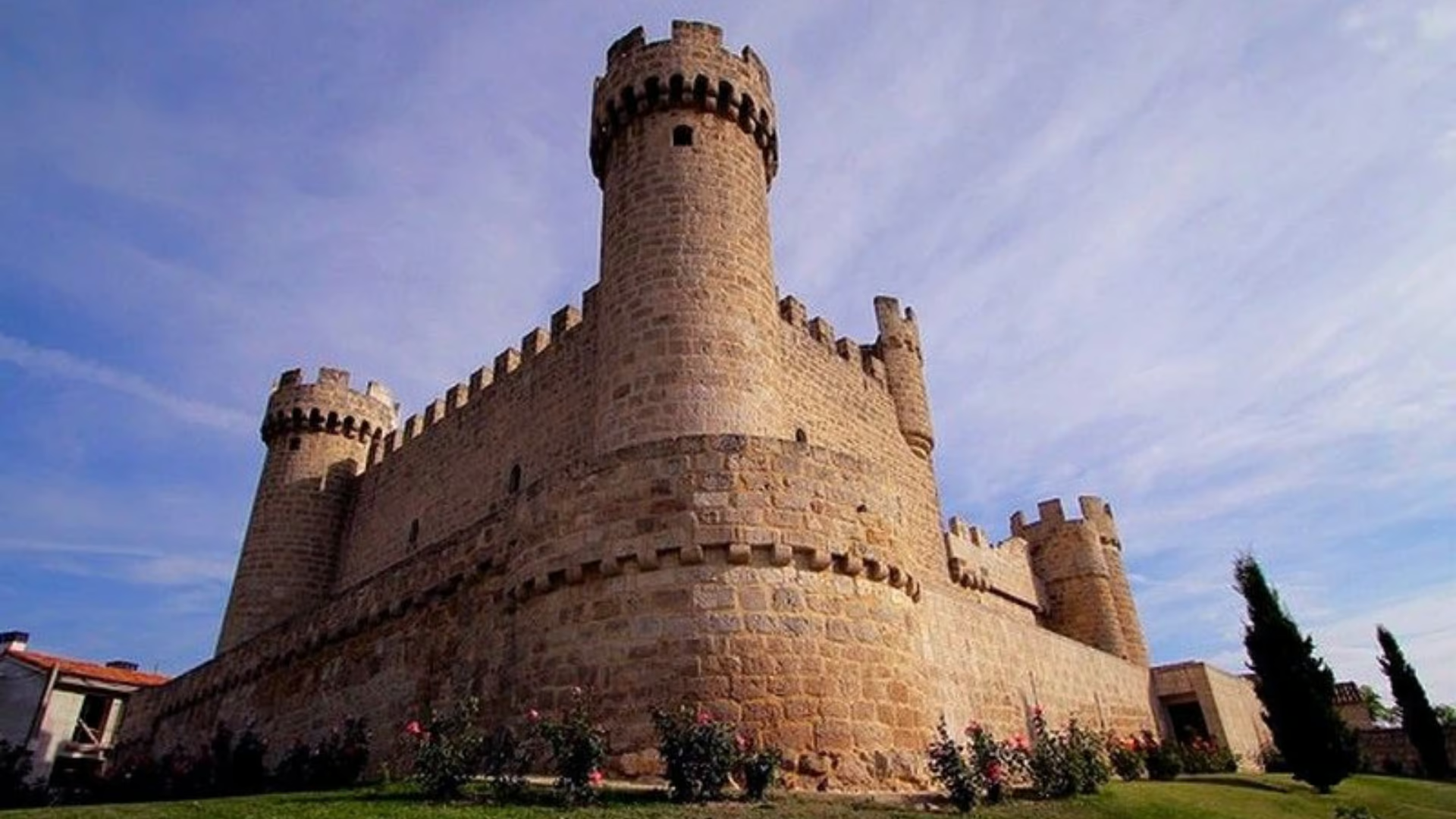
The Castle of Castrojeriz, declared a Site of Cultural Interest, was a key fortress in the history of Castile. Built on a hill overlooking the plain, it was restored in the year 882 by Munio Núñez and played an essential role in the civil wars between Alfonso the Battler and Doña Urraca. Leonor of Castile, Queen of Aragon, was imprisoned there and later murdered by her nephew Peter I of Castile in 1358. After the Lisbon earthquake of 1755, the fortress was damaged and today only its ruins remain.Traduce
The Monastery of Santa María de las Tiendas (Palencia)
This monastery of the Order of Santiago welcomed pilgrims with leprosy, fulfilling an essential function in the Middle Ages. Its history reflects how many of these institutions went from being reception centres to becoming labour houses, losing their original function.
The church of San Pedro (Viana, Navarre)
The ruins of the Church of San Pedro located in Viana possess “the charm of ruins and the grandeur of what was an imposing 13th-century Gothic temple.” During the Carlist wars it suffered its final abandonment, but the side nave, part of the chancel, and a Baroque doorway are still preserved. Despite its ruinous state, the church remains a landmark at the entrance of Viana, which witnessed the death of Cesare Borgia in 1507.
Frequently asked questions about the forgotten monuments of the Way
How many forgotten monuments are there on the Way?
There are hundreds. Along the Jacobean routes, especially on the so-called Forgotten Way, there are numerous churches, hermitages, and hospitals that have disappeared or are in ruins. Many of them are documented, but even more await research and recovery.
Are these monuments being recovered?
Yes. More and more associations and administrations are working on the recovery of this heritage. The Hermitage of San Juan de Ruesta is a great example: it has received the Hispania Nostra Award 2021 and the FAD Architecture Award 2024 for its restoration. Volunteer campaigns are also being carried out at the Monastery of Bargota for its archaeological recovery.
How can I visit these places?
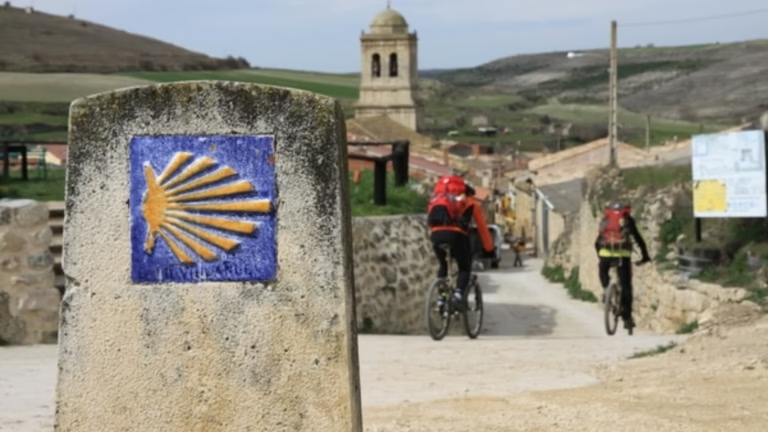
Most of these monuments are located alongside the Jacobean routes, so they are accessible on foot or by bicycle. It is advisable to find out beforehand about their condition and accessibility, as some are in ruins and may have restrictions. Associations such as the Friends of the Camino de Santiago offer updated information on the condition of these heritage sites.