Who was John Paul II?
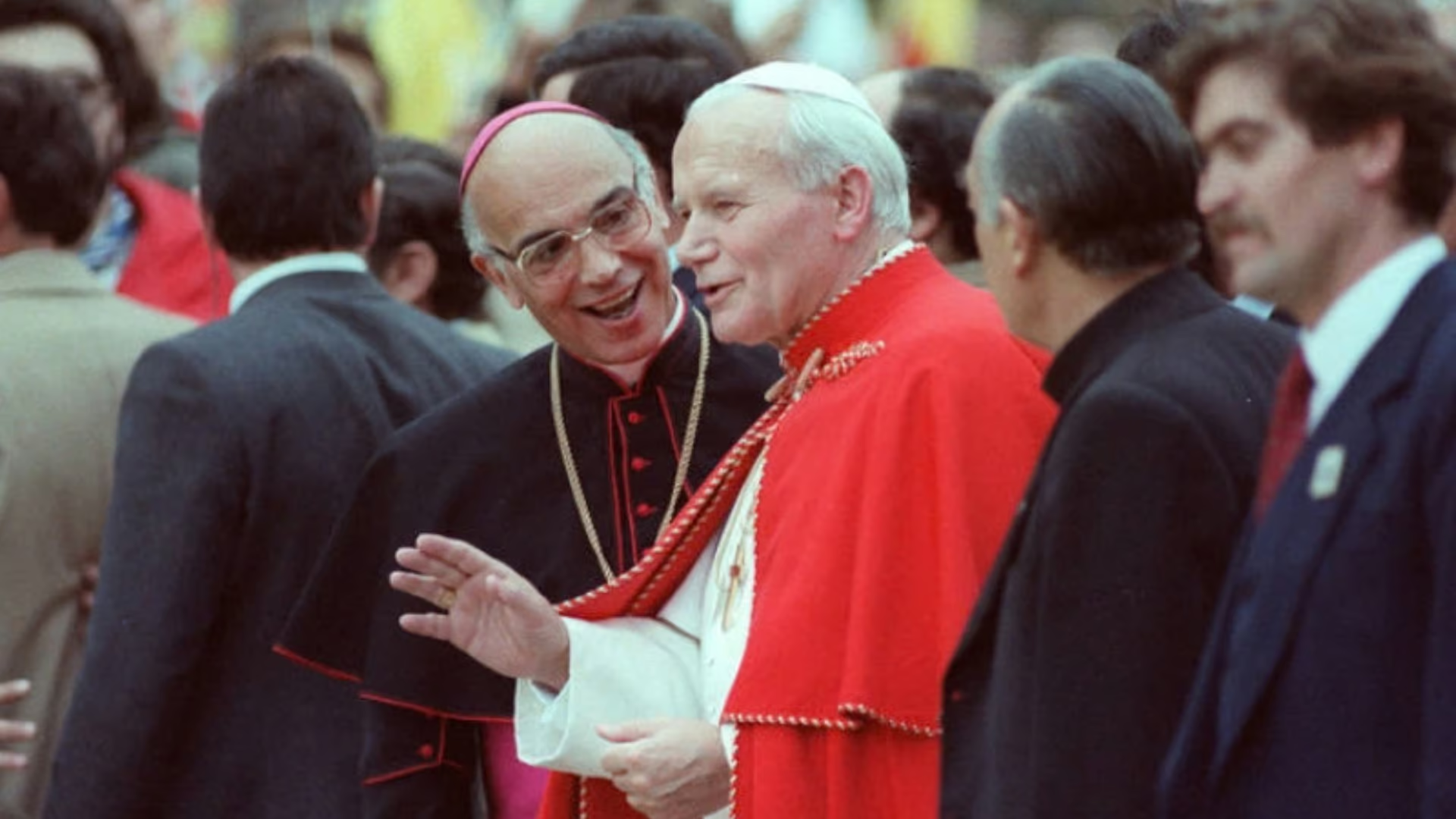
John Paul II, born Karol Wojtyła in Wadowice (Poland) in 1920, was the 264th pope of the Catholic Church. His pontificate lasted from 1978 to 2005. He was the first non-Italian pope in more than four centuries, and one of the great protagonists of 20th-century history.
John Paul II visited Spain on numerous occasions, and one of his most important visits was to Santiago de Compostela. For the pope, who had suffered the totalitarianisms of the 20th century, the Camino de Santiago was a symbol of European unity and shared faith, and his visit had a strong spiritual and political component.
John Paul II’s journeys to Santiago de Compostela
The first visit (1982): context and events
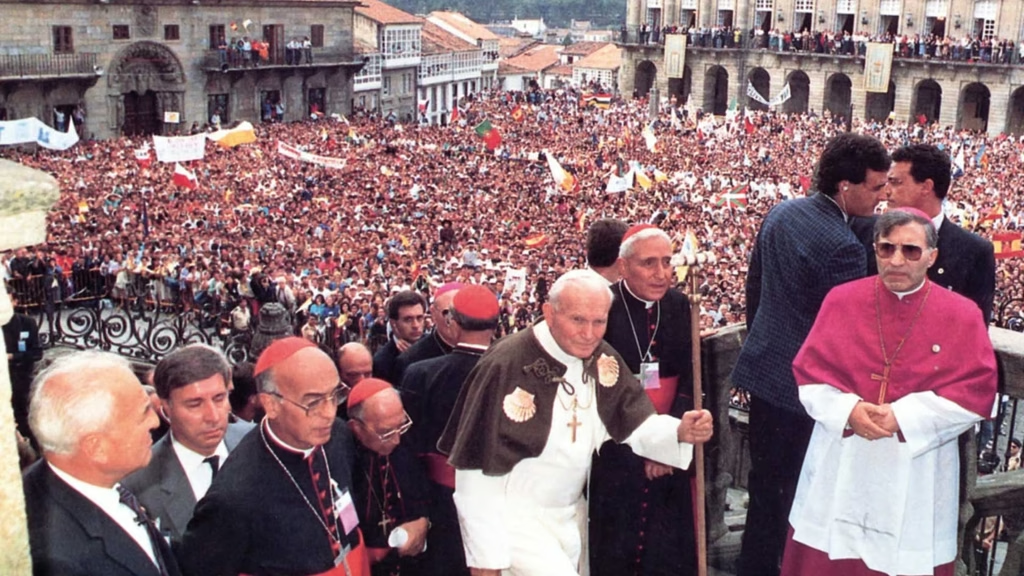
John Paul II visited Santiago de Compostela for the first time in November 1982. In a historical context in which Spain had just emerged from a dictatorship and was consolidating its democracy, the Pope’s visit represented international support. In addition, the Spanish Church was experiencing a moment of renewal after the Second Vatican Council.
During his visit, John Paul took part in a huge mass at Monte do Gozo, presided over the Botafumeiro ceremony and visited the tomb of the Apostle. He sent a clear message: Europe had to recover its Christian roots, and the Camino de Santiago was the symbol of that unity.
The second visit (1989): context and events
John Paul II’s second visit took place in August 1989, on the occasion of World Youth Day. On this occasion, the pope addressed the young pilgrims who had come to Compostela, and encouraged them to follow the example of medieval pilgrims: to walk, to make an effort and to seek the truth.
Thanks to this visit, from the 1990s onwards the number of pilgrims never stopped growing. In this way, John Paul II on the Camino de Santiago de Compostela became the great driving force behind modern pilgrimage.
John Paul II and his relationship with the Camino de Santiago
John Paul II in Santiago de Compostela was not a one-off visit. The pope had always shown great appreciation for the Jacobean pilgrimage, and he considered it a European symbol of the Christian faith. In various speeches, he tried to encourage the faithful to walk the Camino de Santiago as an experience of conversion and encounter with others.
During his first visit to Santiago de Compostela, he encouraged the Spanish and European authorities to recover and signpost the different Jacobean routes, and he helped many associations and public administrations to invest in the Camino de Santiago. His legacy is unquestionable: John Paul II in Santiago de Compostela was one of the architects of the revival of the Camino in the 20th century.
John Paul II’s legacy in Santiago de Compostela
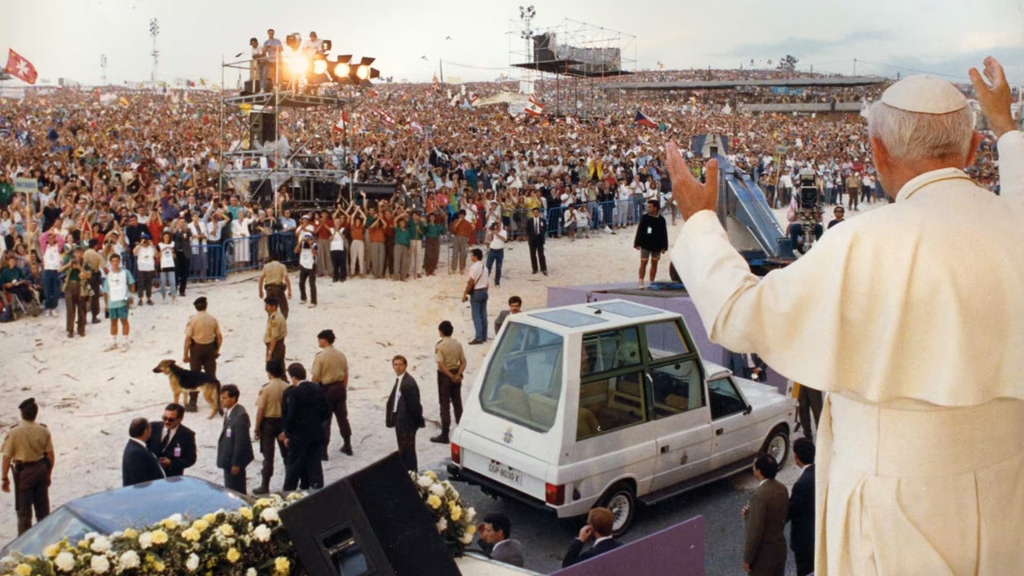
John Paul II’s legacy in Santiago de Compostela is visible in different places in the city and along the route. These are the main ones:
- Monte do Gozo: The place where the 1982 mass was held; it is currently a commemorative space and a pilgrim hostel.
- The Cathedral of Santiago: Where the pope venerated the tomb of the Apostle and presided over the Botafumeiro ceremony.
- The monument to John Paul II in Santiago: A bronze sculpture that commemorates his 1989 visit; it is located in the Alameda park.
- The John Paul II Pilgrim Reception Centre: A space for welcoming and caring for pilgrims.
In addition, John Paul II’s legacy in Santiago de Compostela endures in the growth of Jacobean pilgrimage and in the spirit of welcome that characterises the Camino de Santiago.