What is the ritual of embracing the Apostle Santiago?
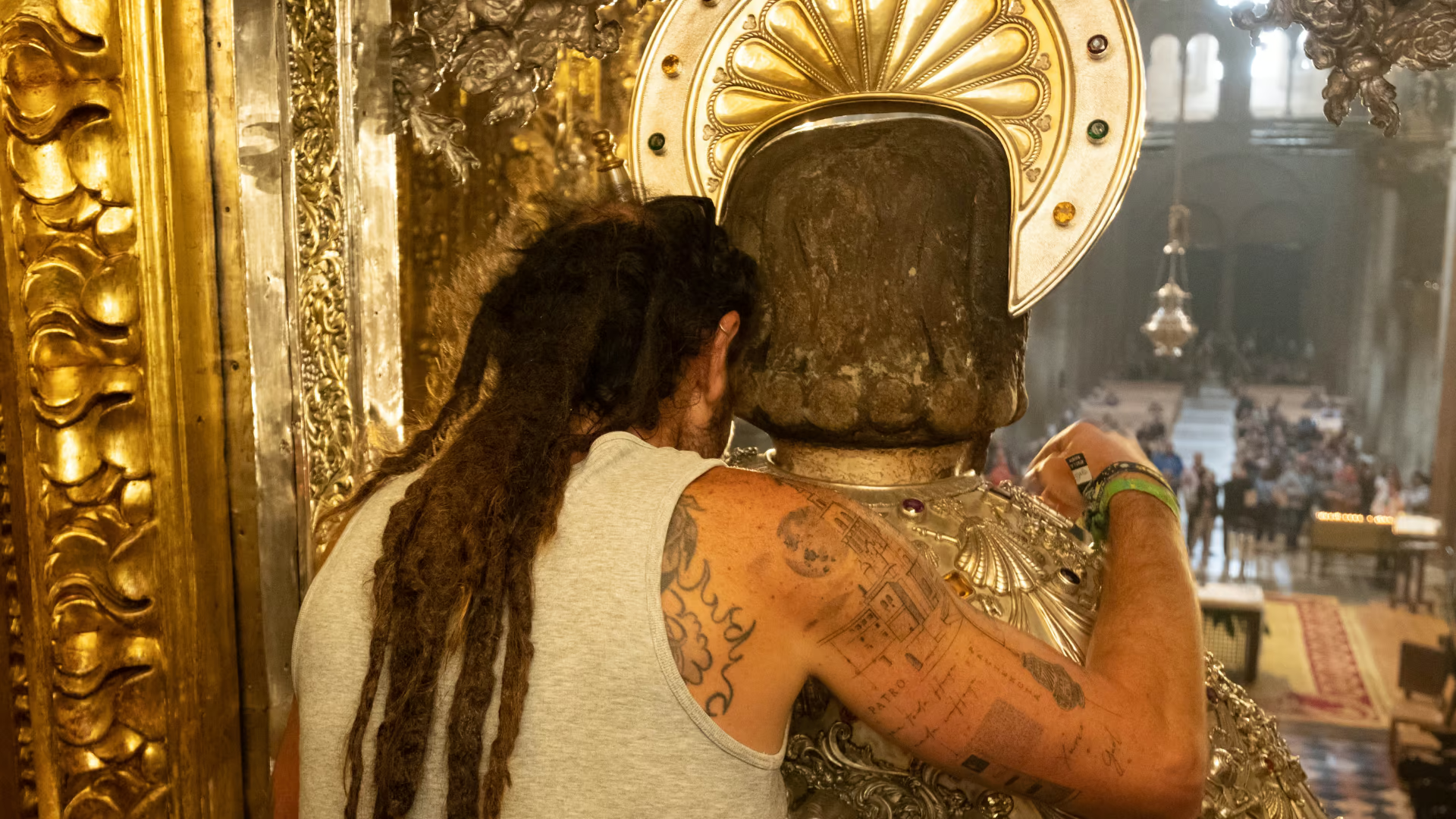
The ritual of embracing the Apostle Santiago consists of the pilgrim’s gesture of embracing the image of the Apostle Santiago venerated in the camarín of the Cathedral of Santiago de Compostela. It is one of the most notable moments of the pilgrimage.
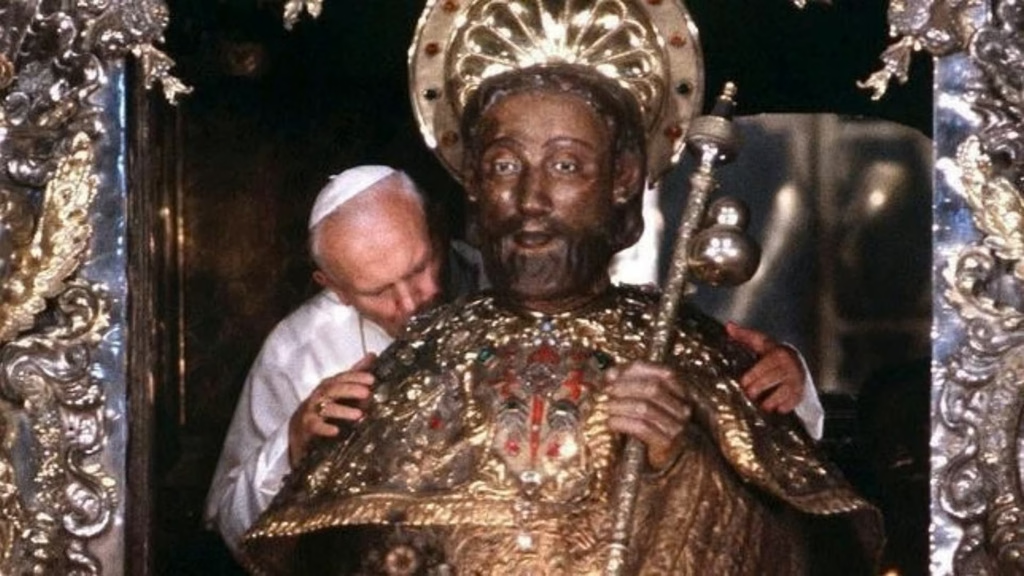
The embrace takes place in the camarín, a chapel above the main altar of the Cathedral of Santiago, which is reached by a narrow staircase. In that place stands the image of Santiago, which the pilgrim embraces from behind, as a gesture of devotion and gratitude.
History of the ritual of embracing the Apostle Santiago
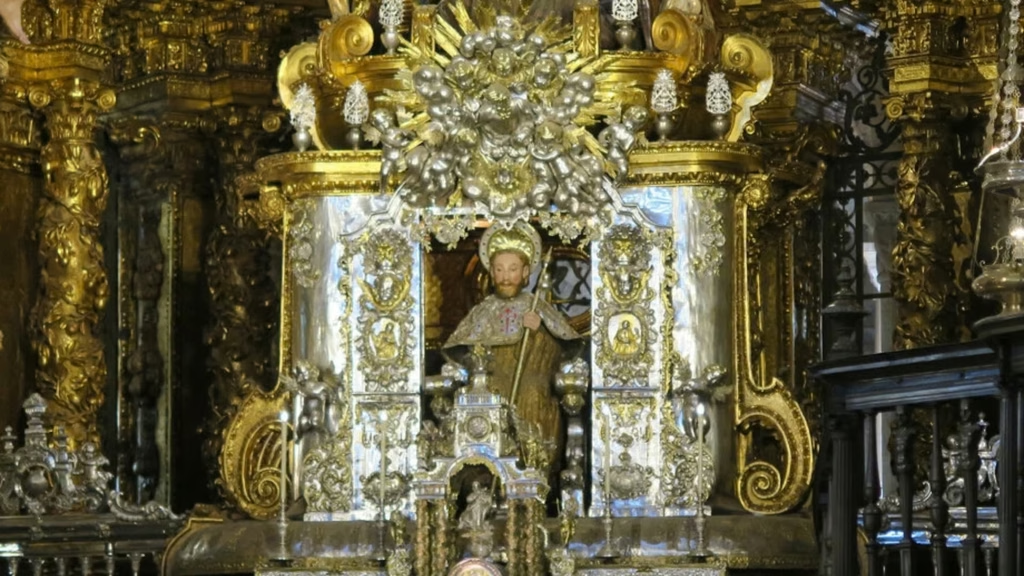
In the Middle Ages, the veneration of the image of the Apostle Santiago originated, when pilgrims arriving in Compostela went to the Cathedral to kneel before the Apostle’s tomb. The embrace of the Apostle, as we know it today, is a recent ritual, although its roots come from medieval tradition.
Throughout history, the ritual has evolved and adapted to the circumstances of each era. Today, this ritual is one of the most popular among pilgrims, and it has become a symbol of the pilgrimage. The image that is venerated is a 13th-century carving, decorated with vestments and attributes.
How the ritual of embracing the Apostle Santiago is performed
The ritual of embracing the Apostle takes place in the camarín of the Cathedral, which is reached by a narrow staircase located in the transept. In the cathedral, the access to the Apostle’s image is signposted and, in high season, there may be queues. Once upstairs, the pilgrim approaches the image and embraces it from behind, in silence.
After the embrace, the pilgrim can pray for a few moments and kiss the Apostle’s cloak. When you finish the ritual, you go down another staircase that leads to the crypt, where the tomb of Santiago is located.
When can the ritual of embracing the Apostle Santiago be performed?
The camarín of the Apostle is open during the visiting hours of the Cathedral of Santiago, which vary depending on the season of the year. Generally, you can access it from Monday to Sunday, in the morning and afternoon, although the hours may change depending on liturgical celebrations and the needs of worship.
In the Compostelan Holy Year, with the crowds multiplying, access to the camarín may be restricted and the queues are longer. On these dates, it is advisable to get up early or choose the least crowded hours in order to perform the ritual calmly. It should be borne in mind that the camarín may close during solemn masses.
Frequently asked questions about the ritual of embracing the Apostle Santiago
Is it obligatory to embrace the Apostle to obtain the Compostela?
No. Embracing the Apostle Santiago is a devotional gesture, but it is not a requirement to obtain the Compostela; the Compostela is obtained for having covered the last 100 kilometres on foot or 200 by bicycle and for having stamped the credential. The embrace is a voluntary, personal act.
How long does the ritual take?
The ritual itself lasts a few seconds: the time it takes to embrace the image and, if desired, to pray briefly. However, in high season there can be queues of 15 to 30 minutes to access the camarín. In the Holy Year, the waits can be longer.
What happens if the camarín is closed?
If the camarín is closed because of liturgical celebrations or other circumstances, the pilgrim can venerate the Apostle Santiago from the nave of the Cathedral or visit the crypt, where the tomb is located. The embrace can be performed at another time, as long as the camarín is open.
Can you embrace the Apostle in a wheelchair?
Access to the camarín is via a narrow staircase, which can make it difficult for people with reduced mobility. However, the Cathedral has alternatives so that all pilgrims can venerate the Apostle. It is advisable to check with the Pilgrim Attention Office to find out about the available options.