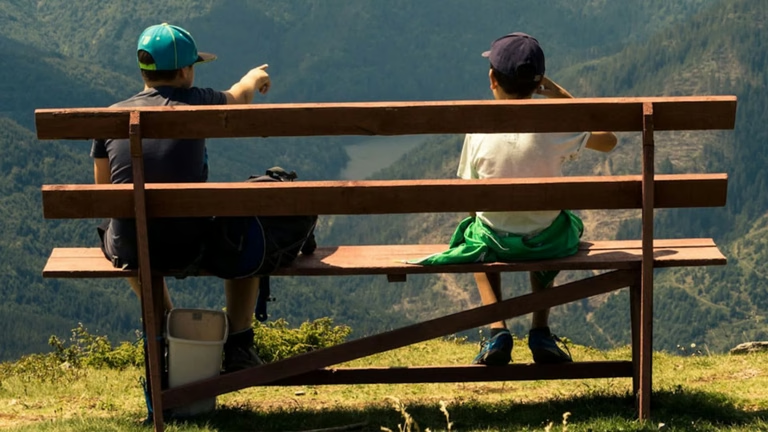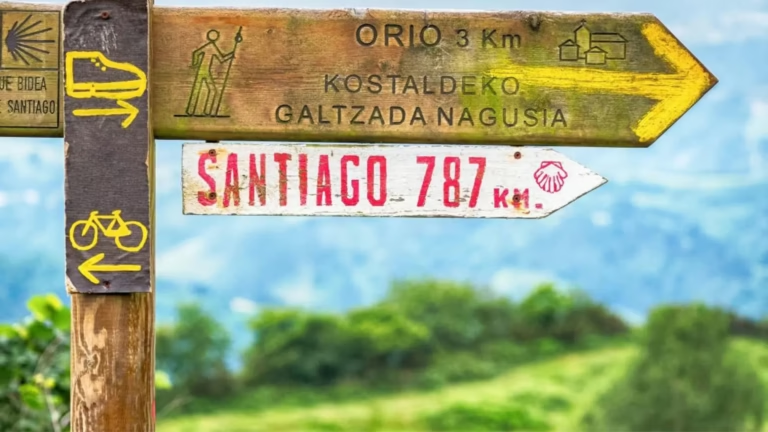
The highest points of the Camino de Santiago are places where the landscape changes completely, the effort becomes invisible and the reward is most gratifying. Knowing which are the highest points of each main Jacobean route is essential for planning the different stages, pacing your effort and preparing physically.
Highest points of the Camino Francés
The Camino Francés is the most crowded route and the one that offers some of the highest and most emblematic points of the entire Camino de Santiago. Its profile combines flat sections with demanding climbs, and knowing its highest peaks helps you plan each stage better. Here are the highest points of the route:
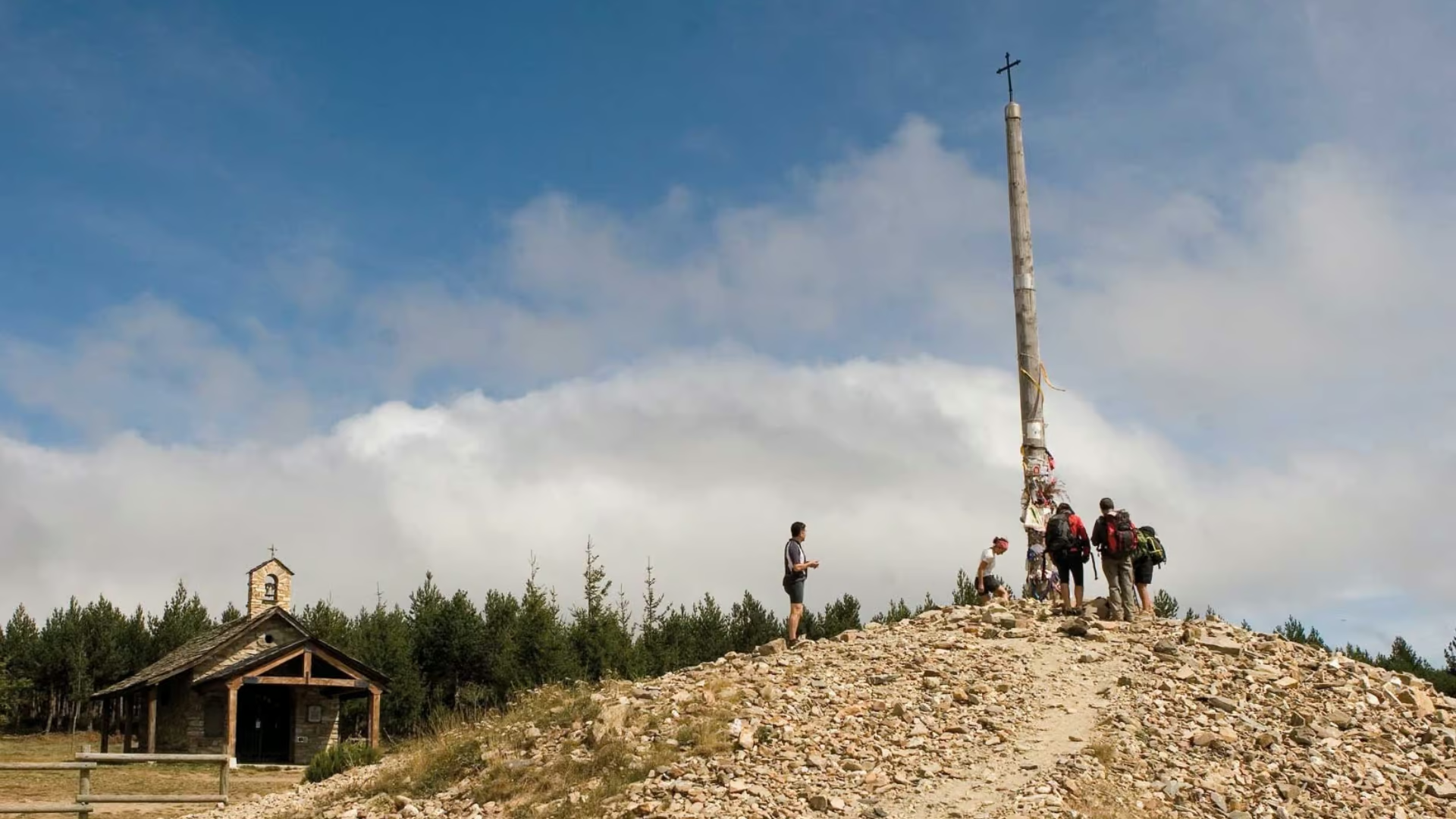
- La Cruz de Hierro (Foncebadón, 1,505 m): The highest point of the Camino Francés. It is located on Monte Irago, and is one of the most symbolic places on the route.
- The Puerto de Lepoeder (1,450 m): Right in the middle of the Pyrenees crossing, it is the highest point of the first stage from Saint-Jean-Pied-de-Port.
- O Cebreiro (1,300 m): The entrance to Galicia and one of the greatest milestones of the Camino de Santiago.
- The Alto de Perdón (770 m): Near Pamplona, it offers wonderful views.
Highest points of the Camino del Norte
The Camino del Norte is a route with constant ups and downs that puts every pilgrim to the test. Its highest points are also unmatched, with their views of the sea.
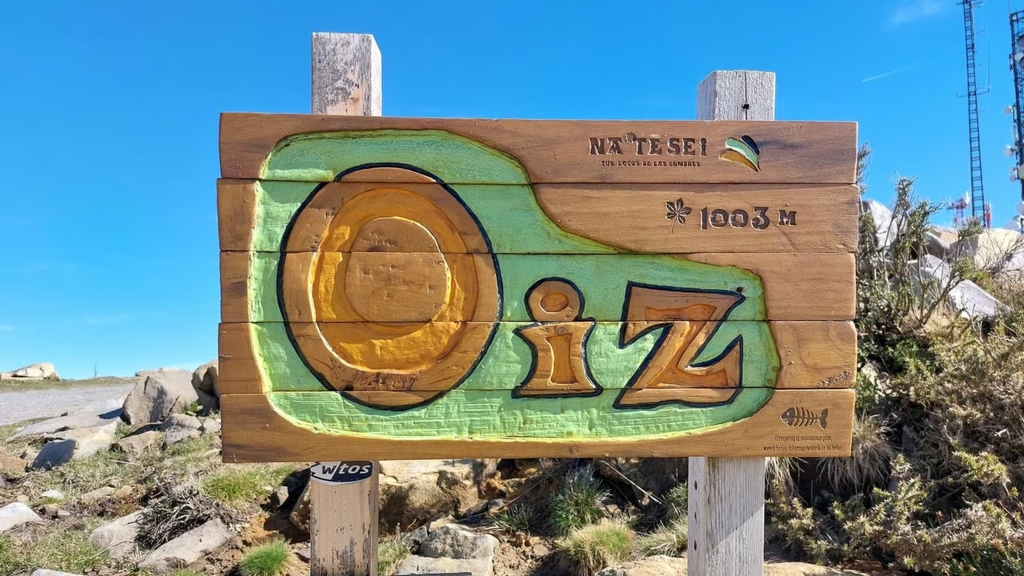
- Monte Oiz (1,026 m): The highest point of the Camino del Norte. It is located between Gernika and Bilbao and offers a coastal landscape.
- Monte Jaizkibel (543 m): The first stage of the Camino, it is a very demanding pass with unmatched views.
- The Alto de la Bozaya (400 m): Near Irún, one of the elevated points on the route.
Highest points of the Camino Portugués
The Camino Portugués is one of the gentlest routes, but it has several high points, specifically on the Portuguese section and on the entry into Galicia:
- The Alto da Portela Grande (405 m): It is located on the section between Ponte de Lima and Rubiães, and it is the highest point of the Camino Portugués.
- The Alto da Cruz (520 m): Located on the stage between Tui and Redondela, it is the highest point of the Galician section of the Camino Portugués.
Highest points of the Vía de la Plata
The Vía de la Plata runs through dehesa and mountain landscapes and contains some passes that exceed 1,000 metres in altitude:
- The Puerto de Béjar (1,200 m): It is located in the Sierra de Béjar, and it is one of the highest points of the Vía de la Plata.
- The Sierra de la Culebra (1,200 m): Located in the province of Zamora, it offers unique landscapes and is a very demanding point.
Highest points of the Camino Primitivo
The Camino Primitivo is the oldest Camino and one of the most mountainous. Its highest points are found in the Asturian and Galician mountain passes.
- The Puerto de Palo (1,160 m): Located between Asturias and Galicia, the highest point of the Camino Primitivo.
- The Alto del Acebo (1,000 m): The final stage towards Santiago, it offers some views.
Highest points of the Camino de Invierno
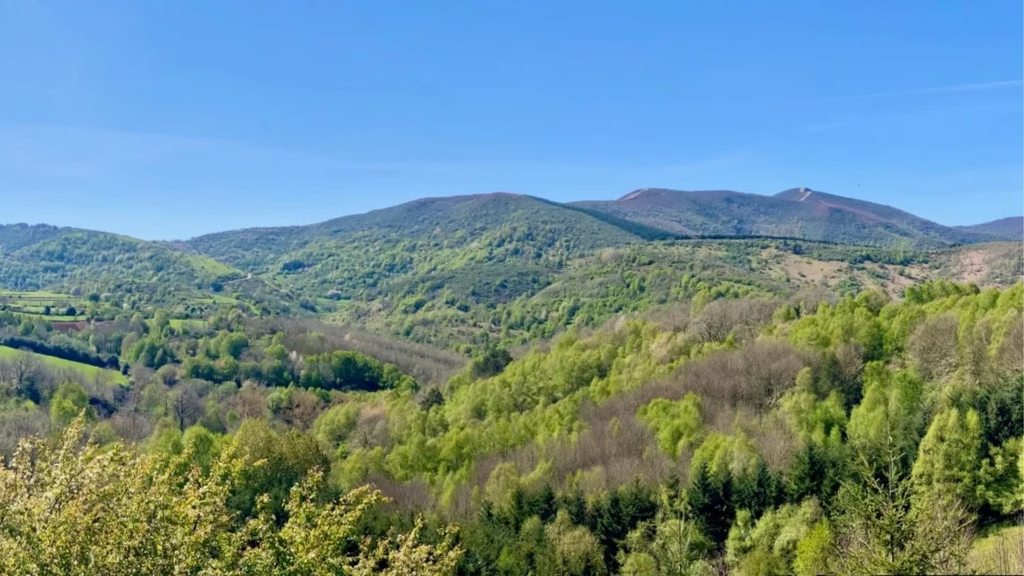
The Camino de Invierno is a route that avoids the mountain passes, with a much gentler profile. However, it also has some elevated points:
- The Alto de Montefurado (800 m): Located in the Valdeorras region, it is one of the highest points on the route.
- The Sierra del Caurel (1,000 m): It is the entrance to Galicia.
Questions about the highest points of the Camino de Santiago
What is the highest point of the entire Camino de Santiago?
The highest point of the entire Camino de Santiago is La Cruz de Hierro, in Foncebadón (Camino Francés), at 1,505 metres of altitude. It is followed by the Puerto de Lepoeder (1,450 m) and O Cebreiro (1,300 m).
How does altitude affect the pilgrim?
Altitude can affect the pilgrim if they are not used to it. From 1,000 metres upwards, the air is thinner and physical effort is more noticeable. It is important to hydrate well, climb slowly and listen to your body’s signals.
How can you prepare to tackle the highest points?
To tackle the highest points, it is advisable to train on climbs, wear suitable footwear, hydrate well and pace your effort. It is also necessary to plan the stages so as not to tackle the climbs during the hottest hours.