Why is Villafranca del Bierzo a must-stop on the Camino de Santiago?
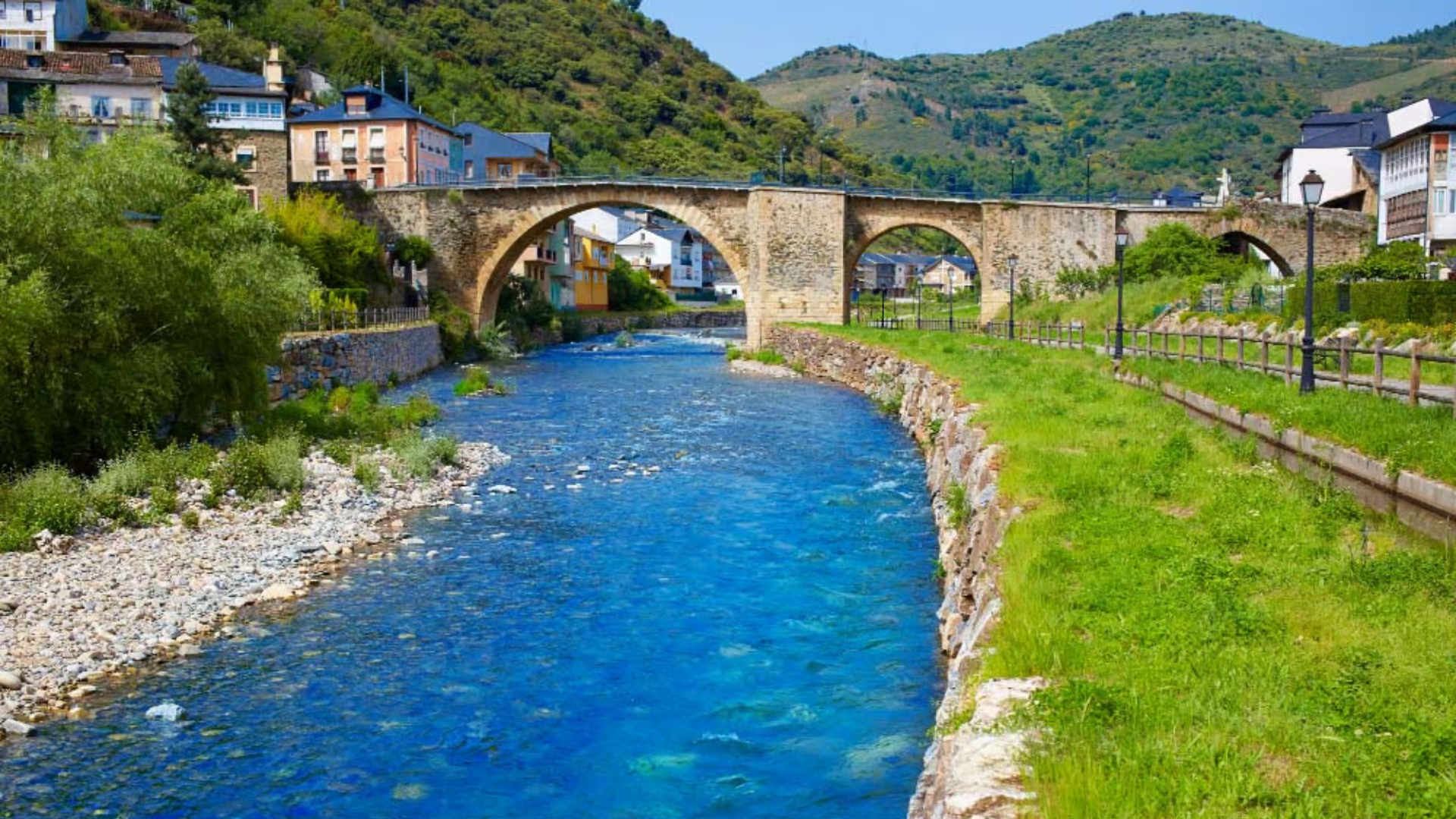
Villafranca del Bierzo occupies a strategic place on the Camino Francés; it is the last Leonese town before the route enters the Valcarce river valley and begins the climb to O Cebreiro. For medieval pilgrims, as the Codex Calixtinus indicated, it was a resting point before facing the ascent towards Galicia.
Villafranca del Bierzo on the Camino de Santiago is popularly known as the “little Compostela of León”, thanks to its three monuments recognised by UNESCO: the church of Santiago Apóstol, the Collegiate Church of Santa María and the Convent of San Nicolás el Real. In addition, its historic centre is declared a Historic-Artistic Site.
History and origin of Villafranca del Bierzo on the Camino de Santiago
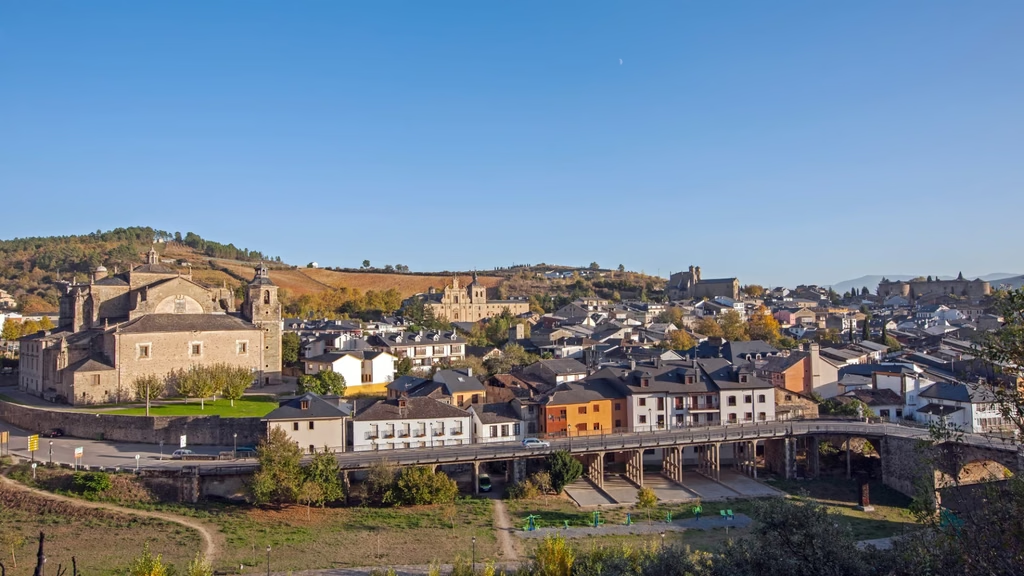
The origin of Villafranca del Bierzo is linked to the Camino. The town emerged as a settlement around the calle del Agua, the layout of the Camino Francés, and grew thanks to the care and the pilgrim hospitals. Its name “Villa Franca” refers to the charters and privileges granted to its inhabitants in order to increase settlement and the flow of pilgrims.
The oldest mention of the area dates back to the year 791. A battle was fought beside the river Burbia between Muslims and Christians. With the rise of pilgrimages, Villafranca del Bierzo on the Camino de Santiago consolidated itself as a pillar of assistance to pilgrims.
What to see in Villafranca del Bierzo: monuments and living history
The historic centre of Villafranca is like an open-air museum:
- Church of Santiago Apóstol: A 12th-century Romanesque temple that contains the Puerta del Perdón, the most emblematic element for pilgrims.
- Collegiate Church of Santa María: Rebuilt between the 16th and 18th centuries, it blends late Gothic with Renaissance and Baroque elements. Its Neoclassical altarpiece and the Abbot’s Chair stand out.
- Convent of San Nicolás el Real: Founded by the Jesuits in the 17th century, it preserves the Cristo de la Esperanza and a Baroque cloister.
- Calle del Agua: The historic heart of the town, full of palaces and manor houses.
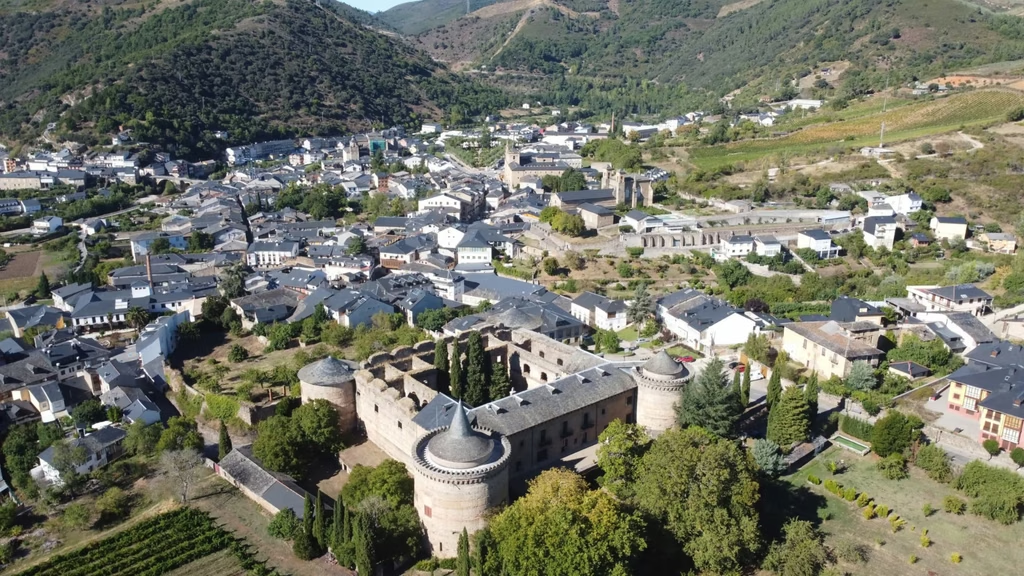
- Castle of the Marquises of Villafranca: A 16th-century fortress that can be partially visited.
The gastronomy of Villafranca del Bierzo on the Camino de Santiago
Bierzo cuisine is hearty and filling, the perfect way to regain strength after a demanding stage:
- The botillo del Bierzo: A standout dish of the area. It is a sausage made from pork ribs and tail, marinated with peppers and smoked. Its preparation is simple: boil it slowly with potatoes and turnip greens.
- Roasted Bierzo peppers: Full-flavoured vegetables to accompany a meal or preserved in jars.
- Cecina de León: Cured and smoked meat, perfect for a charcuterie board.
- Wines of the D.O. Bierzo: Made with the mencía variety.
- Bierzo sweets: Frisuelos, chestnuts in syrup and pears in wine.
Services for pilgrims in Villafranca del Bierzo
Villafranca del Bierzo has a large infrastructure for caring for pilgrims:
- Municipal Pilgrim Hostel: Located on calle Campo de la Gallina, with 60 places and a price of 10 euros per night.
- Ave Fénix Pilgrim Hostel: Private accommodation at calle Santiago, number 10.
- Other accommodation: Guesthouses, hostels and country houses.
- Shops and supermarkets: To restock provisions before the climb to O Cebreiro.
- Pharmacies and health centres: To deal with various problems such as blisters, chafing and others.
- Restaurants and bars: A wide range of pilgrim menus and typical dishes.
The Puerta del Perdón: the unique privilege of Villafranca del Bierzo
The Puerta del Perdón is the treasure of Villafranca del Bierzo. You will find it in the church of Santiago Apóstol; this 12th-century Romanesque doorway carries a privilege: pilgrims who, through illness or accident, cannot continue to Santiago, can obtain the plenary jubilee here, provided they have covered the required distance, have confessed and have prayed for the intentions of the Church.
This door can grant Jubilee Graces. For medieval pilgrims it was a great consolation: it meant that, even if the body could not reach Compostela, the soul would still attain forgiveness. Today, it remains an emblematic place on the Camino de Santiago.