Why is Puente la Reina a must-stop on the Camino de Santiago?
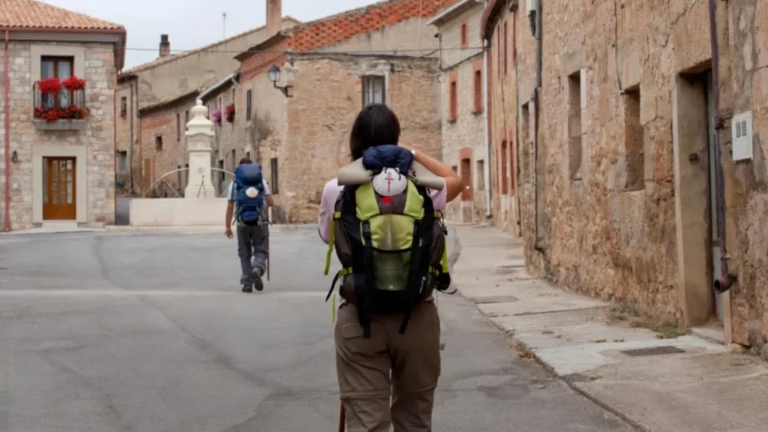
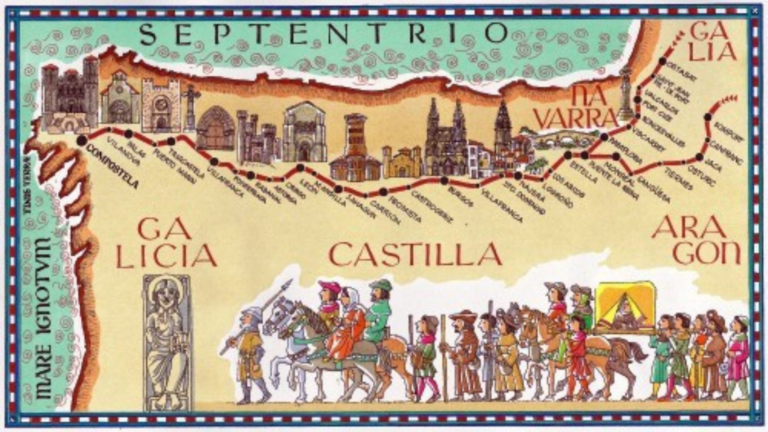
Puente la Reina is one of the essential stops on the Camino de Santiago. In this town, the route coming from Roncesvalles and the one arriving from Somport converge, joining into a single path. Since the 11th century, this town has been a place of rest and encounter for pilgrims.
Puente la Reina was born and grew under the protection of the Camino de Santiago. Calle Mayor is the backbone of the town and follows the original layout of the Jacobean route. This street is surrounded by churches, houses with coats of arms and medieval remains that recall the passage of pilgrims.
History and origin of Puente la Reina on the Camino de Santiago
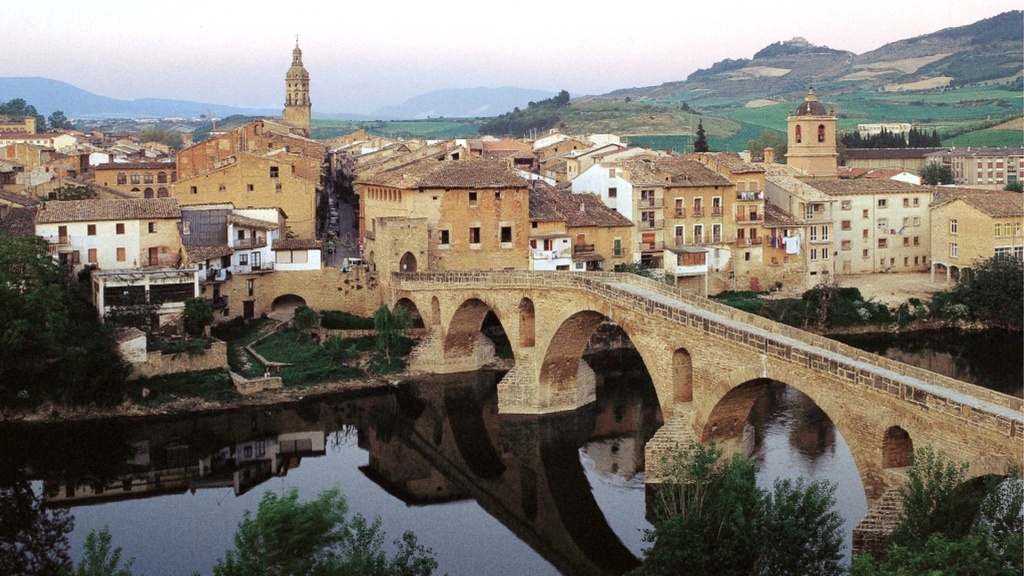
The origin of Puente la Reina goes back to the 11th century, thanks to a Navarrese queen. Historians place the queen who ordered the construction of a bridge over the river Arga to make it easier for pilgrims to cross between Doña Mayor of Castile (wife of Sancho the Great) or Doña Estefanía of Navarre (wife of García of Nájera). Until that time the area was known as Gares.
The construction of the bridge changed the town’s destiny. Alfonso I the Battler, in the 11th century, granted a town charter to the Franks settled there and granted them the fuero of Estella in 1122. The constant flow of pilgrims fostered the growth of the town, which was organised as a “street-town”: a long Calle Mayor along which the Camino ran, with two parallel streets and walls that enclosed the town. Puente la Reina stood out for its Templar importance: in 1142, García Ramírez handed the town over to the Knights of the Temple.
What to see in Puente la Reina on the Camino de Santiago
The historic town of Puente la Reina is an extraordinary museum. These are its most notable monuments:
- Church of the Crucifix: Founded by the Templars in the 12th century, it contains a crucifix with arms raised in the shape of a “Y”, a unique piece in European art.
- Church of Santiago: A 12th-century church, rebuilt in the 16th century with a doorway of Moorish influence and a Gothic carving of the Apostle Santiago inside.
- Church of San Pedro: Built in the 14th century, it preserves Baroque altarpieces and the image of the Virgin of Puy.
- Convent of Sancti Spiritus: It was rebuilt in the 18th century. The absence of a tower and its bell in a small bell gable are striking.
- Calle Mayor: The historic axis of the town, full of manor houses, noble coats of arms and the pilgrim atmosphere.
The gastronomy of Puente la Reina on the Camino de Santiago
Puente la Reina is known for its gastronomy based on produce from the Navarrese market gardens. The typical products are:
- Piquillo peppers: The most notable product. Every autumn, Puente la Reina holds its pepper market, and 80% of sales correspond to the piquillo, roasted and jarred by traditional methods.
- Txantxigorris: A typical sweet made from bread dough, cinnamon, pork crackling, lard and sugar, baked in layers.
- Jildas: A local speciality enjoyed in the town’s bars.
- Navarrese-style artichokes: A traditional dish, present on restaurant menus.
- Chuletón: The ideal accompaniment to roasted peppers.
Services for pilgrims in Puente la Reina on the Camino de Santiago
Puente la Reina has enough infrastructure to serve pilgrims:
- Albergue de los Padres Reparadores: A parish hostel with 100 places, priced at €9. It has a kitchen, washing machine, dryer and Wi-Fi.
- Albergue Jakue: A private hostel with 52 places, priced at €25.
- Albergue Gares: A private hostel with 42 places, priced at €15.
- Albergue Puente: A private hostel with 40 places, priced at €18.
- Albergue Santiago Apóstol – Camping el Real: A private hostel with 100 places, priced at €13.
- Other services: Shops, supermarkets, pharmacies, bars and restaurants with pilgrim menus.
The Romanesque bridge: the great symbol of Puente la Reina on the Camino de Santiago
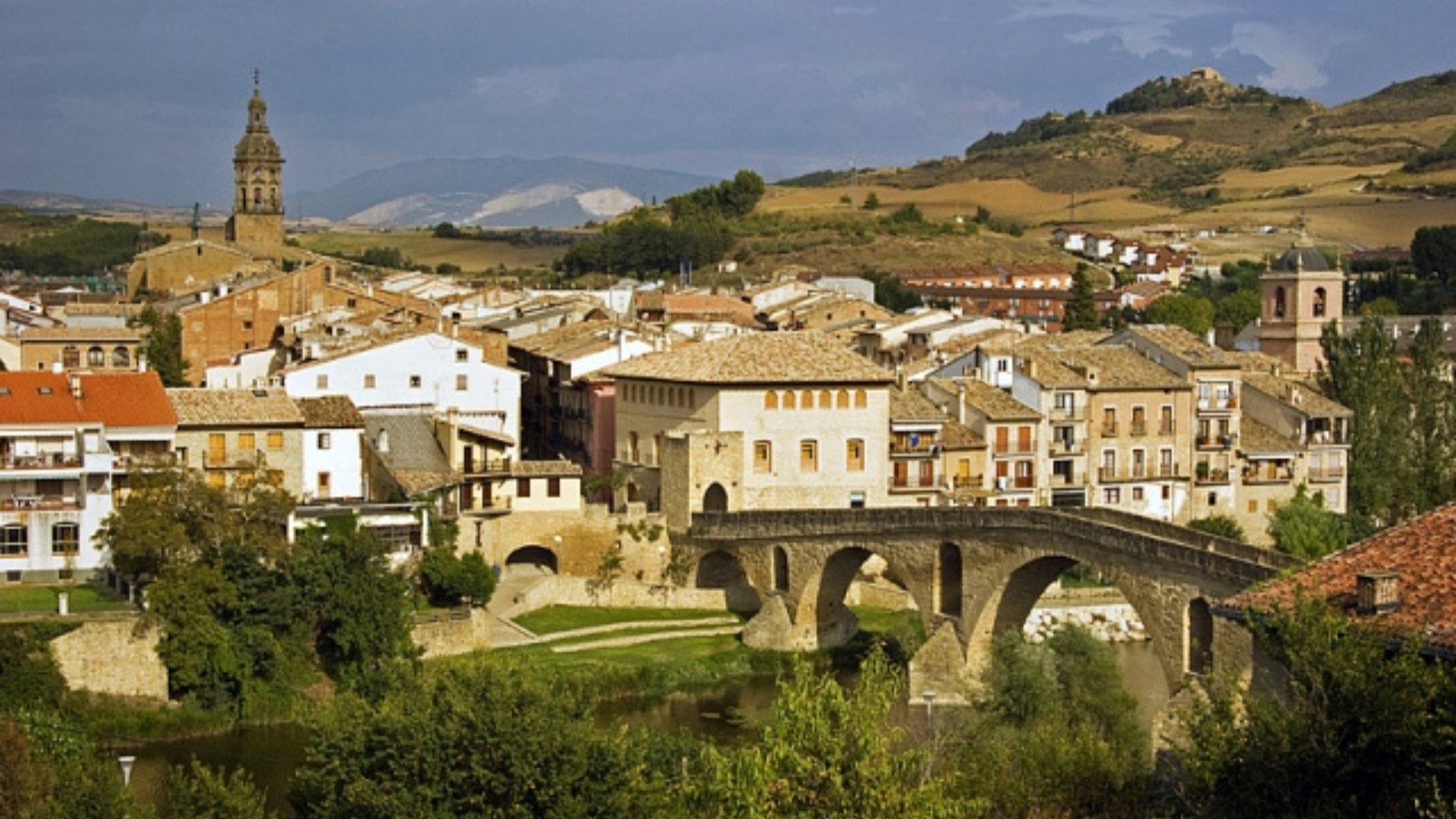
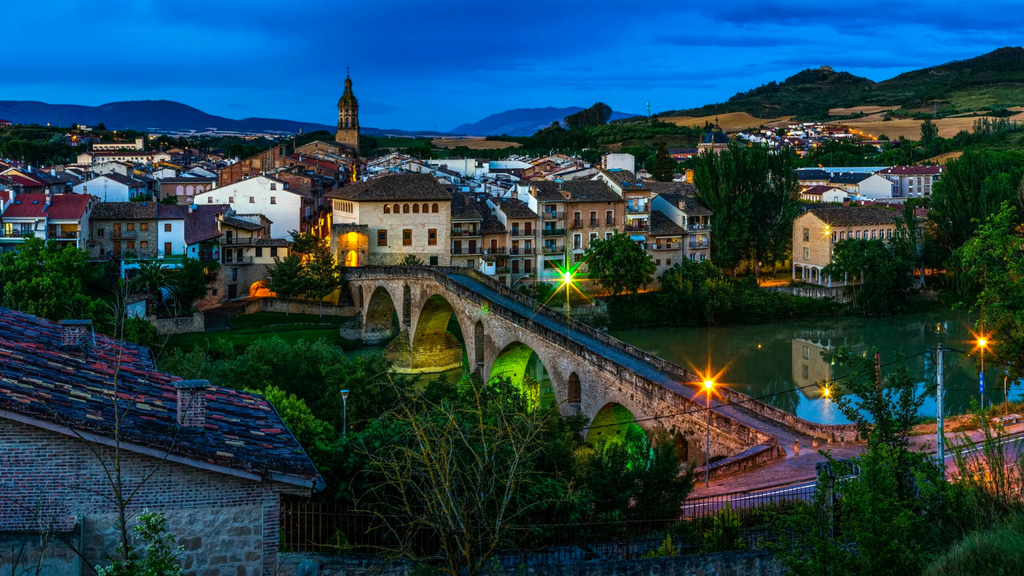
The Romanesque bridge is one of the best preserved in all of Europe. It was built in the 11th century, measures more than 110 metres in length and about 4 metres in width, and is supported by five pillars that hold up six pointed arches. Originally it had small towers at its ends and chapels along its layout, and its cutwaters protect the structure from river floods.
Today, walking over the Roman bridge is still one of the most photographed and memorable moments of the Camino Francés. In addition, the legend of the Txori, the little bird that cleaned the image of the Virgin with water from the river, adds a spiritual touch to a monument of such antiquity.