What was the Spanish Inquisition?
The Spanish Inquisition was an ecclesiastical court founded in 1478 by the Catholic Monarchs, with the aim of maintaining the Catholic religion in their kingdoms. The Spanish Inquisition was under the control of the monarchy, which turned it into an instrument of political and religious power. The main aim of the Spanish Inquisition was to persecute heresy.
The Inquisition Tribunal had a hierarchical structure and its own judicial process. Anonymous denunciations were very common, and punishments ranged from abjuration and public penance to the confiscation of property, exile or the stake. The Inquisition was abolished in 1834, during the reign of Isabella II.
The Camino de Santiago during the Inquisition: historical context
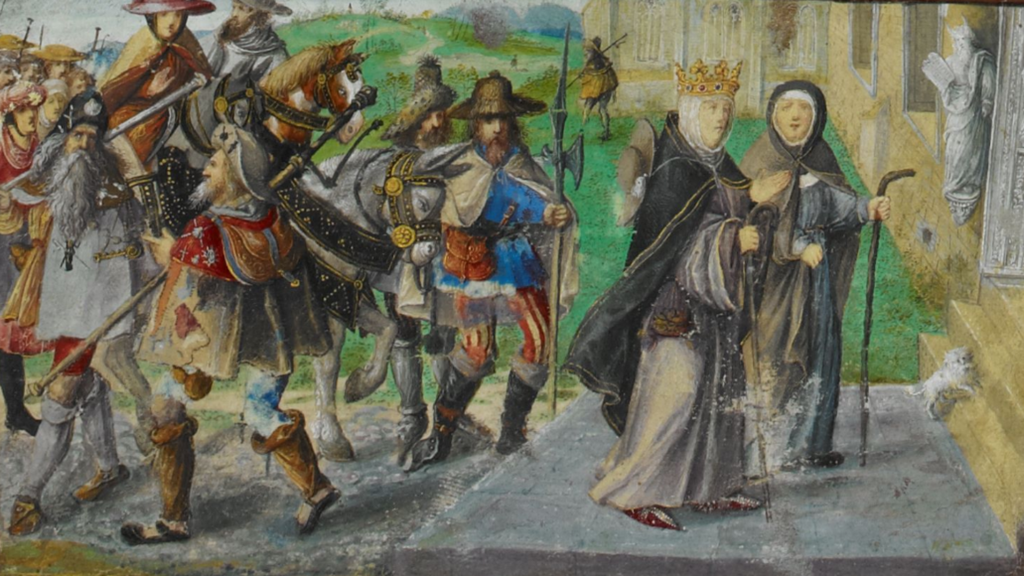
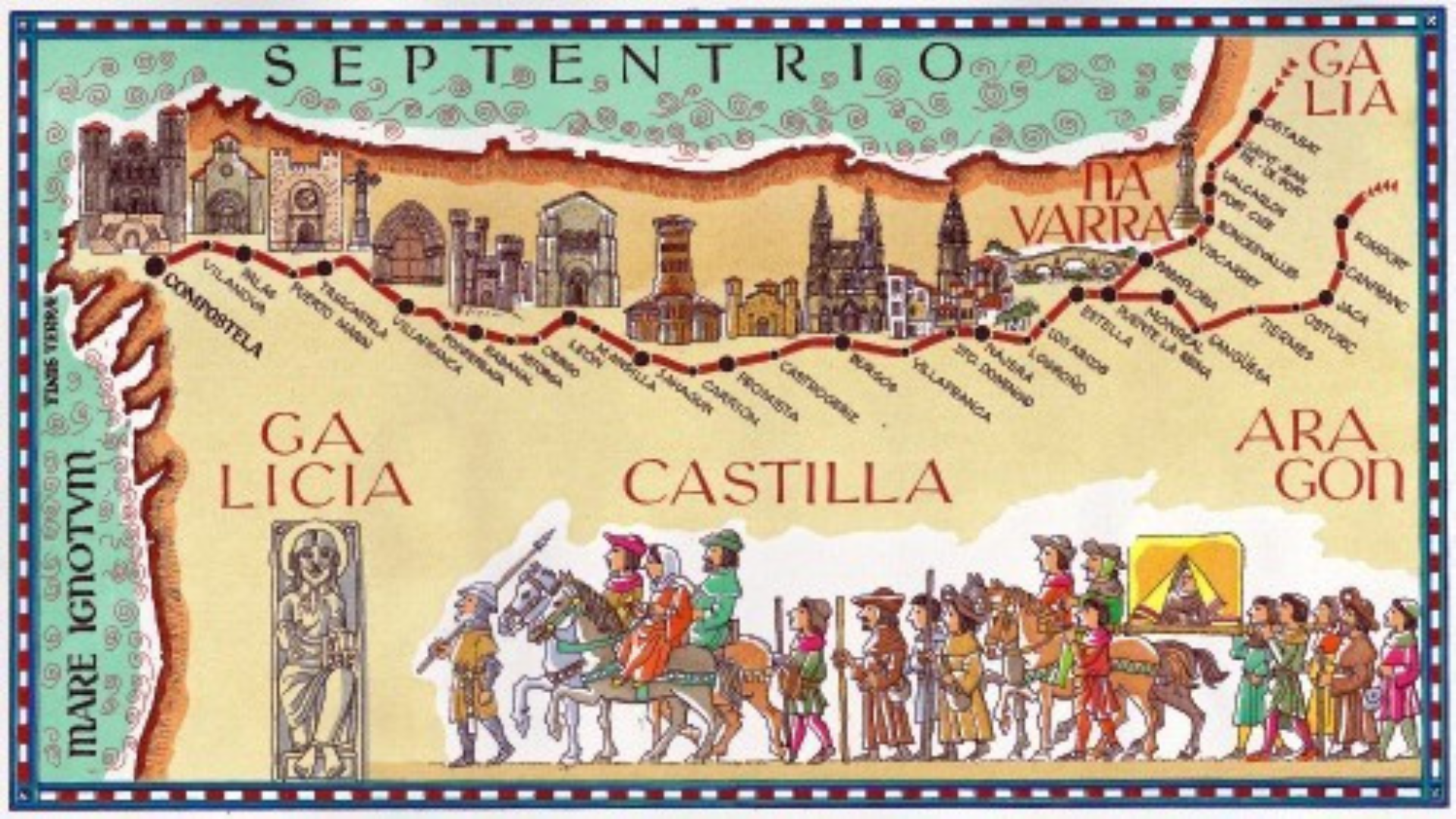
To understand the impact of the Inquisition on the Camino de Santiago, we must go back to the Middle Ages, when pilgrimages to Compostela were at their height and the Cathedral of Santiago had become one of the greatest centres of pilgrimage. However, by the end of the 15th century, the decline in pilgrimages was evident: wars, economic crises and insecurity on the roads.
The origin of the Inquisition coincides with this period of decline. The Holy Office represented a new factor of control and surveillance over the Jacobean routes. From that moment on, pilgrims arriving from other European countries would be considered potential suspects of heresy, especially if they came from Protestant areas.
The Inquisition and Jacobean pilgrimage on the Camino de Santiago during the Inquisition
The Inquisition never banned the Camino de Santiago, but it did keep a close watch on it. Controls at borders and ports increased, and pilgrims had to prove their Catholic orthodoxy in order to continue their journey. Pilgrim hostels and hospitals were monitored, through informants established by the Inquisition, and innkeepers had to report any suspicious behaviour.
In addition, the literature that pilgrims carried was also checked. Banned books were confiscated, and pilgrims who carried them could be arrested and interrogated.
The pilgrims of the Camino de Santiago during the Inquisition
Pilgrims who dared to walk the Camino de Santiago in the times of the Inquisition were in danger. Foreigners, especially those coming from Protestant countries, were viewed with suspicion and could be interrogated or arrested if their faith was doubted. False pilgrims, who used the excuse of pilgrimage for other purposes, were also persecuted.
Denunciations before the Inquisition could come from anyone. Once denounced, the pilgrim was subjected to a judicial process that could last for months, during which he could be imprisoned and subjected to interrogations. If found guilty of heresy, the consequences could be serious: from public penance to a sentence of galley slavery or the stake.
The impact of the Camino de Santiago during the Inquisition
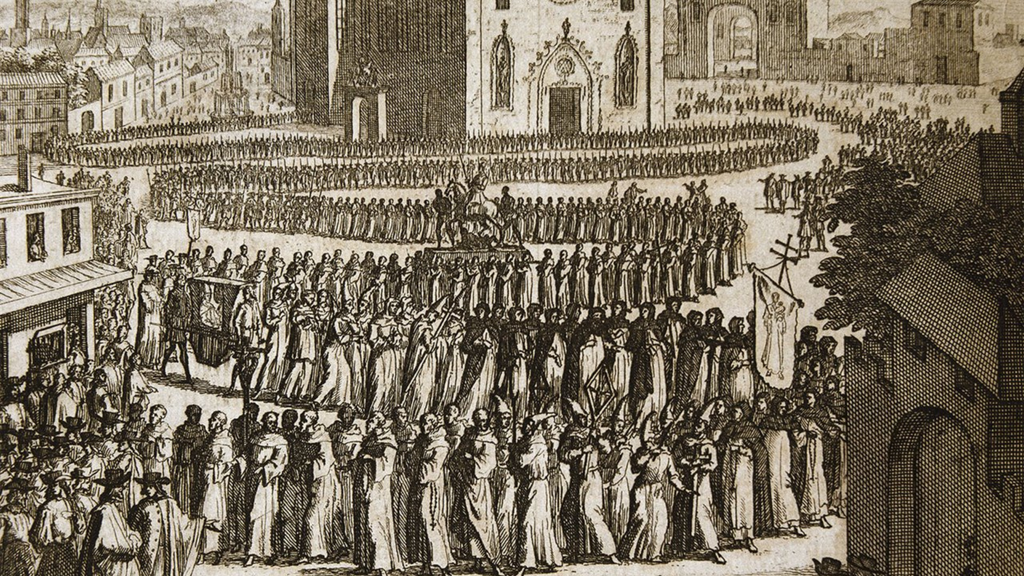
The impact of the Inquisition on the Camino de Santiago was significant. The number of pilgrims decreased during the 16th and 17th centuries, partly because of the climate of fear and suspicion generated by the Holy Office, and partly because of the decline in pilgrimages in Europe after the Protestant Reformation.
Most pilgrim hostels and hospitals closed or reduced their activity. The Jacobean routes became more unsafe. However, the Camino never disappeared completely: there were still pilgrims.
Myths and legends of the Camino de Santiago during the Inquisition
Did the Inquisition persecute pilgrims?
Not systematically. The Inquisition did not aim to persecute pilgrims; rather, it kept watch over those who might be heretics or suspected of not being practising Catholics.
The Black Legend and historical exaggeration
The Spanish Inquisition has been the subject of an intense Black Legend, fuelled by propaganda from the enemies of the Hispanic monarchy and by literary and cinematic works that have exaggerated its abuses. Although the Inquisition committed abuses and acts of cruelty, its impact on the Camino de Santiago was more limited than is sometimes believed. Most pilgrims were able to complete their pilgrimage without being bothered, and the route never ceased to be active.