Who was Alfonso II the Chaste?
Alfonso II, popularly known as the Chaste, was king of Asturias from 791 until his death in 842. He was the son of Fruela I and nephew of Alfonso I, and his reign was marked by the consolidation of the Asturian kingdom and by defence against the Muslim advance. He moved the court to Oviedo and turned the city into the political and religious centre.
Alfonso II was a very religious king and a great promoter of the Church. He maintained a close relationship with the papacy and with Charlemagne, and he promoted the construction of churches and monasteries in his kingdom.
The historical context of the first pilgrimage
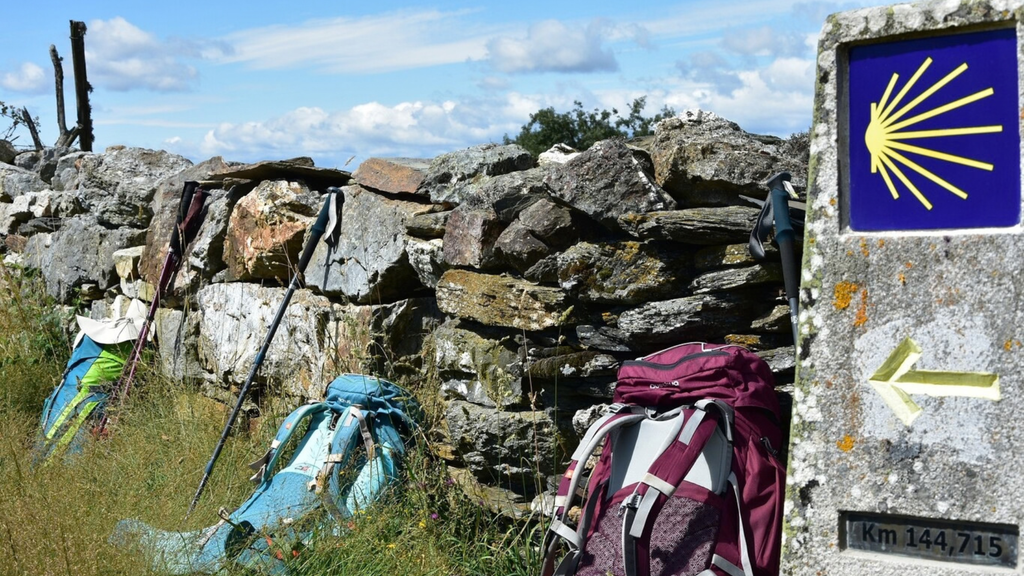
Alfonso II the Chaste made a pilgrimage to Santiago at a key moment in the history of the Iberian Peninsula. In the 9th century, the kingdom of Asturias was the only Christian stronghold against the Muslim advance on the peninsula. In this context, the discovery of the tomb of the Apostle Santiago was a great religious and political event.
According to tradition, the tomb was discovered by Bishop Teodomiro of Iria Flavia, after a divine revelation. The discovery provided the religious symbol that would legitimise the kingdom’s power and unite its people.
Why did Alfonso II the Chaste make a pilgrimage to Santiago de Compostela?
Alfonso II the Chaste made a pilgrimage to Santiago de Compostela for different reasons:
- On the religious level, the king wanted to venerate the tomb of the Apostle. Devotion to Santiago became a central element of Asturian identity and of the struggle against Islam.
- On the political level, the pilgrimage served to legitimise the king’s power and to link the kingdom of Asturias with the Apostle Santiago. Thanks to the pilgrimage, Alfonso presented himself as the protector of the faith and the heir to the apostolic tradition. His journey helped to consolidate the Jacobean route.
The itinerary of the first pilgrimage
The itinerary that Alfonso II the Chaste followed on the first pilgrimage began in Oviedo, the capital of his kingdom. He travelled a route that passed through Grado, Salas, Tineo and Pola de Allande, before entering Galicia through El Acebo. From that point, he continued through Fonsagrada, Lugo and Melide until he reached Santiago de Compostela.
This route would become the Camino Primitivo, the oldest Jacobean route. Today, there are much more heavily travelled routes because of its difficulty.
The arrival of Alfonso II the Chaste in Santiago de Compostela
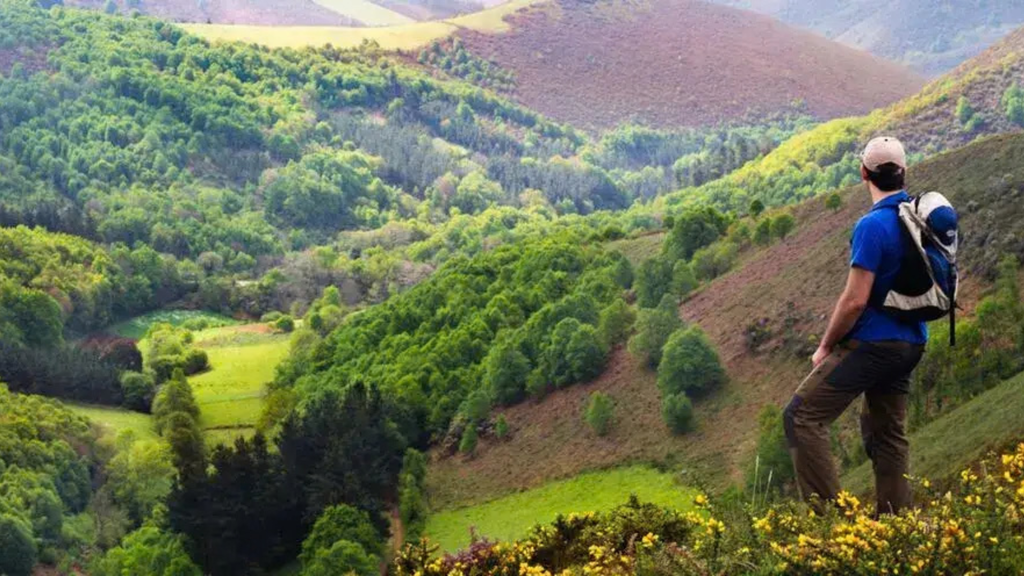
On his arrival in Santiago de Compostela, Alfonso II was received by Bishop Teodomiro and by the authorities of the Compostelan church. After his arrival, he visited and venerated the tomb of the Apostle Santiago. According to legend, the king was impressed by the discovery and ordered the construction of a basilica to guard the tomb.
The first basilica, in the pre-Romanesque style, was the origin of the current Cathedral of Santiago. The pilgrimage of Alfonso II the Chaste marked the beginning of the Jacobean cult, and he is considered the first pilgrim in history.
Questions about Alfonso II the Chaste and the first pilgrimage
Was he really the first pilgrim in history?
Yes, according to the chronicles of the time, Alfonso II the Chaste was the first pilgrim to travel to Santiago de Compostela to venerate the tomb of the Apostle. His pilgrimage, made in the 9th century, is the origin of the Camino de Santiago as we know it.
What is its connection with the Camino Primitivo?
Alfonso II the Chaste travelled the itinerary that we know today as the Camino Primitivo, the oldest route to Santiago. He set out from Oviedo and crossed Asturias and Galicia until he reached Compostela. That is why the Camino Primitivo is considered the original camino, the one followed by the first pilgrim.