Why did taxes exist on the Camino de Santiago in ancient times?
Taxes on the Camino de Santiago in ancient times existed because pilgrimage was an economic activity. The constant flow of pilgrims generated wealth, and various authorities (kings, lords and religious orders) saw a good opportunity to finance their projects and maintain their territories. The taxes served to maintain the roads, bridges and pilgrim hospitals.
In addition, collecting taxes on the Camino de Santiago implied having authority over the route and over those who travelled it. Kings granted collection privileges to lords and military orders as a reward for their services, and these used the income to finance their own activities.
The main taxes on the Camino de Santiago in ancient times
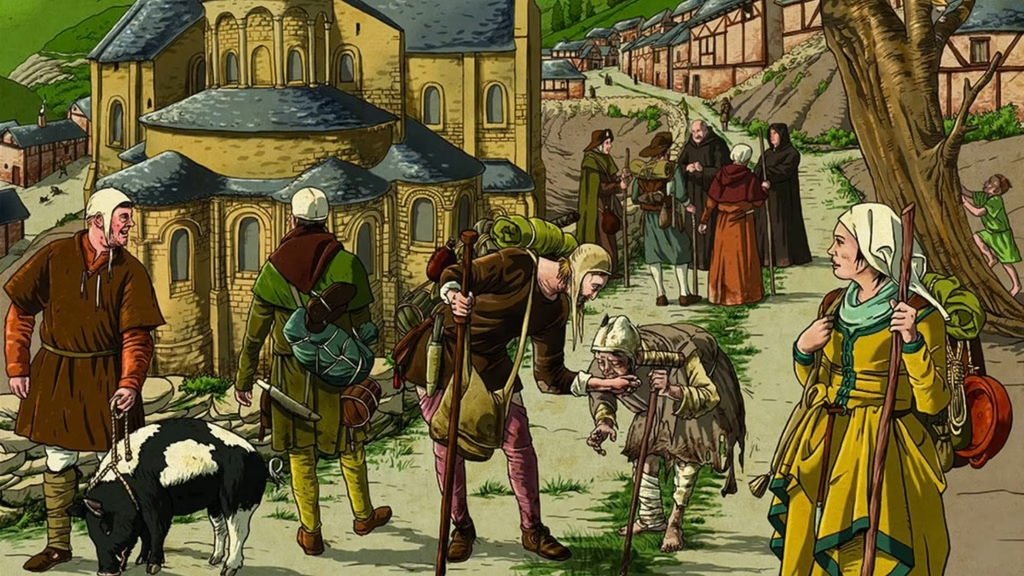
In ancient times, on the Camino de Santiago, pilgrims had to face different taxes and fees. The most common ones:
- The portazgo (toll): The most common tax. It was charged for crossing bridges, city gates and various roads. It varied depending on the place and the type of goods or person.
- The peaje (toll): Similar to the portazgo, with the difference that it was applied to transit along certain routes or roads.
- The tithe: A tenth of one’s income, paid to the Church. It affected pilgrims who traded or worked during the pilgrimage.
- Compulsory alms: In various hospitals and hostels, financial or in-kind help was expected in exchange for accommodation.
- Ferry rights: Payment for crossing rivers by boat or raft, when there were no bridges.
- Mill rights and other services: Fees for the use of local infrastructures.
Who collected taxes on the Camino de Santiago in ancient times?
Taxes on the Camino de Santiago in ancient times were collected by a range of authorities: kings, lords, military orders, monasteries, bishops and brotherhoods. Each had its own collection rights, granted by royal privilege or by custom.
- Kings and lords collected the portazgos and tolls in their territories, and used that income to finance their armies and their courts.
- The military orders (that of Santiago or that of the Temple) controlled collection on the sections of the route under their jurisdiction.
- Monasteries and bishops collected tithes and alms.
- Brotherhoods managed the fees of the hospitals and hostels that cared for pilgrims.
Exemptions and privileges of pilgrims
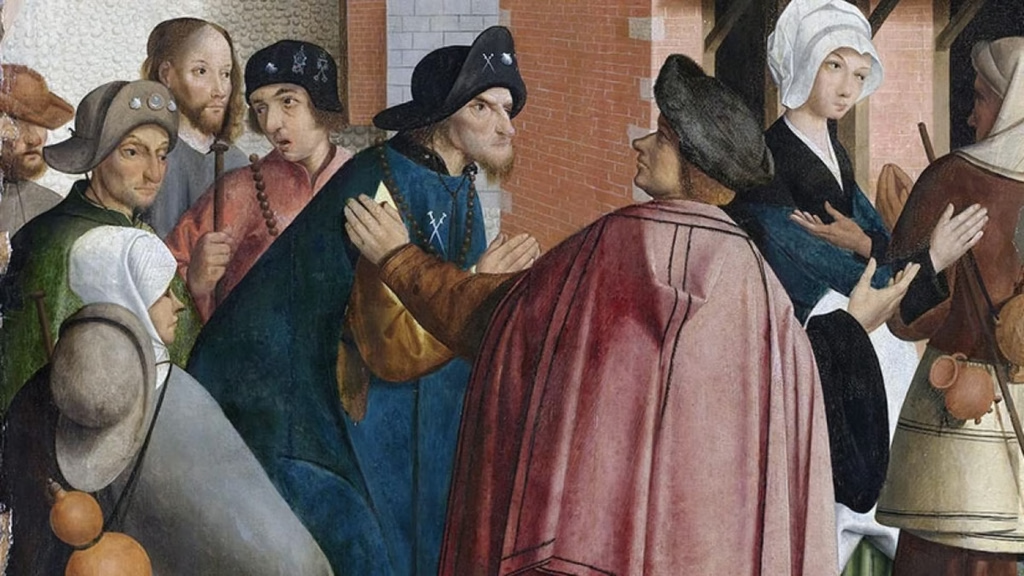
Not all pilgrims paid the same taxes; there were a series of exemptions and privileges that freed some pilgrims from certain fees:
- Letters of recommendation: Documents issued by bishops, abbots or kings that exempted the pilgrim from paying portazgos and tolls.
- Royal safe-conducts: Privileges granted by kings that guaranteed free transit and exemption from taxes.
- The status of poor pilgrim: Pilgrims without resources were exempt from many fees, especially those of hostels and hospitals.
- The privileges of the military orders: Some orders had the right to collect or exempt taxes in their territories.
- Indulgences and bulls: Papal documents that granted spiritual graces and, sometimes, economic exemptions.
The evolution of taxes on the Camino de Santiago
Over time, taxes on the Camino de Santiago evolved. In the Middle Ages, the tax system was complex and varied. From the Early Modern era onwards, the kings gradually centralised tax collection and reduced seigneurial privileges.
In the 18th century, with the arrival of the Bourbons, tax reforms were promoted to simplify and reduce the number of portazgos and tolls. By the 19th century, the disentailment and the abolition of the seigneurial system put an end to most of the taxes. Pilgrimage was liberalised, and pilgrims were able to travel the route without the tax burdens of earlier times.