What is the French Way?
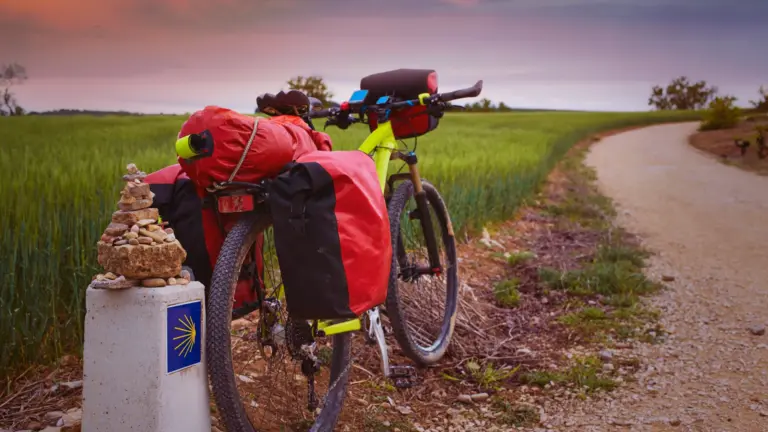
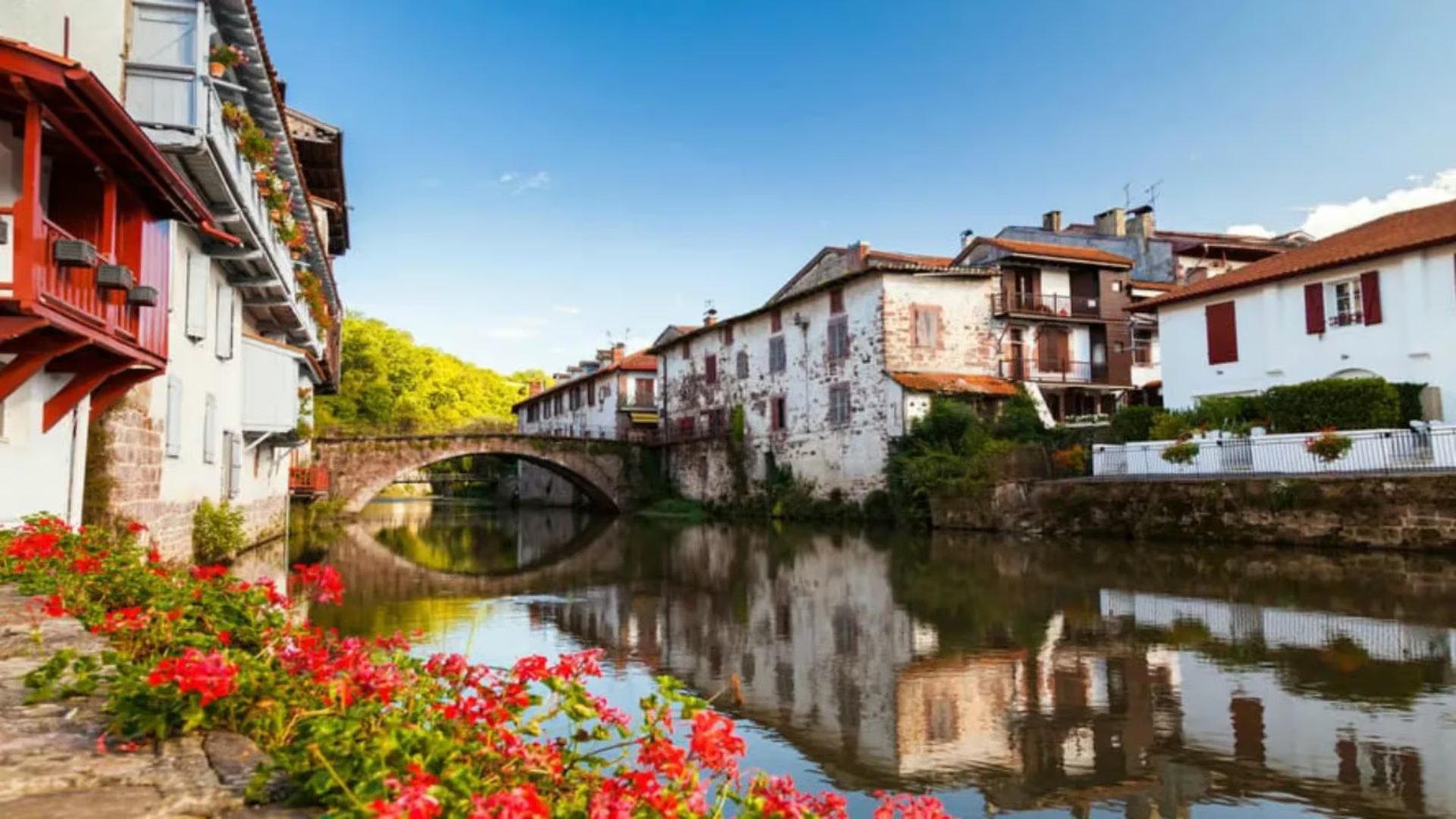
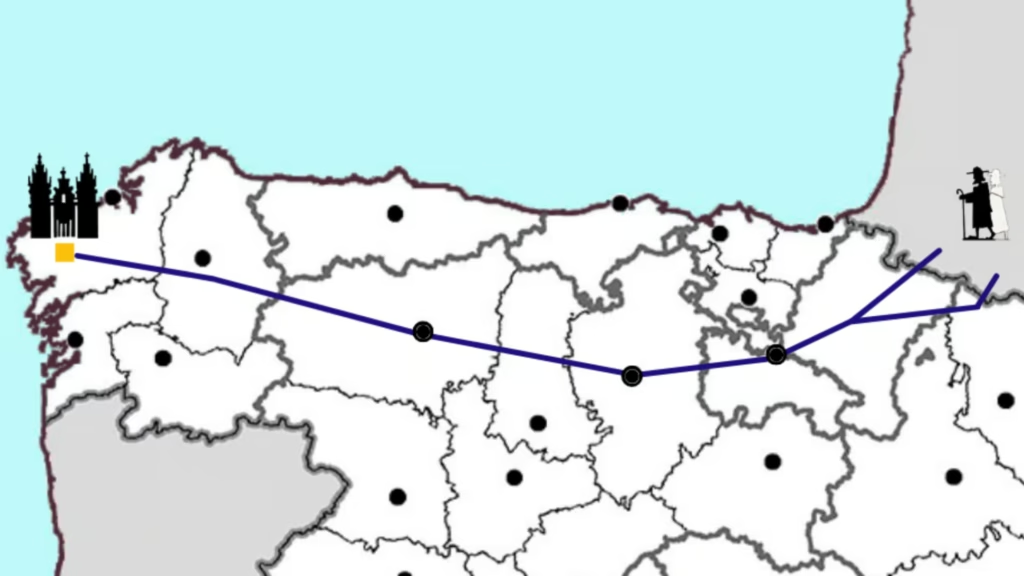
The French Way is the main Jacobean route for pilgrimages to Santiago de Compostela. This route crosses the north of the Peninsula from east to west, starting in the French town of Saint-Jean-Pied-de-Port (or in the Navarrese town of Roncesvalles).
The popularity of this route is due to its landscape diversity: from the Pyrenees, through the vineyards of La Rioja and the endless Castilian Plateau, to ending in the green Galicia. This variety makes each day different from the previous one.
What is the historical origin of the French Way?
The origin of the French Way dates back to the 11th and 12th centuries, following the discovery of the tomb of the Apostle James. After the advance of the Reconquista and the securing of territories south of the Cantabrian mountain range, different monarchs such as Sancho III of Navarre and Alfonso VI of León promoted this itinerary, increasing the construction of bridges, hospitals, and monasteries.
This route was consolidated with the writing of the Codex Calixtinus in the 12th century. This manuscript is considered the world’s first tourist and logistics guide, meticulously detailing each stage, establishing a route that has remained unchanged to this day.
Route, distances, and kilometers: Where does the Way start and where does it pass through?
In order to properly plan your journey, it is necessary to know the route; this path crosses the regions of Navarre, La Rioja, Castile and León, and Galicia. It is a route that has 32 traditional stages on foot:
- Stage 1: Saint Jean Pied de Port – Roncesvalles (26 km)
- Stage 2: Roncesvalles – Zubiri (21 km)
- Stage 3: Zubiri – Pamplona (20 km)
- Stage 4: Pamplona – Puente la Reina (24 km)
- Stage 5: Puente la Reina – Estella (22 km)
- Stage 6: Estella – Los Arcos (21 km)
- Stage 7: Los Arcos – Logroño (28 km)
- Stage 8: Logroño – Nájera (29 km)
- Stage 9: Nájera – Santo Domingo de la Calzada (21 km)
- Stage 10: Santo Domingo de la Calzada – Belorado (22 km)
- Stage 11: Belorado – San Juan de Ortega (24 km)
- Stage 12: San Juan de Ortega – Burgos (26 km)
- Stage 13: Burgos – Hornillos del Camino (21 km)
- Stage 14: Hornillos del Camino – Castrojeriz (20 km)
- Stage 15: Castrojeriz – Frómista (25 km)
- Stage 16: Frómista – Carrión de los Condes (19 km)
- Stage 17: Carrión de los Condes – Terradillos de los Templarios (26 km)
- Stage 18: Terradillos de los Templarios – El Burgo Ranero (30 km)
- Stage 19: El Burgo Ranero – León (37 km)
- Stage 20: León – San Martín del Camino (25 km)
- Stage 21: San Martín del Camino – Astorga (24 km)
- Stage 22: Astorga – Foncebadón (26 km)
- Stage 23: Foncebadón – Ponferrada (27 km)
- Stage 24: Ponferrada – Villafranca del Bierzo (24 km)
- Stage 25: Villafranca del Bierzo – O Cebreiro (28 km)
- Stage 26: O Cebreiro – Triacastela (21 km)
- Stage 27: Triacastela – Sarria (18 km)
- Stage 28: Sarria – Portomarín (22 km)
- Stage 29: Portomarín – Palas de Rei (25 km)
- Stage 30: Palas de Rei – Arzúa (29 km)
- Stage 31: Arzúa – O Pedrouzo (19 km)
- Stage 32: O Pedrouzo – Santiago de COmpostela (20 km)
What are the infrastructures and hostels like on the French Way?
The French Way has the most complete infrastructure network in Europe. Every few kilometers you will find towns with all the necessary services, providing great peace of mind when tackling the route.
Its biggest drawback is the overcrowding of pilgrims, especially in summer. Competition for beds in public hostels is excessive, so it is recommended to book in advance at private accommodations if you are traveling in high season.
Places and monuments along the French Way
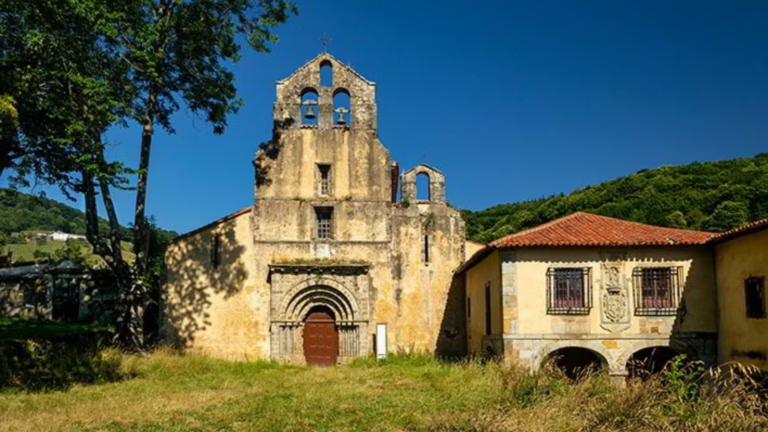
The French Way is a museum of Romanesque, Gothic, and Baroque art. Every village along this route has its own charm, but we can highlight several monuments and historical landmarks:
- Collegiate Church of Roncesvalles (Navarre): A monumental complex in the French Gothic style, located upon crossing the Pyrenees.
- Cathedral of Santa María in Pamplona (Navarre): A Neoclassical-style cathedral that contains a spectacular Gothic cloister, considered one of the finest in Europe.
- Puente la Reina (Navarre): A Romanesque bridge, built in the 11th century, to facilitate the passage of pilgrims.
- Cathedral of Santo Domingo de la Calzada (La Rioja): Famous for housing a live chicken coop.
- Cathedral of Burgos (Castile and León): A European Gothic-style cathedral and a UNESCO World Heritage Site. It is essential to see its façade and the tomb of El Cid.
- Cathedral of León (Castile and León): Known as the Pulchra Leonina, world-famous for its over 1,800 square meters of stained glass window.
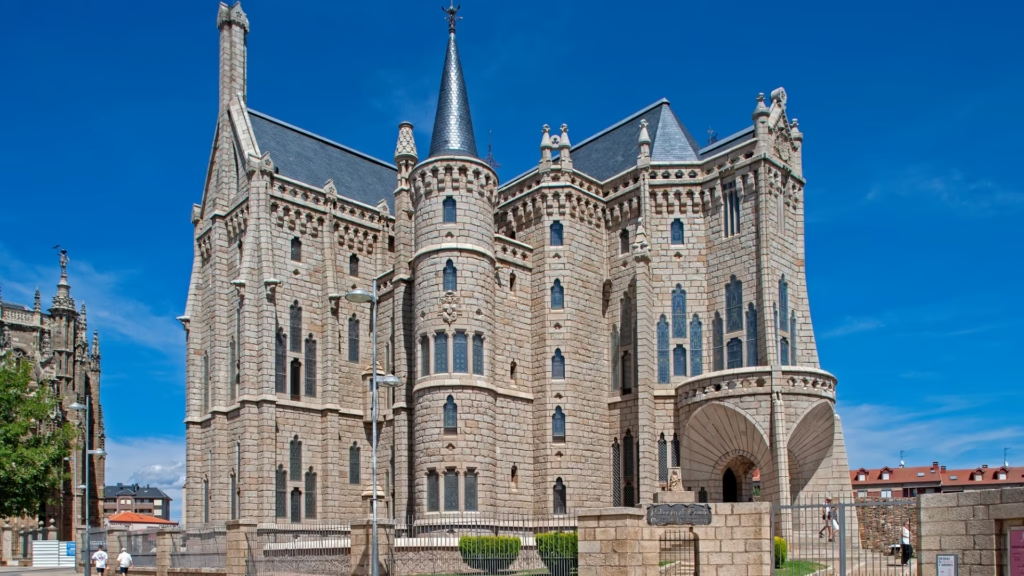
- Episcopal Palace of Astorga (Castile and León): A palace designed by Antoni Gaudí, considered an architectural gem.
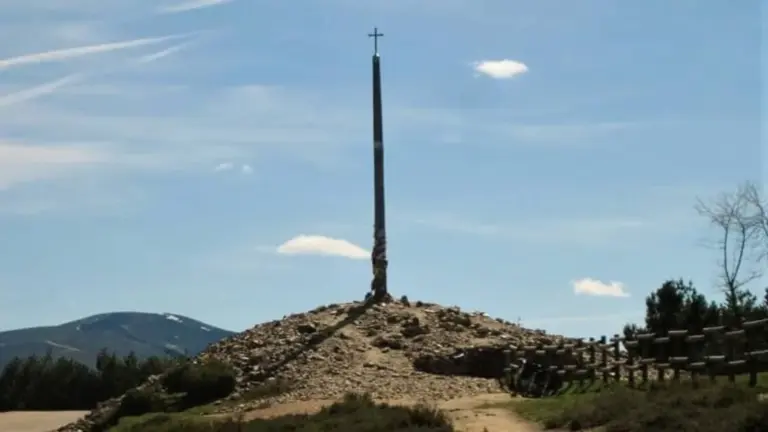
- The Iron Cross (Castile and León): The highest and most mystical point on the Way, where tradition requires you to throw a stone brought from your place of origin.
- Templar Castle in Ponferrada (Castile and León): A 12th-century fortress that served as protection for pilgrims.
- Palloza of O Cebreiro (Galicia): Unique, circular pre-Roman dwellings with thatched roofs that withstand the harsh climate.