What is a hospitalero on the Camino de Santiago?
The term “hospitalero” comes from the word “hospital”, and refers to the person in charge of attending to the pilgrims who arrive at the hostel. In the context of the Camino de Santiago, it is the volunteer person who collaborates in the maintenance and care of the pilgrim hostel, providing welcome, help and information.
Being a hospitalero is a vocation; it is an altruistic, selfless and human task, carried out “gratis et amore” (for free and out of love). The hospitalero is responsible for transmitting the values of the Camino de Santiago: hospitality, brotherhood and solidarity.
Historical origin of the hospitaleros on the Camino de Santiago
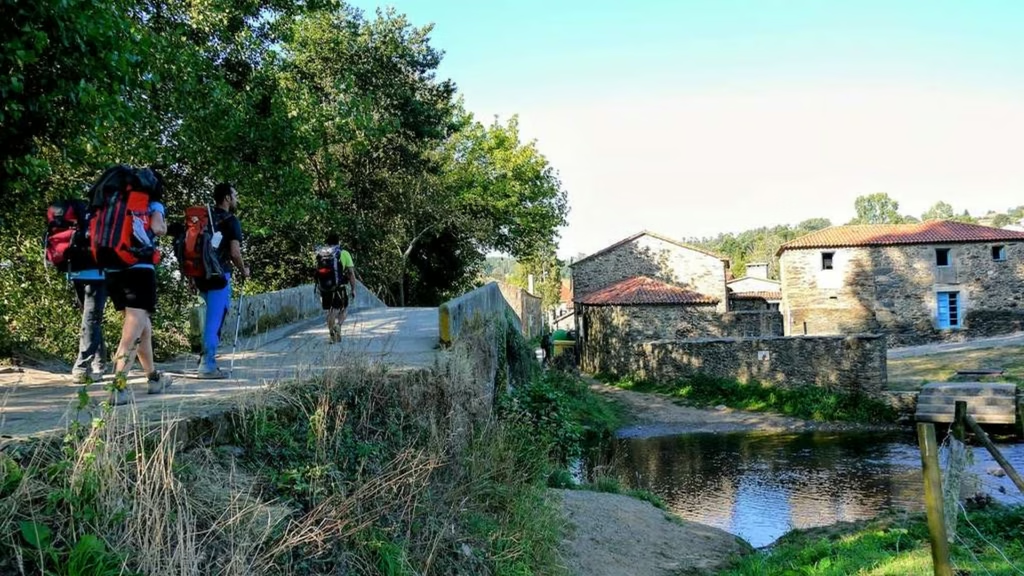
The figure of the hospitalero on the Camino de Santiago originates in the Middle Ages, when the first pilgrim hospitals emerged on the Jacobean routes. These institutions offered beds, food and basic care to the pilgrims who travelled the Way to Compostela. The hospitalero was in charge of receiving and attending to the pilgrim.
In medieval hospitals, it was common for a male-female pair to work: the hospitalero attended to the men and the hospitalera to the women. Currently, the work of the hospitaleros continues with the same spirit of welcome and service.
Functions and work of the volunteer hospitalero
The functions of the hospitalero in the hostels of the Camino de Santiago are varied and demanding. It is a job that requires dedication and commitment.
- Welcome and register the pilgrim: They stamp the credential and assign a place to spend the night.
- Inform and guide: They resolve doubts about the route, accommodation and monuments in the area.
- Maintain the hostel: Cleaning and organising, ensuring that the facilities are in good condition.
- Prepare meals: Cook dinner and breakfast.
- Provide spiritual accompaniment: Offering listening and support, in Christian welcome hostels, inviting prayer.
- Foster coexistence: Creating an atmosphere of respect and community among pilgrims.
How to become a volunteer hospitalero?
Emblematic hospitaleros of the Camino de Santiago
Throughout history, there have been hospitaleros who have become emblematic figures of the Camino de Santiago.
Tomás Martínez de Paz, the hospitalero of Manjarín
Tomás Martínez de Paz was a hospitalero who settled in the deserted village of Manjarín, at the top of the Foncebadón pass, in the early 90s. There, in his humble hut, he offered coffee, broth and a bed to pilgrims on one of the most demanding stretches of the French Way. He was known as “the last Templar”; his bearded and austere figure became an essential character. He passed away in January 2026, leaving an indelible mark on the Camino de Santiago.
Abad Galindo of Santa María de Salas
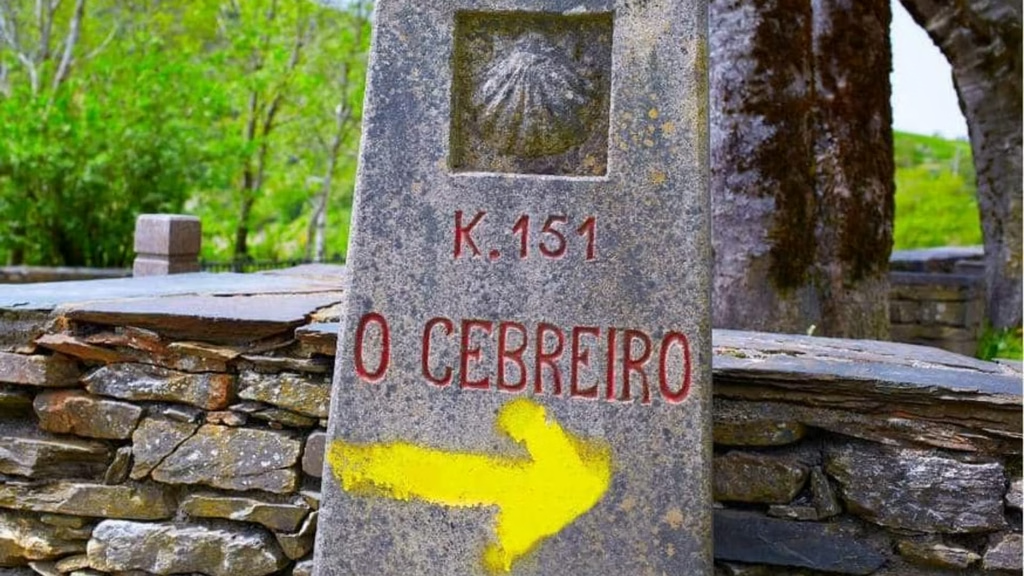
Abbot Galindo was the first documented hospitalero in history. In the Middle Ages, the abbot of the monastery of Santa María de Salas, in the province of Huesca, founded a hospital for pilgrims on the Aragonese Way, becoming a benchmark.
Other hospitaleros who have made history
- Jesús Arias Jato, born in Villafranca del Bierzo, is another famous hospitalero. His family has been linked to the welcoming of pilgrims for generations, and he has dedicated his life to keeping Jacobean hospitality alive.
- José Luis Antón, a hospitalero at the parish hostel of Tosantos (Burgos) for more than 25 years, popular for offering a simple and spiritual welcome.
Frequently asked questions about the hospitaleros of the Camino de Santiago
How long do you dedicate to being a hospitalero?
Volunteers usually dedicate a week or a fortnight to this work. The hostels of the Spanish Federation work by weeks (from Saturday to Saturday) or by natural fortnights (from the 1st to the 15th and from the 16th to the 30th/31st of each month).
Is payment received for being a hospitalero?
No. The hospitalero is a volunteer who carries out their work in an altruistic and selfless manner. They do not receive financial remuneration. Their reward is the experience of serving and the contact with pilgrims.
Where can you take the hospitaleros course?
The Spanish Federation of Associations of Friends of the Camino de Santiago organizes courses periodically in different locations, such as Grañón (La Rioja), León, Madrid, Valladolid or Valencia. There are also specific courses, such as the Spanish for hospitaleros course at the University of Santiago de Compostela and training programmes from local associations.