The origins and discovery of the tomb (9th century)
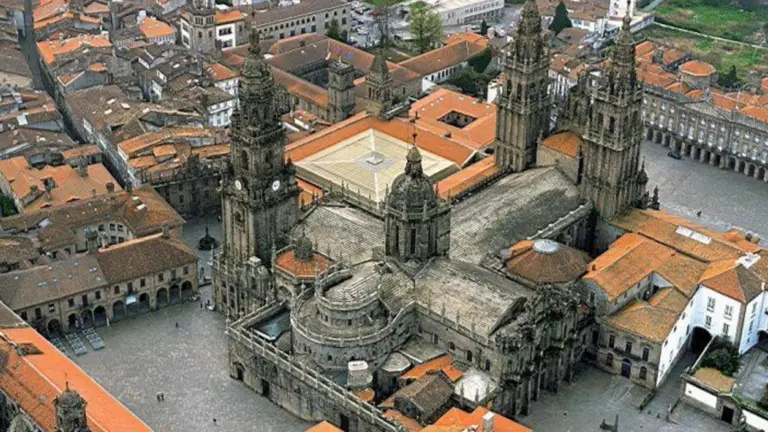
The historical evolution of the Camino de Santiago begins in the 9th century, a period marked by the advance of the Reconquista and the need for unity among the Christian kingdoms. According to legend, it was the hermit Pelagius who, in the forest of Libredón, discovered the tomb where the remains of the Apostle James the Greater rested.
The discovery was received with excitement by King Alfonso II the Chaste, monarch of Asturias, who traveled from Oviedo to the site of the find. This journey is considered the first documented pilgrimage, giving rise to the Primitive Way. Furthermore, the discovery of the Apostle became a symbol of political and religious unity against the Muslim occupation of the Peninsula.
The medieval golden age and the consolidation of the routes (10th–12th centuries)
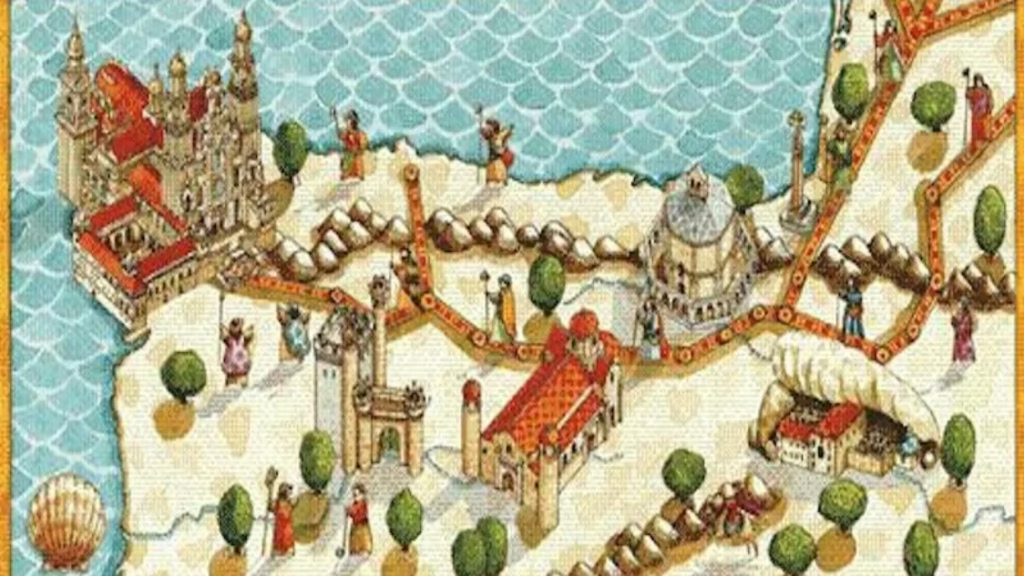
Between the 10th and 12th centuries, the Camino de Santiago was consolidated as the “main highway” of medieval Europe. The Navarrese, Castilian, and Leonese kings, aware of the strategic importance of the route, promoted security and infrastructure along the French Way, which became the main axis of the pilgrimage.
During this period, the Camino de Santiago was enriched by the influence of the Cluniac monks and Romanesque architecture. The most notable event of this era is the drafting of the Codex Calixtinus in the 12th century, a manuscript that functioned as a medieval travel guide. At this time, Santiago was equated in importance with Rome and Jerusalem.
The splendor of pilgrim and monastic infrastructure (13th–15th centuries)
The consolidation of the Camino de Santiago came with the creation of a complex and efficient infrastructure that provided safe transit for thousands of people. During the 13th to 15th centuries, numerous hospitals and hostels emerged, managed by religious orders and pilgrim confraternities that offered shelter and medical assistance.
This system promoted the survival of pilgrims and the economic development of the population centers located along the route. Various cities, such as Burgos, León, and Santo Domingo de la Calzada, prospered thanks to the services offered to pilgrims. During this period, the logistics of the pilgrimage reached a level of sophistication that would not be seen again until recent times.
The decline, wars, and near total oblivion (16th–19th centuries)
During the 16th century, religious crises such as the Protestant Reformation, constant epidemics, and armed conflicts reduced the flow of pilgrims. The Church stopped promoting the route with the intensity of previous centuries, and the pilgrimage was dismissed by some intellectuals as superstition, causing the Way to fall into oblivion.
During this period, the Camino de Santiago ceased to be a great European artery and became a series of local paths. Many hospitals and welcoming infrastructures closed their doors, and bridges fell into disuse.
The modern resurgence and heritage recovery (20th century)
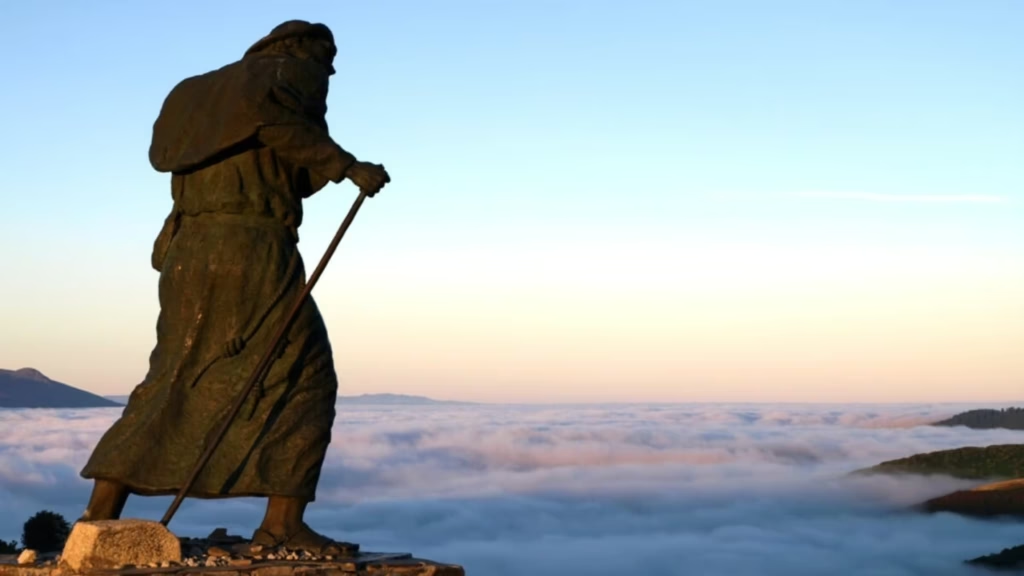
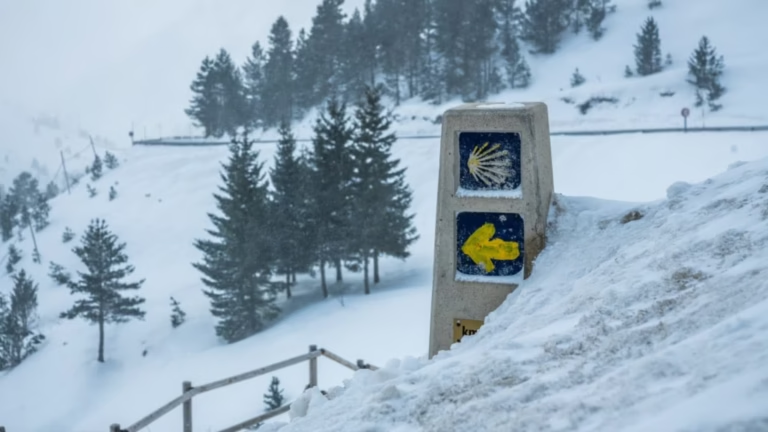
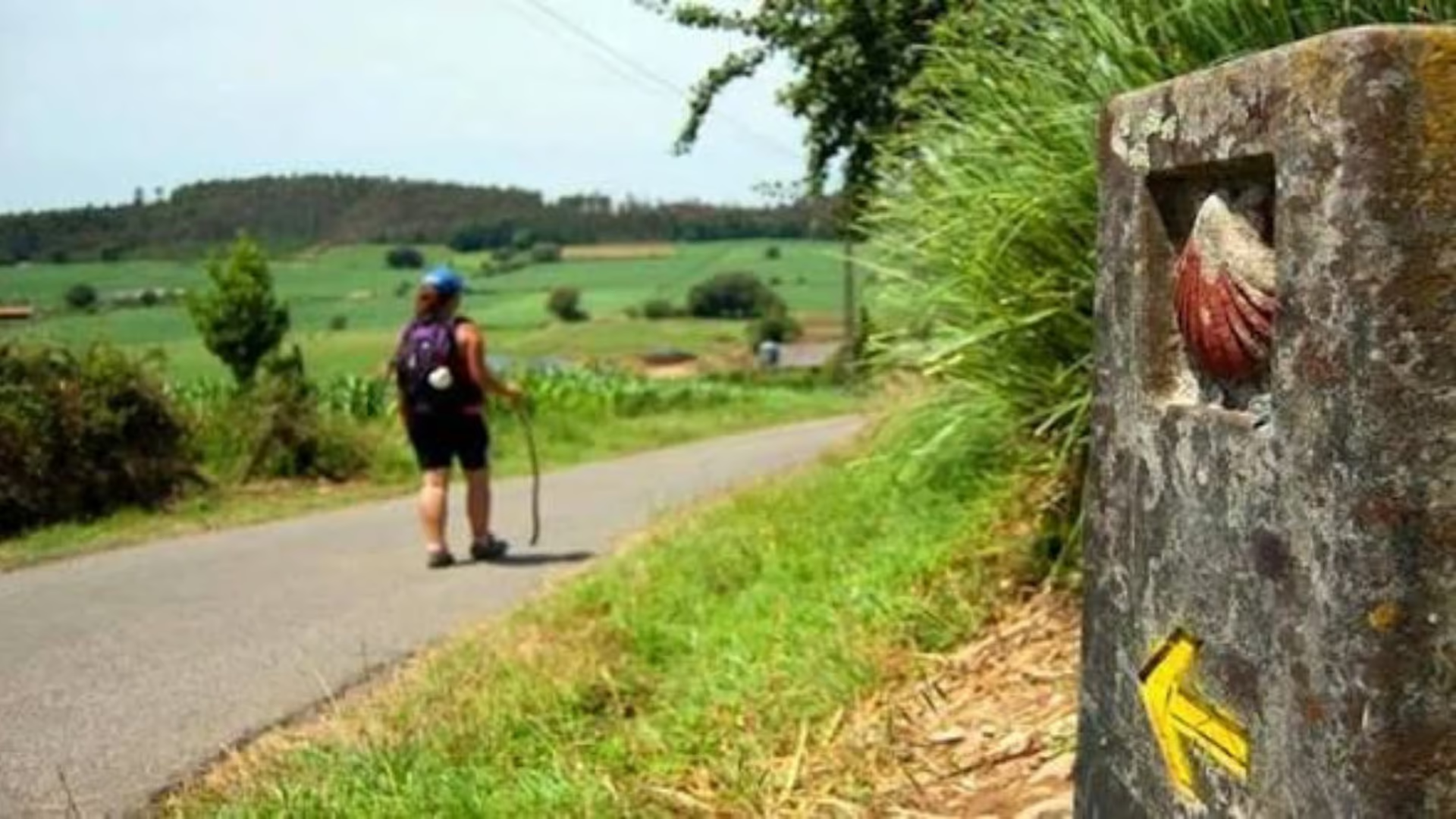
The rebirth of the Camino de Santiago was the result of a heritage recovery effort. In the mid-20th century, work began to rescue the route from oblivion. The name of Elías Valiña, the parish priest of O Cebreiro, stands out; in 1980, he began painting the iconic yellow arrows, a gesture that made it possible to redefine an itinerary that had been lost.
This effort culminated in milestones such as the declaration of the French Way as the First European Cultural Itinerary by the Council of Europe in 1987.
The contemporary explosion and tourist massification (late 20th and 21st centuries)
The turning point was the Holy Xacobean Year of 1993. Massive institutional promotion turned the Camino de Santiago into a global brand. The State and regional administrations intervened in the public hostel network, facilitating access. The Camino de Santiago became an experience within reach of millions of people.
This democratization of travel brought a change in the profile of pilgrims: the profile shifted towards spiritual interest, sporting challenge, the search for disconnection, and a desire for cultural tourism. The UNESCO World Heritage designation consolidated this stage, transforming it into an undeniable economic and social route.
The digital era, cycle-pilgrimage, and the Camino in the 21st century
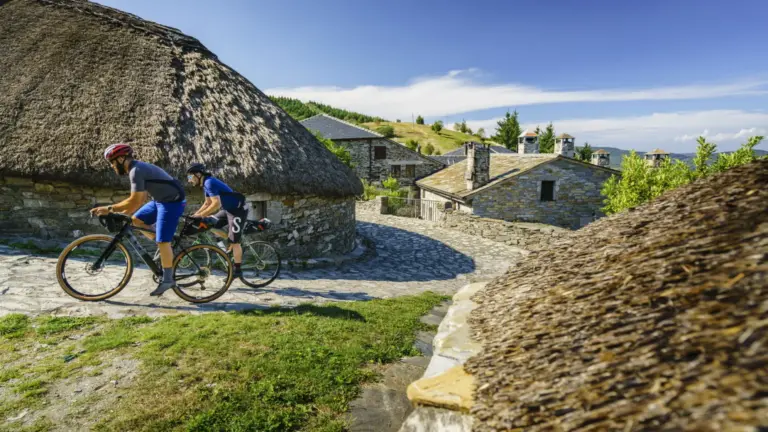
Currently, the Camino de Santiago is experienced with the influence of technology and specialization. Pilgrims are guided by mobile apps, book accommodation online, and have their credential digitized. In this context, cycle-tourism has gained a strong prominence.
At caminoapedales.com we have witnessed this evolution: the bicycle allows many to rediscover the route as a form of active and sustainable tourism. The challenge for this era is to maintain the balance, the preservation of heritage, and respect for the original values of the pilgrimage.