What did pilgrims eat in the Middle Ages?
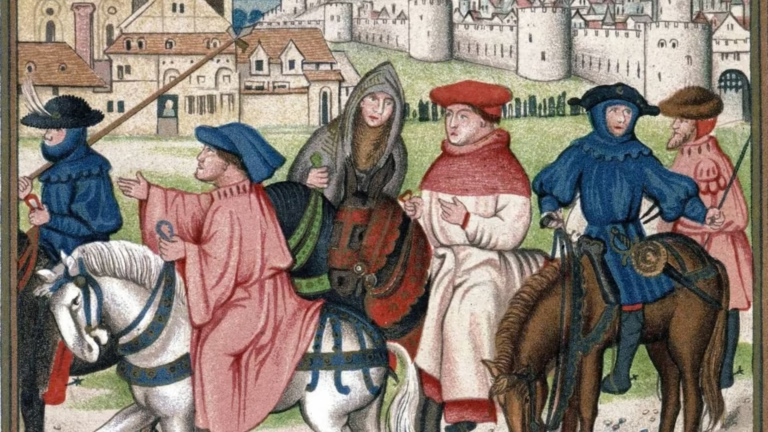
The roots of the gastronomy of the Camino de Santiago date back to the Middle Ages. In that era, pilgrims did not have the food variety available today, but their diets were adapted to long walks and the resources available in each area. Eating was a necessity, but also a social and spiritual act shared in hostels and monasteries.
Pilgrims’ broth or “sopa boba”: the daily staple
“Sopa boba” was the most common dish in pilgrim hospitals. It consisted of a thick broth made with stale bread, water, vegetables, and only occasionally some meat or fat. The hospitaleros distributed the dish to pilgrims arriving from a tough stage, hence its name: “sopa boba” (literally “simple soup”) because it was given “for the love of God.”
Bread, cheese, and wine: the staples of the medieval diet
Bread was the most consumed food among pilgrims; it was carried in the backpack and dipped in wine or soup to soften it. Cheese, specifically sheep or goat cheese, was a source of protein that could be preserved without any problem for several days.
On the other hand, wine not only accompanied meals, but also served as a safe way to stay hydrated, as water was not always drinkable.
Main dishes of the Camino de Santiago
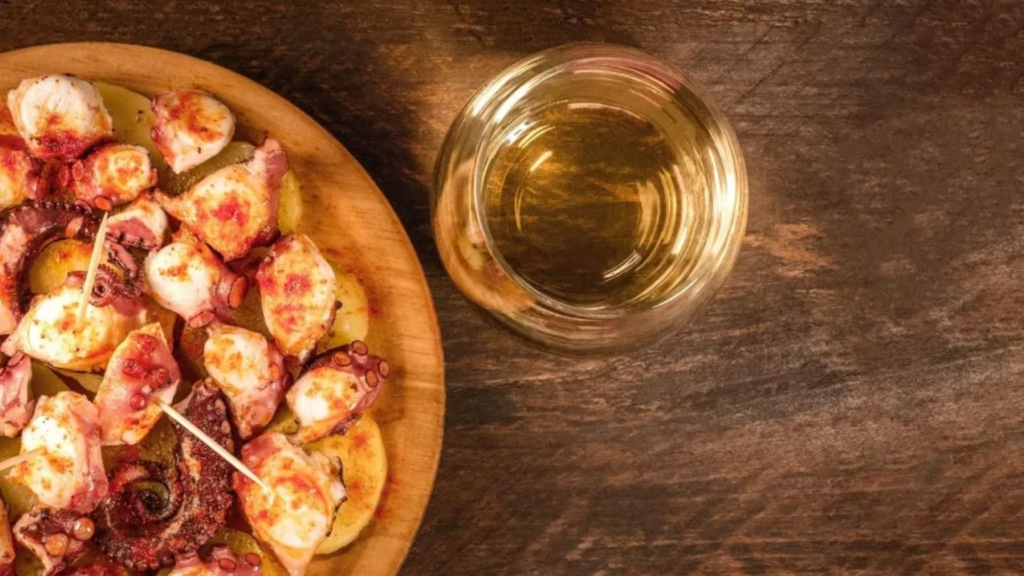
The main dishes of the Camino de Santiago are very varied; each region has developed dishes that have accompanied pilgrims for centuries.
Pulpo a feira: the king of Galician cuisine
Pulpo a feira is the most popular dish in Galicia. It is cooked in a copper pot, cut with scissors, and served on cachelos (boiled potatoes) with olive oil, sweet or spicy paprika, and coarse salt. You will find this dish everywhere in Galicia, but it is especially famous in Melide (French Way) and in Ourense (Via de la Plata).
Caldo gallego: the comforting spoon dish
Caldo gallego is Galicia’s traditional soup. It is made with grelos (turnip greens), potatoes, white beans, and sometimes pork bones or lacón (cured pork shoulder). It is a hearty dish, especially appreciated on winter days. You can find it in any Galician restaurant, but especially in the rural areas of the French Way and the Northern Way.
Galician empanada: the perfect snack for the backpack
The Galician empanada can be described as a pastry filled with tuna, cod, meat, or vegetables. It is an ideal snack to carry in your backpack and eat during the stage. You can find it in any bakery in Galicia, but the most famous ones are from Allariz (Ourense) and the Mondoñedo area (Northern Ways).
Bacalao ajoarriero: a muleteers’ tradition
Bacalao ajoarriero is a typical dish from the León area and the Via de la Plata. It is made with shredded cod, bread, garlic, olive oil, and paprika. The origin of this dish lies with the muleteers, who transported goods and needed dishes that would keep well without spoiling. You can find it in restaurants in León, Astorga, and along the routes that cross Castile and León.
Cocido maragato: the hearty Leonese dish
Cocido maragato originates from the Maragatería region (León) and is served in the reverse order of other stews: first the meats, then the chickpeas, and finally the soup. It is recommended to try it in Astorga and nearby villages. It is not a light dish, but after a long day, it is ideal.
Fabada asturiana: energy for the Northern Way
Fabada asturiana is the most famous dish on the Northern Way, made with fabes (Asturian beans), compango (chorizo, blood sausage, and cured pork shoulder), and saffron. You will find this dish in any restaurant in Asturias, especially in towns such as Avilés, Gijón, or Villaviciosa.
Caldo verde: the soup of the Portuguese Way
Caldo verde is a traditional soup from Portugal. It contains potatoes, onion, garlic, and strips of turnip greens or collard greens cut into thin ribbons. It is a hot and nutritious dish, ideal for starting the day. You can find it in any Portuguese restaurant, but especially in areas near the Miño River and in the towns of Valença and Tui.
Desserts and sweets of the Camino de Santiago
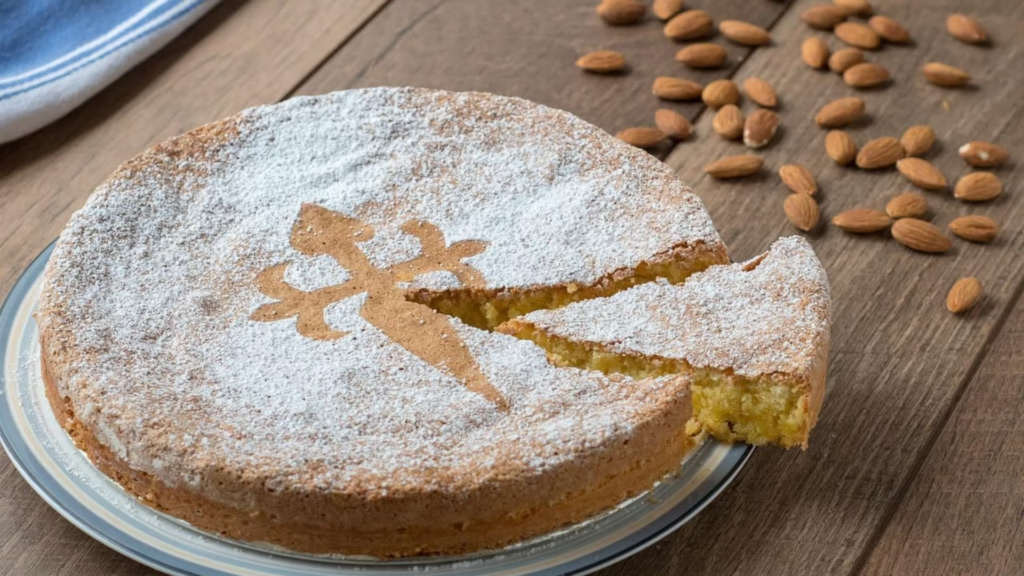
Tarta de Santiago: the most famous dessert
Tarta de Santiago is the most famous dessert in Galicia. It is made with ground almonds, eggs, sugar, and lemon, and is decorated with icing sugar in the shape of the Cross of Saint James. Its moist texture and mild flavor make it the perfect ending to any meal.
Melindres and ricos from Melide: sweets with history
Melindres are a type of elongated sponge cake that melts in your mouth, very popular in Melide. On the other hand, ricos are fluffier and resemble a small milk bread. Both options are perfect to accompany coffee or sweet wine.
Samos sponge cakes: monastic tradition
The monastery of Samos, in Lugo, is famous for its sponge cakes. The monks make the sponge cakes by hand, following recipes that have been passed down from generation to generation. It is a tender, aromatic sweet that melts in your mouth.