What is the Künig Way?
The Künig Way is a historical variant of the French Way that was described by the German monk Hermann Künig von Vach in his pilgrim guide “Die walfart und Straß zu sant Jacob.” This work was published in 1495 and is considered the first pilgrim guide in history; it was so successful that it was published up to five times.
The German monk traveled more than 4,000 kilometers from Switzerland to Santiago and back to Germany. Along the way, he documented churches, hospitals, inns, and the various difficulties of the route. He designed this route to avoid the most complicated mountain passes of the French Way.
What is the historical origin of the Künig Way?
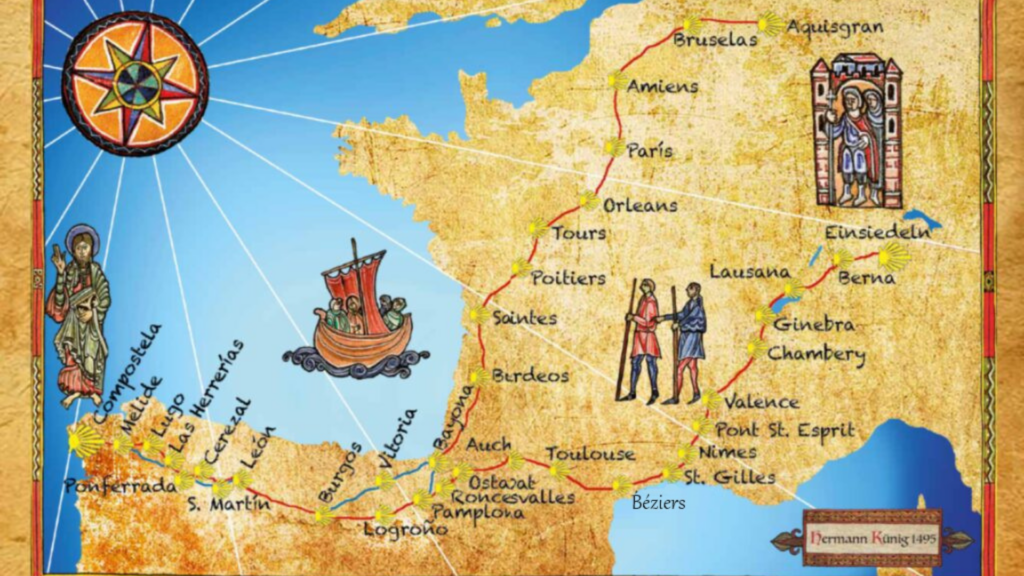
The Künig Way originates from the exploratory journey undertaken by Hermann Künig between the summer of 1488 and the end of 1490. Antonio Alabanti, Prior General of the Order of the Servites, commissioned this work because he wanted a detailed guide for pilgrims heading to Santiago.
In this guide, Künig made several recommendations to pilgrims, such as: If you are starting from León, avoid the Rabanal del Camino route (Puerto de Foncebadón) and detour through Santa Marina del Rey, Cogorderos, and Brañuelas, entering El Bierzo through Cerezal de Tremor and Bembibre. He also proposed avoiding the climb to O Cebreiro, passing through Pedrafita, As Nogais, Becerreá, Baralla, O Corgo, and Lugo, where it connects with the Primitive Way.
Route, distances, and kilometers: Where does the Künig Way start and where does it pass through?
The Künig Way extends approximately 199 kilometers, from San Martín del Camino (León) to Lugo. The route is divided into 9 stages:
- Stage 1: San Martín del Camino – Porqueros (25 km)
- Stage 2: Porqueros – Torre del Bierzo (21 km)
- Stage 3: Torre del Bierzo – Ponferrada (26 km)
- Stage 4: Ponferrada – Villafranca del Bierzo (24 km)
- Stage 5: Villafranca del Bierzo – Pedrafita do Cebreiro (24 km)
- Stage 6: Pedrafita do Cebreiro – As Nogais (14 km)
- Stage 7: As Nogais – Baralla (25 km)
- Stage 8: Baralla – O Corgo (21 km)
- Stage 9: O Corgo – Lugo (19 km)
What are the infrastructures and hostels like on the Künig Way?
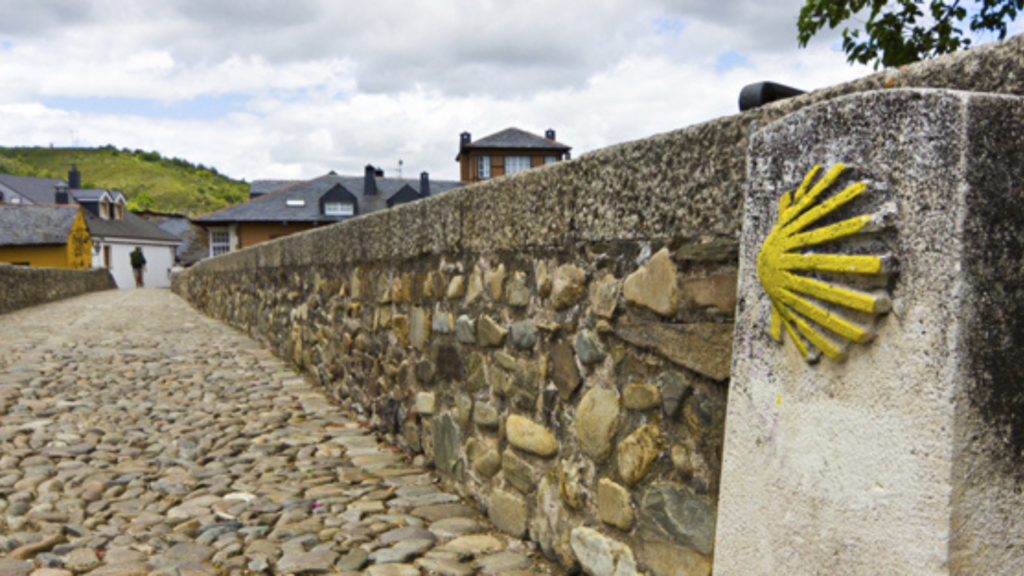
The Künig Way is a route that has been recovered relatively recently, so the infrastructures are limited and scarce. However, signage has improved in recent years, especially on the Galician sections.
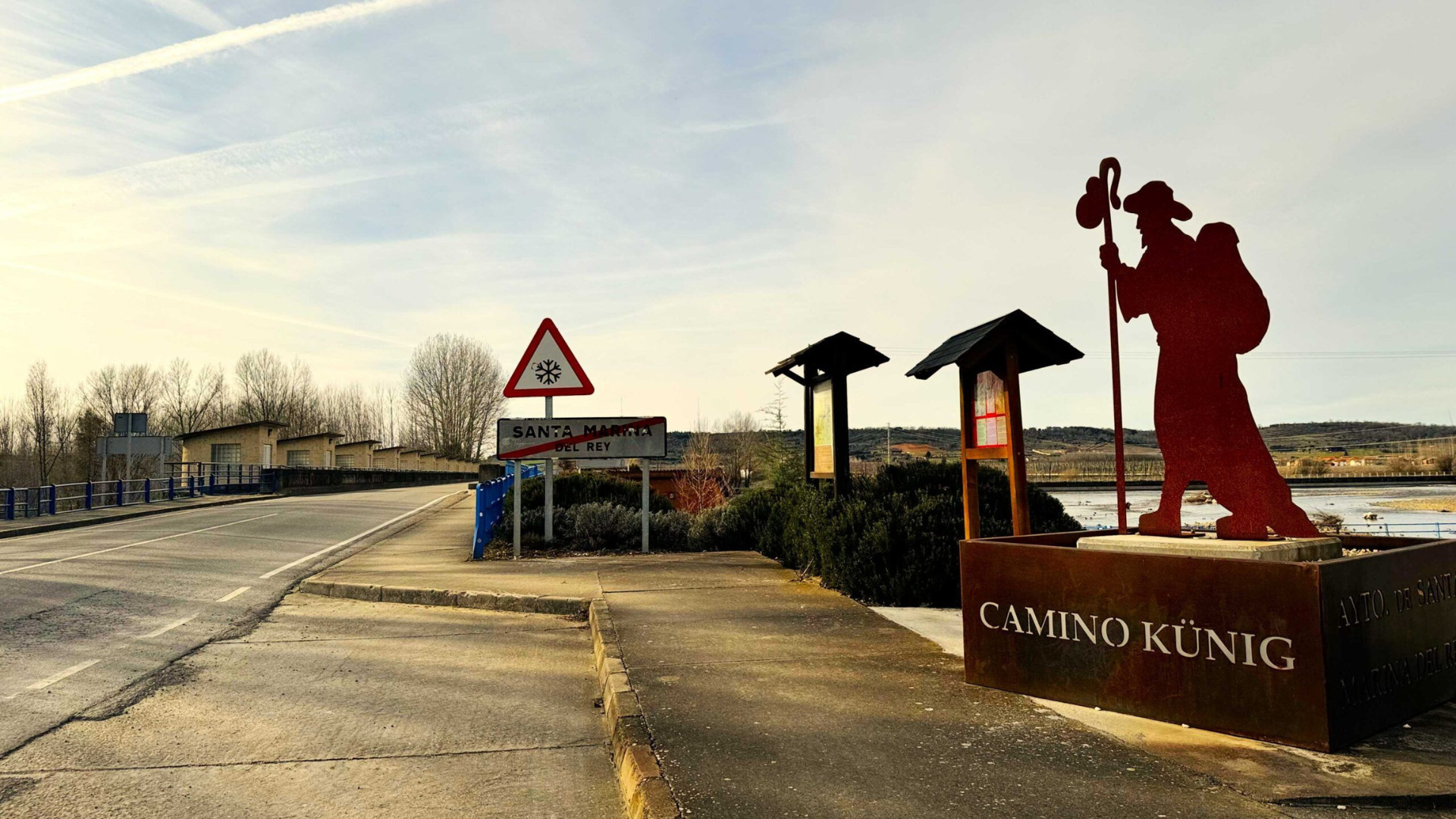
In León, the municipality of Santa Marina del Rey inaugurated in 2024 the first municipal hostel on the Way, called “El paso de Künig.” However, in the rest of the route, guesthouses and pensions predominate. It is advisable for pilgrims to plan in advance where they will spend the night.
Places and monuments along the Künig Way
The Künig Way contains a great deal of historical heritage, impressive landscapes, and popular tradition. Along the itinerary you will find numerous monuments and places:
- Statue of Hermann Künig in Pedrafita do Cebreiro: in homage to the monk who gives the route its name.
- Templar Castle in Ponferrada: A 12th-century castle that served as a welcoming point for pilgrims.
- Órbigo Bridge in Hospital de Órbigo: A medieval engineering bridge over 10 meters in length.
- Castro de O Castelo in As Nogais: An unexcavated Celtic settlement, with the chapel of Santa Olaia on its summit.
- Royal Way of Charles III: An 18th-century dirt and gravel section that preserves its original layout.
- Church of San Pedro de Cadoalla in Becerreá: An 18th-century church with a beautiful fountain.
- Chapel of San Benito de Horta in Cruzul: a hermitage next to the bridge over the River Narón.
- Lugo City Walls: A UNESCO World Heritage Site, the arrival point of this itinerary before joining the Primitive Way.
- Episcopal Palace of Astorga: A work by Antoni Gaudí, it is one of the most unique monuments in the area.