What is the Way to Fisterra and Muxía?
The Way to Fisterra and Muxía is the only official Jacobean route that does not have the Galician capital as its destination, but rather originates there. It is a continuation that extends the route towards the Costa da Morte, heading for the western Atlantic coast.
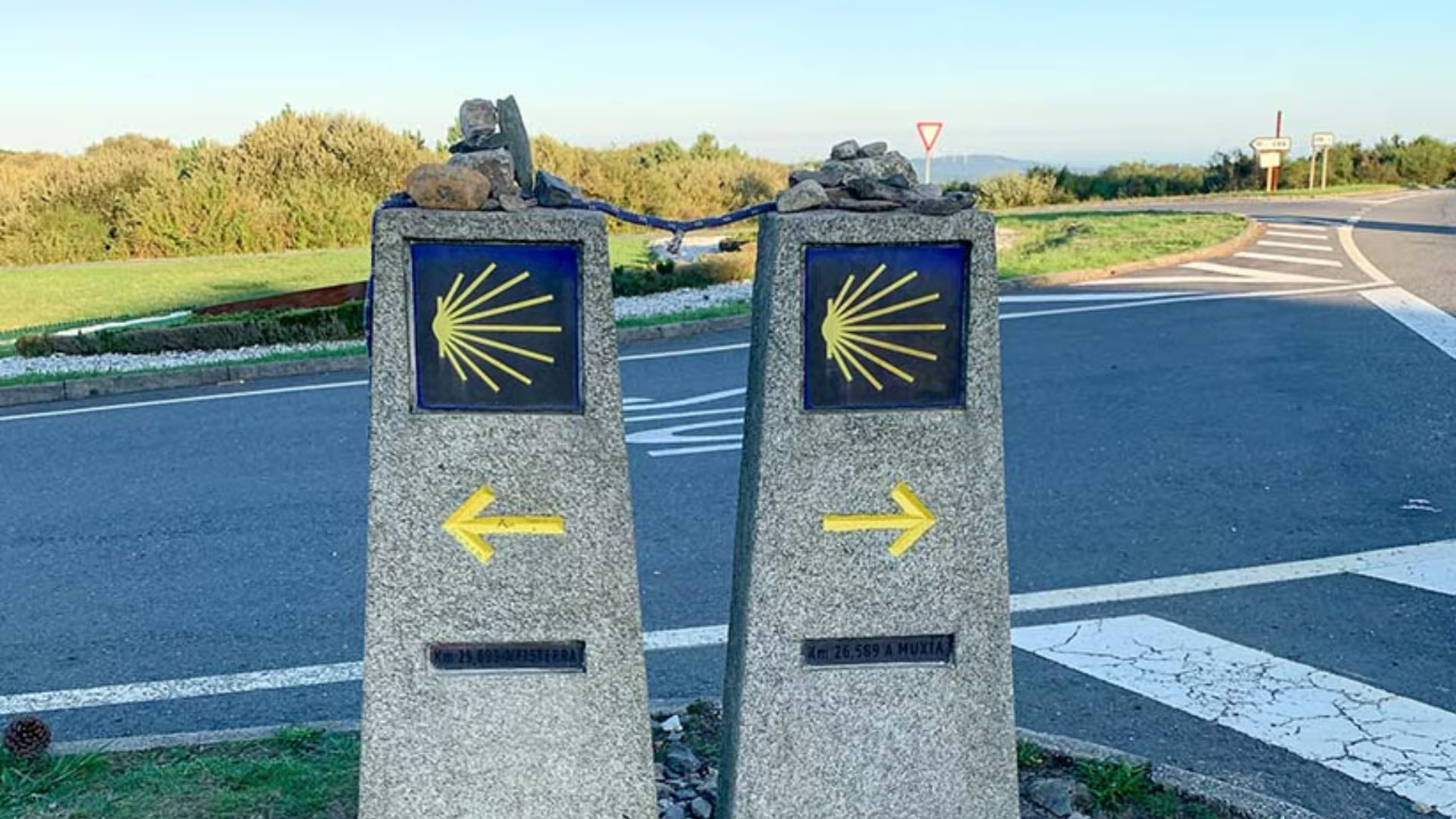
Topographically, it is challenging terrain. The route crosses the interior of the province of A Coruña, presenting a “leg-breaker” profile, with demanding climbs such as the ascent to Monte Aro or the steep slope up to the village of Hospital, where the route splits, forcing you to decide whether you want to go to Fisterra or Muxía first.
For cyclists, this extension can be completed in a couple of days. In addition, they can obtain official certificates if they prove their passage with the corresponding stamps:
- The “Fisterrana” upon reaching the Fisterra lighthouse.
- The “Muxiana” upon reaching the sanctuary of Muxía.
What is the historical origin of the Way to Fisterra and Muxía?
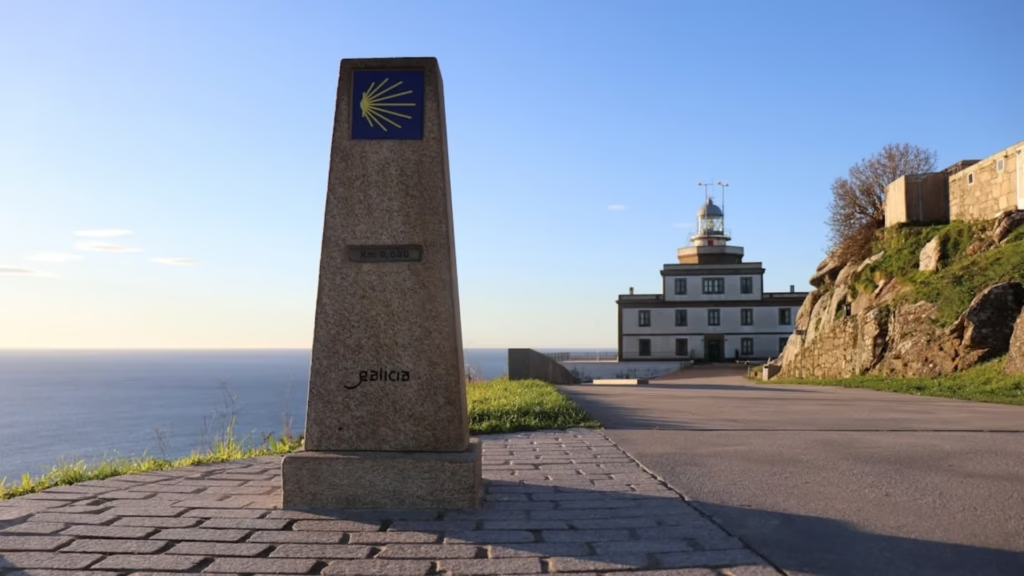
The origin of the Way to Fisterra and Muxía is older than the Way of St. James itself, having its roots in pagan and pre-Christian rites. The Celtic peoples traveled these paths following the course of the sun across the Milky Way until reaching the Costa da Morte. In this place, called Ara Solis, they worshipped the sun king, believing that this was the point where the living and the dead met.
Upon the discovery of the tomb of the Apostle James in the 9th century, the Catholic Church assimilated this ancient pagan route. The belief began to spread that the Virgin Mary came in a “stone boat” to the shores of Muxía to encourage the Apostle during his preaching, and the figure of the Holy Christ of Fisterra attracted thousands of devotees who, after finishing the Way of St. James, walked towards the ocean to purify themselves.
Route, distances, and kilometers: Where does the Way to Fisterra and Muxía start and where does it pass through?
Planning the Way to Fisterra and Muxía is essential. On this route, upon reaching the village of Hospital, the path splits into two branches, so we also include the coastal stage that connects both destinations so that you can complete the full route:
- Stage 1: Santiago de Compostela – Negreira (21 km)
- Stage 2: Negreira – Olveiroa (33 km)
- Branch towards Fisterra: Olveiroa – Fisterra (35 km)
- Branch towards Muxía: Olveiroa – Muxía (32 km)
- Coastal connection stage: Fisterra – Muxía (29 km) (Puede hacerse en ambos sentidos)
What are the infrastructures and hostels like on the Way to Fisterra and Muxía?
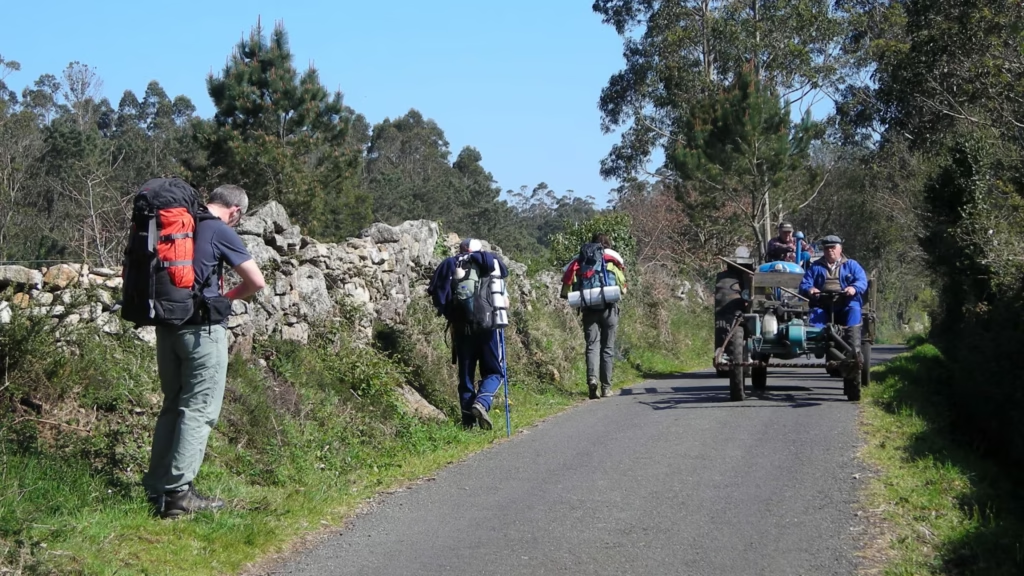
The logistics of the Way to Fisterra and Muxía are perfect and easy to manage on the go. You will find public hostels run by the Xunta and a network of private hostels. As this stretch is less crowded, you will find space for yourself and your bicycle.
Regarding services, you need to be cautious on the inland stretch between Negreira and Olveiroa, as there are few intermediate towns, and it is necessary to carry water and some food in your luggage. However, once you approach the coast, the range of services becomes plentiful again in the main towns.
Places and monuments along the Way to Fisterra and Muxía
This final stretch concentrates some of the most important landscapes and monuments of the Jacobean tradition.
- Ponte Maceira: One of the most beautiful villages on the peninsula. You will cross the Tambre River via a 13th-century medieval stone bridge, surrounded by mills and weirs.
- The Fisterra Lighthouse: Located on a cliff over the Atlantic, it is a place where pilgrims come to watch the sunset and consider their journey complete.
- Sanctuary of A Virxe da Barca (Muxía): A sanctuary built directly on the rocks against the sea. Around it, you will find the famous “holy stones” (the Pedra de Abalar and the Pedra dos Cadrís), legendary remnants of the Virgin’s boat.
- Horreo of San Martiño de Ozón: You will pass by one of the largest horreos (traditional granaries) in all of Galicia, supported by 22 pairs of pillars and a symbol of rural architecture.