What is the Pilgrim’s Credential?
The Pilgrim’s Credential is the document that certifies your status as a pilgrim on the Camino de Santiago. It is a personal and non-transferable document that identifies you and allows you to access public hostels and some services for pilgrims. Its origin comes from the safe-conducts that medieval pilgrims used to certify their journey and receive help in hospitals and monasteries.
You can get the Credential at the associations of Friends of the Camino de Santiago, in parishes and cathedrals, in hostels and tourist offices. When you obtain it, the pilgrim must stamp it at each stage. Each stamp is proof of passing through a specific place and, at the end of the journey, the credential with all the stamps is presented at the Pilgrim’s Office in Santiago to obtain the Compostela.
Stamp requirements to obtain the Compostela
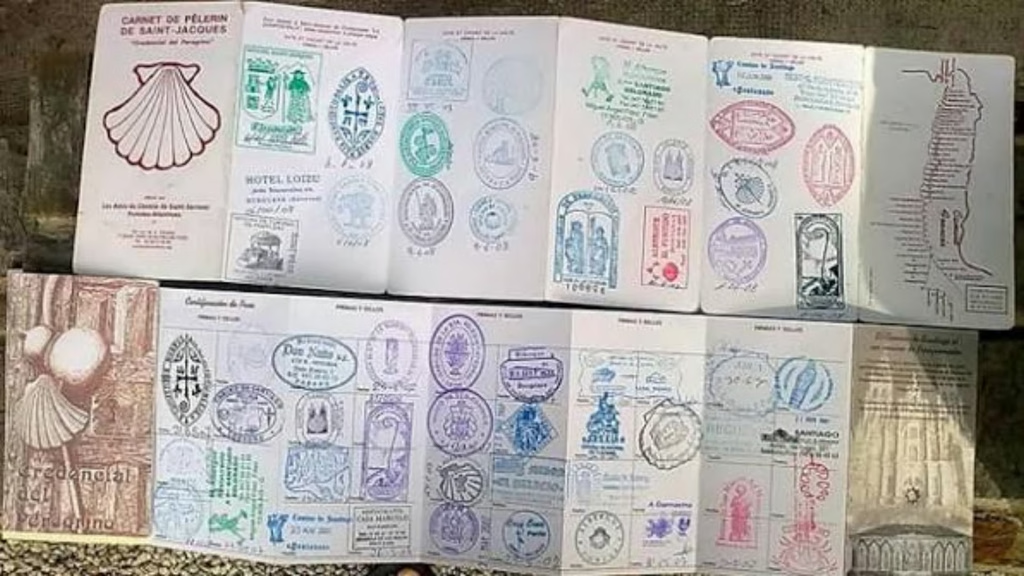
The official regulations for obtaining the Compostela establish clear requirements regarding the stamps that the credential must contain:
- Minimum distance: To obtain the Compostela, you must cover the last 100 kilometres on foot or horseback, or the last 200 kilometres by bicycle.
- Two stamps per day: It is necessary to obtain at least two stamps per day on each stage completed, except for those covering the last 100 kilometres from Sarria.
- Stamps from official places: The stamps must be from official establishments along the itinerary.
- Exception for the last stretch: If you start in Sarria, you only have to stamp at the beginning and end of the stage.
Where to get stamps on the Camino de Santiago?
One of the things that most surprises the pilgrim is how easy it is to get stamps. Practically any establishment that has a relationship with the Camino de Santiago has a stamp for the credential.
- Public and private hostels: All hostels have their own stamp, and it is the most common place to stamp at the beginning or end of the stage.
- Churches, Cathedrals and hermitages: The churches along the Way usually have a stamp.
- Tourist offices and town halls: All town halls in the towns along the Way have a stamp for pilgrims.
- Bars, restaurants and shops: Many establishments along the route have their own stamp.
- Monasteries and interpretation centres: Monasteries and cultural centres linked to the Camino de Santiago usually offer stamps.
- Hospitals and health centres: In case you need medical assistance, you can stamp at the health centre.
The only place where you cannot stamp is the Cathedral of Santiago, since the credential is presented at the Pilgrim’s Office to obtain the Compostela.
Types of stamps and their meaning
The stamps can be of different types, and each one has its own history and meaning. You can also find pilgrims who have become stamp collectors along their journey. These are the most common ones:
Official stamps of the Cathedral of Santiago
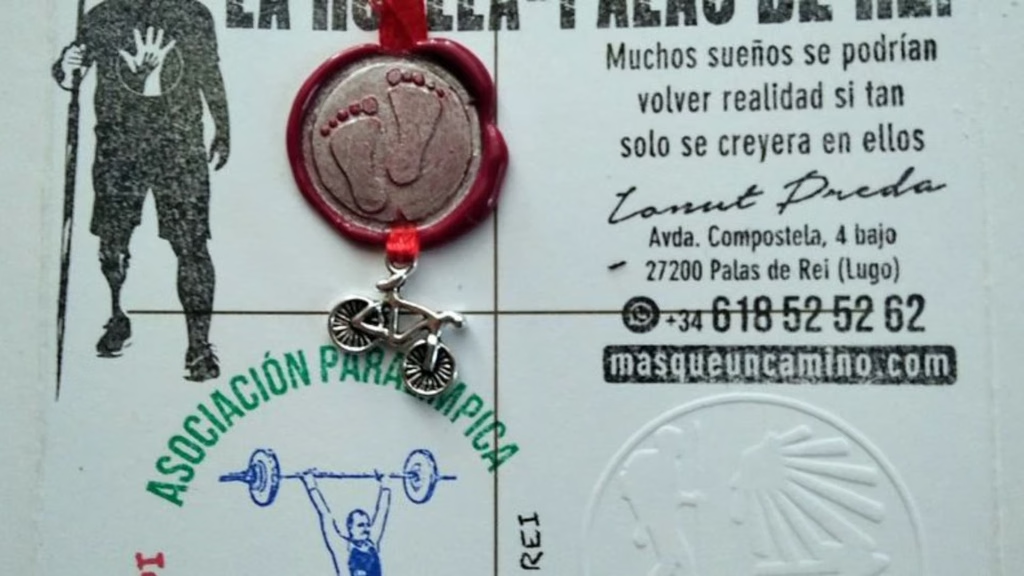
The Cathedral of Santiago has its own stamp, which is the most sought-after by pilgrims. To get it, you must stamp it at the Pilgrim’s Office or in authorised establishments in the surrounding area. The Cathedral stamp certifies arrival in Santiago and is used to complete the credential before requesting the Compostela.
Stamps from hostels and Jacobean associations
Public and private hostels have their own stamps, which usually include the name of the hostel, town and year. The Friends of the Camino de Santiago associations also have specific stamps that can be obtained at the associations’ information offices.
Frequently asked questions about the stamp code
Can I stamp the credential anywhere?
No. The stamps must be from official establishments along the itinerary: cathedrals, churches, hostels, monasteries, town halls, or institutions related to the Camino.
What happens if I am missing a stamp on any given day?
If one day you only get one stamp, don’t worry, but make sure you get two the next day. The Pilgrim’s Office is flexible, but it is better to have two stamps for each day to avoid problems.
Do stamps from bars or restaurants count?
Yes, as long as the establishment is related to the Camino. Practically any bar, restaurant or shop along the route has its own stamp and it is valid for the credential.