What is the Portuguese Way?
The Portuguese Way is one of the most traveled Jacobean routes today. The complete path of this route begins in the city of Lisbon, spanning approximately more than 600 kilometers. However, most pilgrims start the route from Porto, which reduces the journey to about 240–280 kilometers.
This route crosses the peninsula from south to north, crossing the natural border of the Miño River to enter Galicia. On a technical level, it is a simple route with no major mountain passes, allowing for a good, steady pace throughout the journey.
What is the historical origin of the Portuguese Way?
The definitive boost that popularized this route came in the 14th century from Queen Isabella of Portugal (known as the Holy Queen). Her pilgrimage to Santiago de Compostela, during which she offered her crown at the Apostle’s altar, set an example for both the nobility and the common people, consolidating the path we still walk today.
The route was consolidated in the Middle Ages, during the 12th century, following the independence of Portugal. In this era, the pilgrimage to Compostela became an essential tool for maintaining the religious, cultural, and commercial ties between the Lusitanian kingdom and the Christian territories of the north.
Main Differences Between the Coastal and Central Portuguese Ways
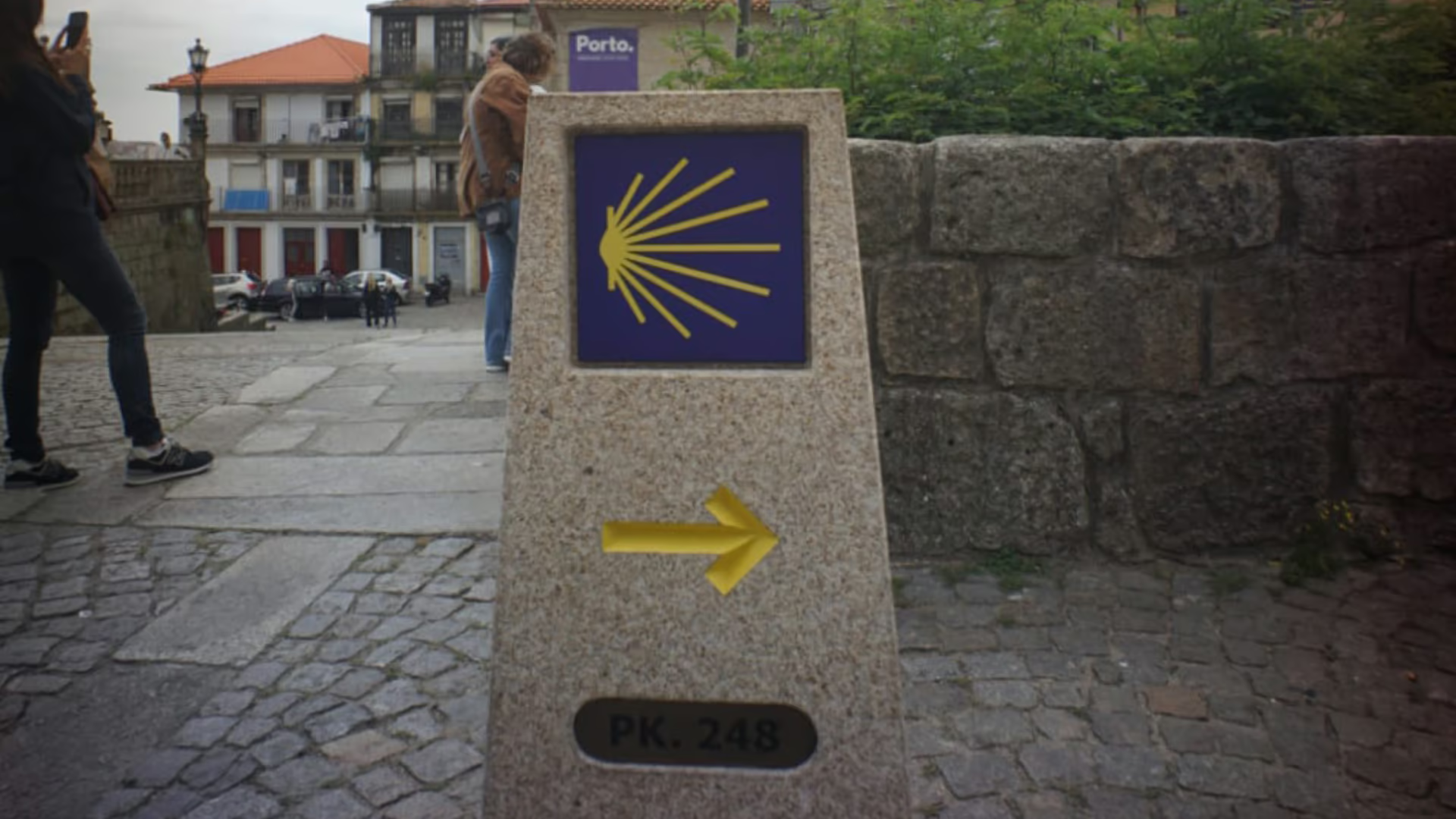
Upon leaving the Porto Cathedral, the route lets you choose between two paths: heading inland or seeking the Atlantic Ocean. These two variants run parallel toward the north until they meet again in the Galician town of Redondela.
- The Central Portuguese Way is the original route. It passes through the rural interior, crossing dense forests, vineyards, and villages with a medieval legacy. On a technical level, it features a more rolling terrain; and for cyclists, it is worth noting that sections of calçada portuguesa (traditional cobblestones) are quite common.
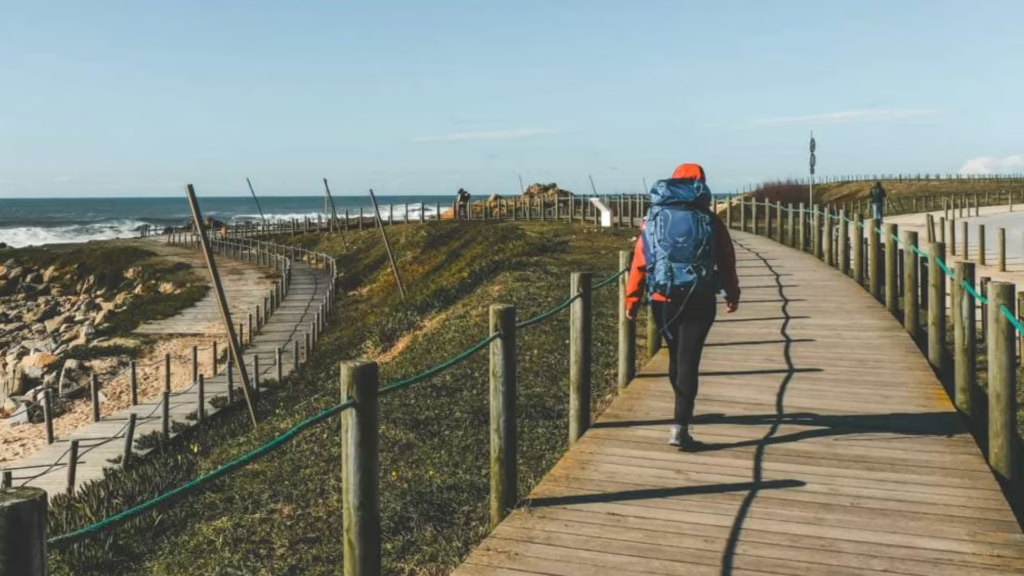
- The Coastal Portuguese Way is a modern variant that runs alongside the Atlantic coastline. It is a practically flat route from start to finish. For cyclists, it is a smoother and easier option, though it comes with the drawback of being highly exposed to coastal winds.
Route, Distances, and Kilometers: Where Does It Start and Where Does It Go?
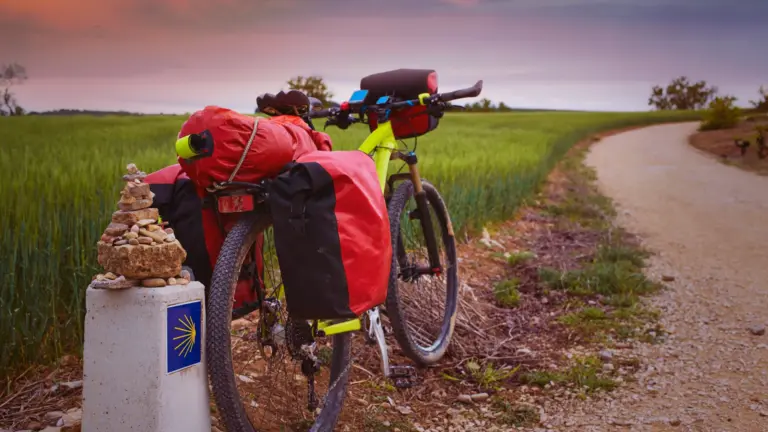
To plan the trip, we will use Porto as our reference, since it is the most popular starting point. On foot, either of the two variants requires between 11 and 13 days of walking. However, for cyclists, the stages can be combined to complete the route in 4 or 5 days.
Stages of the Central Portuguese Way
- Stage 1: Oporto – Vilarinho (26 km)
- Stage 2: Vilarinho – Barcelos (27 km)
- Stage 3: Barcelos – Ponte de Lima (34 km)
- Stage 4: Ponte de Lima – Rubiães (17 km)
- Stage 5: Rubiães – Tui (19 km)
- Stage 6: Tui – Redondela (31 km)
- Stage 7: Redondela – Pontevedra (19 km)
- Stage 8: Pontevedra – Caldas de Reis (23 km)
- Stage 9: Caldas de Reis – Padrón (18 km)
- Stage 10: Padrón – Santiago de Compostela (25 km)
Stages of the Coastal Portuguese Way
- Stage 1: Oporto – Labruge (24 km)
- Stage 2: Labruge – Póvoa de Varzim (16 km)
- Stage 3: Póvoa de Varzim – Marinhas (24 km)
- Stage 4: Marinhas – Viana do Castelo (21 km)
- Stage 5: Viana do Castelo – Caminha (28 km)
- Stage 6: Caminha – Mougás (23 km)
- Stage 7: Mougás – Ramallosa (16 km)
- Stage 8: Ramallosa – Vigo (22 km)
- Stage 9: Vigo – Redondela (16 km)
What are the infrastructures and hostels like on the Portuguese Way?
The Portuguese Way is a fairly busy route, so you will cross towns and villages every short while. In both the Portuguese and Galician sections, you will find cafes, supermarkets, and ATMs close at hand. There is no need to worry about daily supplies.
Regarding accommodation, this route offers plenty of options. However, it is very crowded, and during spring or summer, beds disappear quickly. Public hostels prioritize the order of arrival and walkers; if you are a cyclist, it is highly recommended to book private hostels or guesthouses in advance.
Places and Monuments of the Portuguese Way
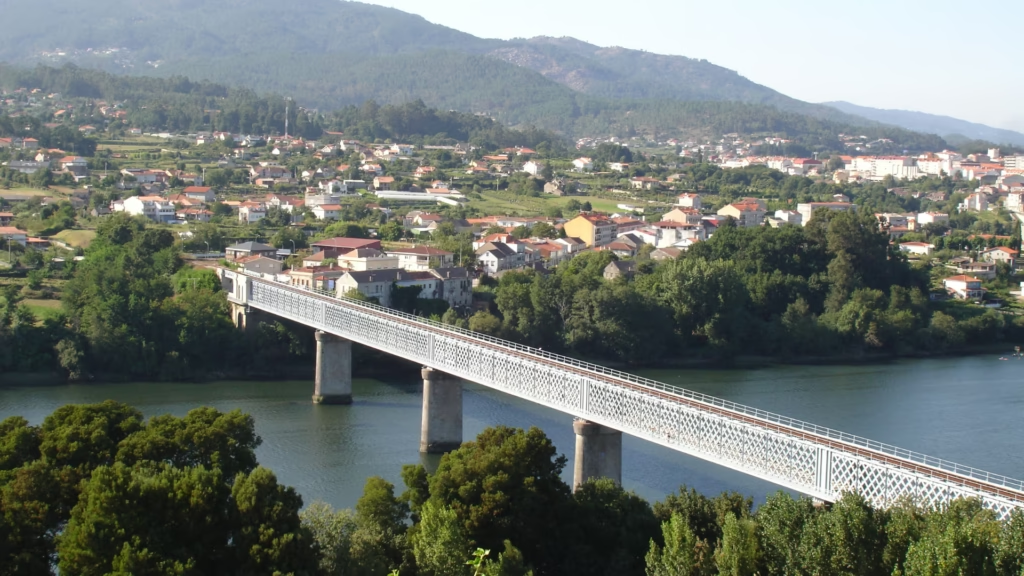
The heritage value of the Portuguese Way allows you to appreciate the cultural and architectural transition between two countries. Depending on the variant you choose, you will find different monuments and milestones.
On the Central Portuguese Way variant
- Barcelos: A town famous for being the birthplace of the legend of the Portuguese rooster.
- Ponte de Lima: A mandatory stop to appreciate the spectacular medieval bridge.
- Valença and Tui Border Crossing: You will cross the international bridge over the Miño River, leaving behind the Valença fortress to take in the Cathedral of Santa María in Galicia.
On the Coastal Portuguese Way variant
- Viana do Castelo: You will pass by the foot of the Sanctuary of the Sacred Heart of Santa Luzia.
- The Mouth of the Miño River: A unique border crossing, where you will board a ferry to go from Caminha to A Guarda.
- Baiona: A seaside town featuring the first port in Europe to hear the news of the discovery of America after the arrival of the caravel Pinta in 1493.
In the unified section of the Portuguese Way
- Pontevedra’s Historic Center: Stroll through one of the best-preserved pedestrian historic centers in Galicia.
- Caldas de Reis: The perfect place to relax your legs by soaking them in its public thermal hot springs.
- Padrón: A historic municipality where, according to tradition, the stone boat carrying the remains of Saint James the Apostle was moored.