The Camino de Santiago is a unique experience. Although many people would love to do the entire route, it is not always easy to step away from our daily obligations and responsibilities for a whole month. For this reason, following up on the post that lists the best starting points for a two-week Camino, we present the best starting point for a one-week journey.
Instead of giving up on the trip entirely, many pilgrims choose to do a shorter, week-long version of the Camino.
When time is limited, people want to make the most of the experience. That is why the question that most concerns future one-week pilgrims is: what is the best starting point?
Where should you start your journey to make the most of the Camino de Santiago in a short period of seven days?
The French Way, starting from Sarria.
If you are looking for the most classic experience, Sarria is probably the best starting point. It is just over 100 km from Santiago, which meets the minimum distance required to receive the pilgrim’s certificate. Depending on your physical condition and your preferences, you can divide the route into 5 or 7 stages. Personally, I recommend that you take it easy. You only have a few days on the trail, so it’s important to savor it.
The main stopping points are Portomarín, Palas de Rei, Arzúa, Melide, and Pedrouzo. The terrain is relatively easy but varied, offering stunning views. The route will take you through beautiful landscapes filled with streams and rivers, hidden in the shade of oak and chestnut trees.
Although there are some paved roads on the stage from Portomarín to Palas de Rei, the next stage to Arzúa will surprise you with beautiful eucalyptus forests. The road is winding, but there are no significant uphill or downhill sections to worry about.
Perhaps the only drawback of this route is that it is very busy. As the last part of the most popular Camino, it is also the most crowded, depending on the time of year you go. If you are looking for a more solitary experience, this is not the route for you, as the number of pilgrims can be overwhelming. However, if this is your first time doing a trip like this, you will be able to enjoy an authentic pilgrim experience while also having the security of well-developed infrastructure and services.
The Portuguese Way, starting from Tui
If you want to experience two different cultures, the Portuguese Way might be the right choice. Tui, like Sarria, is just over 100 km from Santiago (118 km) and can be completed in six or seven comfortable stages of about 20–25 km per day. This route is probably the easiest in terms of ascents and descents of all the Caminos, making it gentle on the knees.
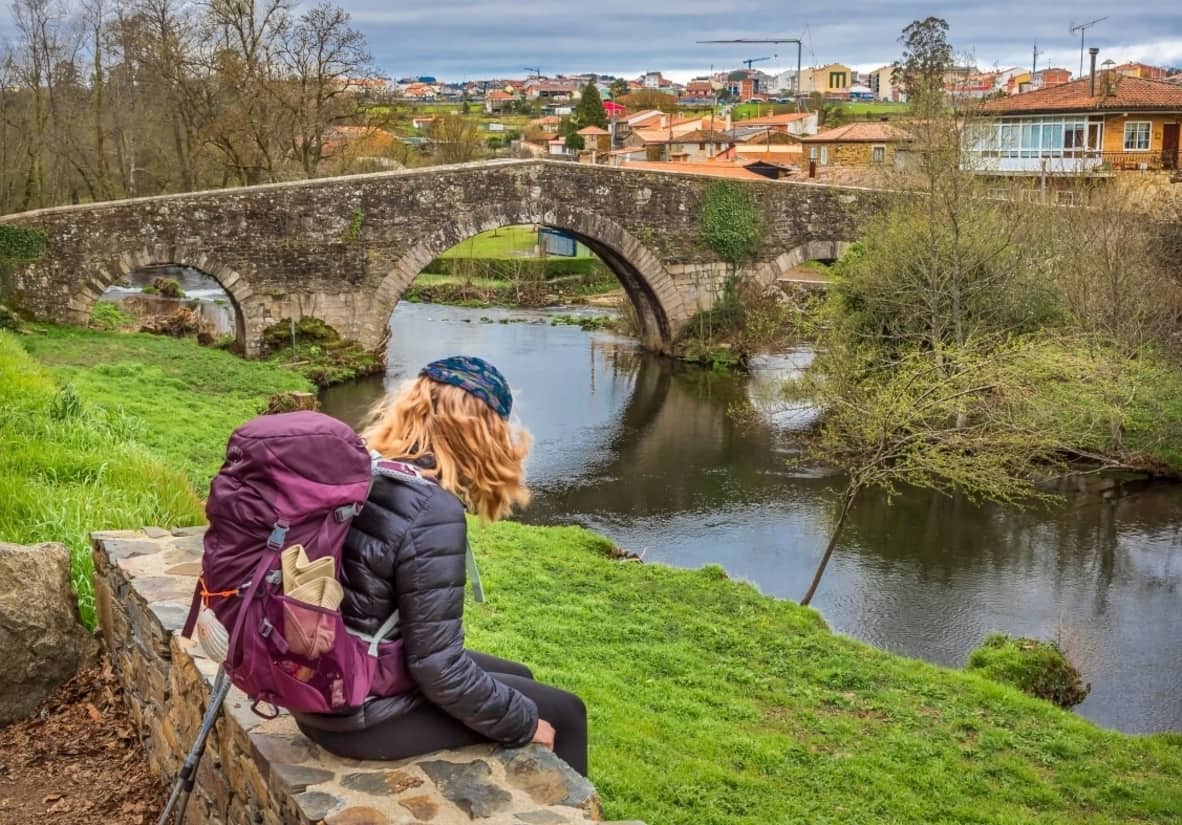
This route will take you through tranquil forests that will envelop you in an intense green, rich farmland, and charming historic towns with many stories to tell. The main stops along the way are O Porriño, Redondela, Pontevedra —with its typical old Galician quarter—, Caldas de Reis, and Padrón. The path will also bring you to the coast, to the town of Arcade, known for its Oyster Festival.
Compared to Sarria, this route is much quieter but not too solitary — after all, the Portuguese Way is the second most popular Camino after the French Way. It offers a full dose of historical gems as well as natural beauty, making it one of the top one-week options for pilgrims from all over the world.
TIP: If you are traveling in summer and want to enjoy the coast a little more, start in the attractive coastal town of Baiona (128 km from Santiago), which lies on the coastal variant of the Portuguese Way. After covering 43 kilometers of stunning coastal views, it joins the original route in Redondela.
The Primitive Way, starting from Lugo
Starting in Lugo will allow you to experience the oldest route of the Camino de Santiago. Due to its long history, the Primitive Way is dotted with Roman ruins and monuments. There is something worth seeing on almost every stage of the journey. The city of Lugo itself is protected by the best-preserved Roman wall in Europe. You will leave Lugo through the city’s oldest gate, following the historic paths that connect small ancient villages such as Seixalbo, Xende, and Ferreira.
You will cross green forests and vast farmlands, following ancient Roman roads and picturesque medieval bridges. The Primitive Way joins the French Way in Melide.
It is a great option if you want to enjoy a bit of both worlds. A small taste of the original route will provide you with a couple of days of peace and solitude, as well as the experience of the classic French Way, so often referenced in books and films from around the world.
The Via de la Plata, starting from Ourense.
Of all the routes covering the final 100 km before Santiago de Compostela, the Via de la Plata from Ourense is probably the one that offers the most fairy-tale-like experience. At 111 km, the distance can be covered in 5 or 6 days (7 if you want to take your time). It is the best choice for those seeking a bit of peace and tranquility away from the hustle and bustle of everyday life.
The city of Ourense is impressive in itself, conveniently situated on both banks of the Miño River and known for its 12th-century cathedral and its natural hot springs. The path will take you through the lush Galician countryside, bursting with greenery. The main stops along the way are Cea, Castro Dozón, Lalín, Silleda, and Ponte Ulla.
You will find peaceful forests, farmlands, and ancient sleepy villages with beautiful Romanesque churches and chapels. This part of the Camino is a true hidden gem.