What Is the Cruz de Ferro and Where Is It Located?
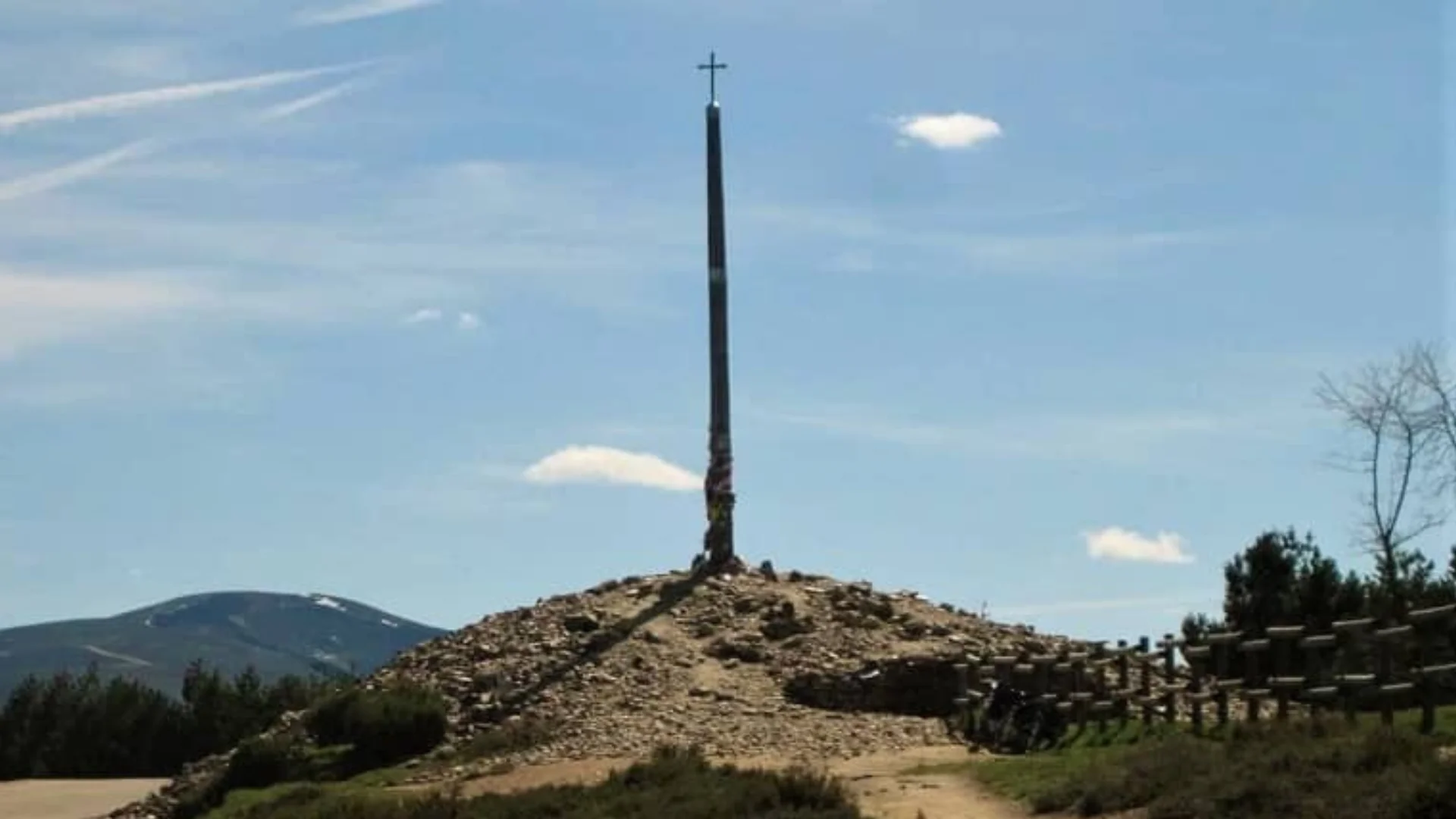
The Cruz de Ferro is a simple monument consisting of a thick oak wooden pole about five meters high, topped with a replica of an iron cross (the original is kept in the Museo de los Caminos in Astorga). The most unique feature of this monument is the immense mound of stones at its base, known as a milladoiro, which has been formed over the centuries thanks to the offerings left by pilgrims.
This monument is located in the province of León, marking the border between the Maragatería region and the Bierzo valley. To find its exact location, you will find it between the villages of Foncebadón and Manjarín. The Cruz de Ferro sits at an altitude of 1,500 meters above sea level.
For pilgrims, this monument represents the end of the Castilian plateau and the beginning of Galicia’s lush greenery. This means that the journey is past the halfway mark, and Plaza del Obradoiro is getting closer.
The Historical Origin and Legends of the Cruz de Ferro
The origin of the Cruz de Ferro is surrounded by legend. In ancient times, this mountain pass was already used during the Roman era to connect the gold mines of Las Médulas with the rest of the peninsula.
It is believed that at this very spot, the Romans built a temple or altar dedicated to Mercury, the god of roads and protector of travelers; as a result, passersby would leave stones behind to ask for his protection.
In the 11th century, Bishop Gaucelmo decided to Christianize the site due to the boom in pilgrimages. He placed a wooden post topped with an iron cross to serve both as a trail marker and a beacon of faith. This famous symbol was the only visual reference available when snow buried the paths.
One of the most famous legends tells of the Galician reapers of the 18th and 19th centuries. These workers crossed into Castile every year for the harvest. On their return, they brought back stones from the Castilian lands, leaving them at the Cruz de Ferro as a token of gratitude for finishing the season in good health and with money in their pockets.
The Stone Ritual: Why Do Pilgrims Leave a Stone?
The most fascinating aspect of the Cruz de Ferro is its tradition, which stands as one of the oldest and most respected spiritual practices on the Camino de Santiago. Year after year, millions of people from all over the world follow this exact same ritual, turning this site into a living archaeological monument of human faith.
What Does the Stone Symbolize at the Cruz de Ferro?
The stone that the pilgrim carries represents the weight of their own sins, emotional burdens, sorrows, or the regrets they drag through daily life. By placing the stone at the foot of the wooden post, the pilgrim releases that heavy burden.
In addition, the stone can bear the name of a loved one, a family promise, or a tribute to someone who is no longer here or was unable to make the journey. In this way, the Cruz de Ferro becomes a collective monument made of memories, promises of self-improvement, and silent prayers.
Step-by-Step Tradition: How to Properly Perform the Ritual
For this tradition to have true meaning, it is best to honor the ritual that walkers have repeated throughout history. If you want to fulfill the tradition, you need to follow these steps:
- Select the stone at your starting point. You should choose the stone in your birthplace, at your home, or at a point along the Camino that has had an emotional impact on you.
- Carry it in your luggage. It must faithfully accompany you throughout the stages, symbolizing the effort of the journey.
- Approach the milladoiro. Once you reach the mountain pass, take a moment to rest and walk up to the Cruz de Ferro.
- Stand with your back to the cross. Take out your stone, hold it in your hands, and stand with your back to the monument
- Throw the stone and say the words: While saying a silent prayer, or simply giving thanks, throw the stone backward onto the mound.