Planning to do the Camino de Santiago as a “bike pilgrim” requires much greater preparation than that of a traditional pilgrim. The speed is higher, mechanical wear and tear is a real factor, and the aerodynamics of your rig will dictate whether you enjoy the experience or if it turns into an ordeal.
As a Bike Pilgrim: What Is the First Thing We Should Do?
The first thing you must do if you are thinking about doing the Camino de Santiago by bicycle is to burn the golden rule of bicycle touring into your mind: the total weight of your luggage must never exceed 10% or 12% of your own body weight.
The mandatory second step is to lay out everything you have chosen on the bed and eliminate half of it. On the Camino de Santiago, you will cross towns, villages, and cities. If you need anything, you will be able to find it without any problem. The best strategy is to shed the excess from day zero.
Additionally, as a tip, mount all your luggage on the bike and go for a ride around your area a few days before leaving; the bike’s handling changes completely when you load weight on the back.
Essential Equipment for Your Bike
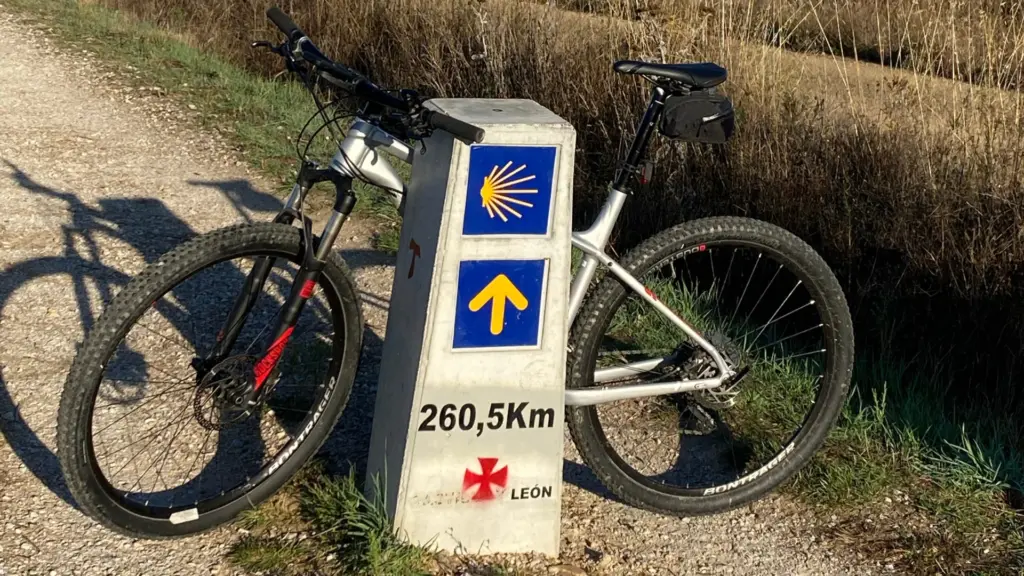
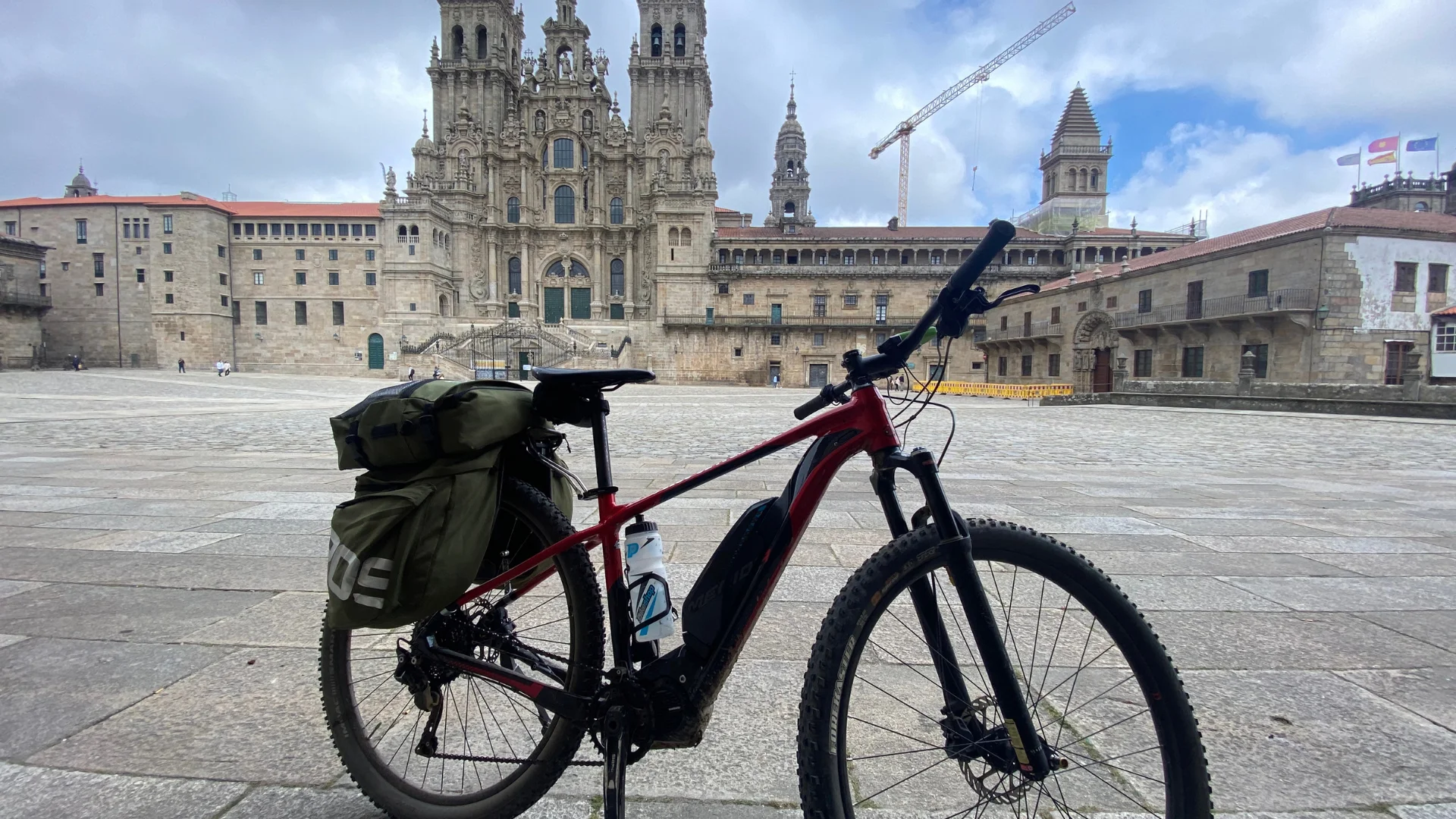
It is essential that the peripheral equipment and tools you install on your frame are highly reliable. All the weight must be distributed correctly across the bike’s structure to prevent lower back pain and ensure stable handling.
- Bike rack and panniers: A robust pannier rack is essential, preferably made of aluminum and mounted to the frame. The panniers will go on top of it, and they must be waterproof to protect your clothes.
- Hydration pack or water bottles: The backpack allows for constant hydration without having to let go of the handlebars on certain sections. Additionally, it offers extra, quick-access space to carry your phone or energy bars.
- Front and rear lights: Essential for safety.
- Lock: preferably a flexible cable lock or a lightweight combination lock.
- Bike pump and bungee cord: The pump should be mounted to the frame and compatible with your valves. The bungee cord will help you tie a wet raincoat on top of the rack or secure a pannier if it breaks.
- Multi-tool kit
- Mandatory spares: you cannot leave behind two inner tubes (even if you run a tubeless system), tire levers, self-adhesive patches, and a quick link compatible with your chain.
Essential Equipment for the Bike Pilgrim
In addition to preparing your bike, you also need to be well-prepared yourself. Your clothing and personal items will determine the comfort of your trip, so we will aim for extreme functionality.
Essential Documents
It is necessary to carry your ID (DNI or passport), health insurance card, and the Pilgrim’s Credential (Credencial del Peregrino). This credential is the official passport; without it, you will not be able to stay overnight in public hostels (albergues) or request the “Compostela” upon arriving at the pilgrim’s office in Santiago. It is highly recommended to keep it within easy reach and inside a waterproof plastic bag. It is also advisable to carry some cash.
Clothing and Footwear for Cycling
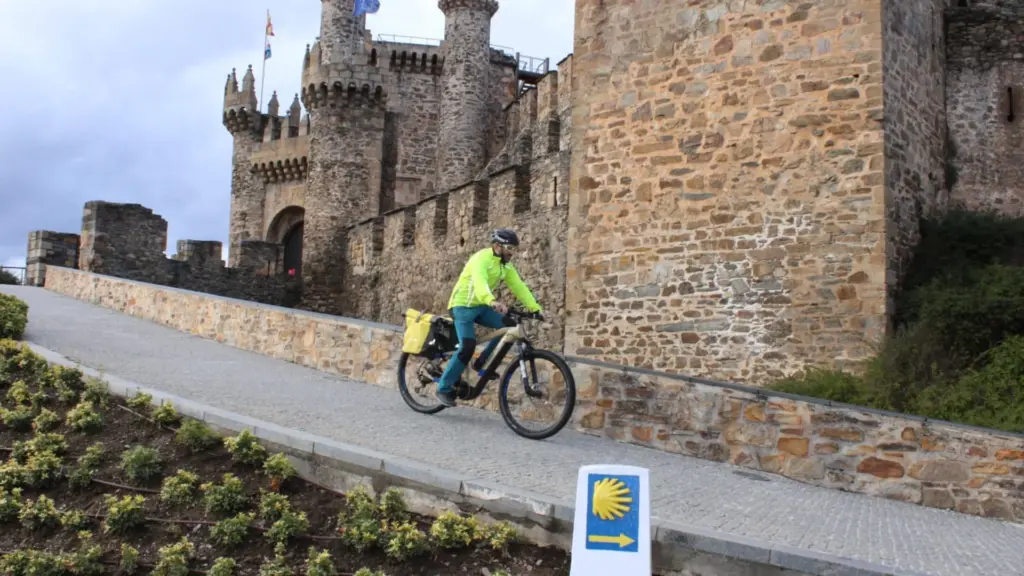
On the Camino de Santiago, the “two-change rule” applies: you wear one set while pedaling, and the other is washed from the day before, drying in the sun. Two good pairs of bib shorts with a high-density gel chamois are essential. These should be accompanied by two breathable, quick-drying jerseys and a couple of pairs of technical synthetic socks.
For footwear, mountain bike shoes with recessed cleats in the sole are recommended. This will allow you to pedal efficiently, get off the bike to push it up endless hills, or walk around to visit a monument. Remember to pack a pair of casual, comfortable shoes in your pannier to wear at the hostel.
Rain Gear
Complete your gear for gray days with waterproof shoe covers. Keeping your feet dry and warm is the number one psychological factor for keeping morale high when the sky falls over the trails of Galicia. If the forecast is very adverse, leg warmers or specific waterproof cycling shorts will prevent freezing water from numbing your thigh muscles.
In the north of the peninsula, rain is the norm. It is necessary to pack a technical, breathable raincoat. If you only bring a non-breathable plastic raincoat, you will end up soaked in your own sweat, which will dangerously lower your body temperature during descents from the mountain passes.