Who Was Saint James the Apostle?
James the Great was one of the twelve apostles chosen by Jesus of Nazareth. Born in Galilee, he was the son of Zebedee and Salome, and the brother of John the Evangelist. The Gospels describe James as a passionate and vehement man, a personality of direct action that earned him the nickname Boanerges, which translates to “Sons of Thunder.”
Following the death of Jesus, the apostles divided up the regions of the known world to spread the gospel message. Apostle James was assigned the territories of Hispania, the Roman province that occupied the Iberian Peninsula. James sailed west and traveled along Roman roads preaching Christianity.
Upon his return to Jerusalem in 44 AD, James’s temperament clashed with the Temple authorities. As a result, King Herod Agrippa I ordered his arrest, sentencing him to death by decapitation with a sword. In this way, James became the first apostle to be martyred for his faith in the history of the Church—an outcome that marked the starting point of a mysterious journey back toward the Atlantic.
The Traslatio: The Mystical Journey of the Body of Saint James
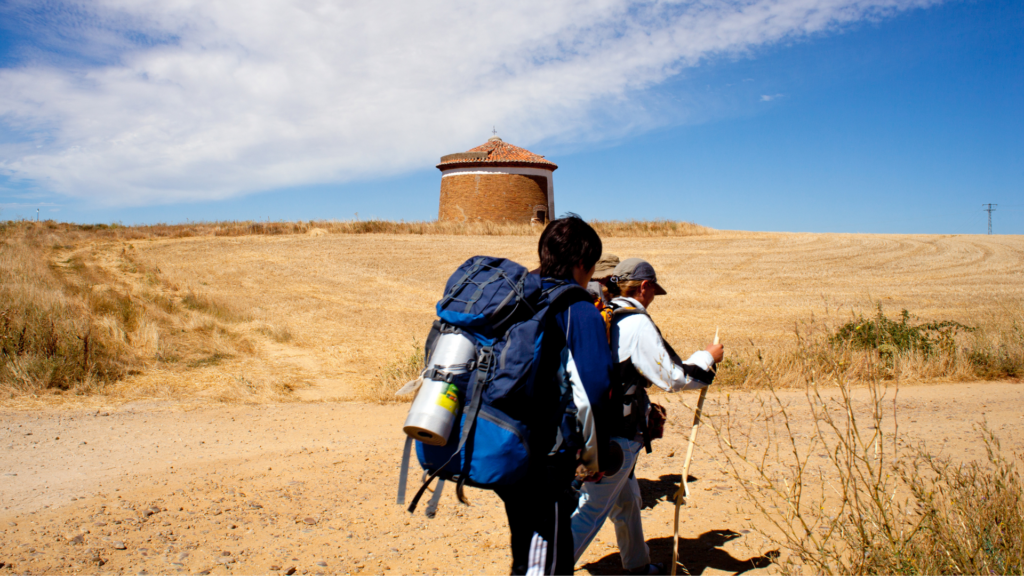
The death of Saint James the Apostle gave rise to one of the most important stories of the Christian medieval era: the Traslatio (the transfer of the body). Fearing that James’s remains would be desecrated in Jerusalem, two of his most faithful disciples, Theodore and Athanasius, secretly took the decapitated body during the night. They then carried the body to the port of Jaffa, where they boarded a rudderless, sailless stone boat guided by angels.
The vessel crossed the Atlantic, passing along the coasts of Portugal and entering the Arousa estuary, sailing up the Ulla River before finally running aground at the river port of Iria Flavia (the modern-day town of Padrón).
The landing in Galicia was full of dangers that tested the disciples’ faith. The territory was ruled by Queen Lupa, a pagan who tried to deceive the Christians by sending them to Mount Pico Sacro to tame some oxen that were supposed to pull the cart carrying the coffin. Legend has it that upon making the sign of the cross, the bulls miraculously grew tame, touching the Queen’s heart. She then converted to Christianity and surrendered her domains in the Libredón forest to bury the Apostle in a hidden stone tomb.
How Was the Tomb of Saint James Discovered? The Miracle of the Stars
The discovery of the tomb of Saint James the Apostle took place in the first third of the 9th century in the middle of a forest. A hermit named Pelayo began to continuously observe strange and intense luminous glows positioned over a hill.
Intrigued by the lights and heavenly chants, Pelayo brought these events to the attention of the highest ecclesiastical authority: Bishop Teodomiro of Iria Flavia. The bishop ordered the clearing of the vegetation and organized a formal excavation. They found a small Roman stone mausoleum containing three tombs inside: that of Saint James the Apostle and those of two of his most faithful disciples.
Bishop Teodomiro named the place Campus Stellae (the field of stars), a Latin expression that evolved to shape the word Compostela.
When Was the Tomb of Saint James Discovered? Key Dates
Determining the exact chronological moment is a highly complex challenge. However, the consensus of scientific research places the discovery of the tomb in the year 813 AD, under the pontificate of Pope Leo III.
The discovery emerged at a critical and strategic moment for the survival of the Christian kingdoms of the north. The monarch of the territory was the Asturian King Alfonso II “the Chaste,” who was leading the resistance against the advance of the Muslim armies.
From that year of the 9th century onward, the figure of Saint James the Apostle was adopted by the Kingdom of Asturias. The humble Galician town began to appear on the maps of the major European abbeys, sparking a wave of visits that would transform the landscape of northern Spain.
From Hidden Tomb to Imposing Basilica: The Evolution of the Jacobean Altar
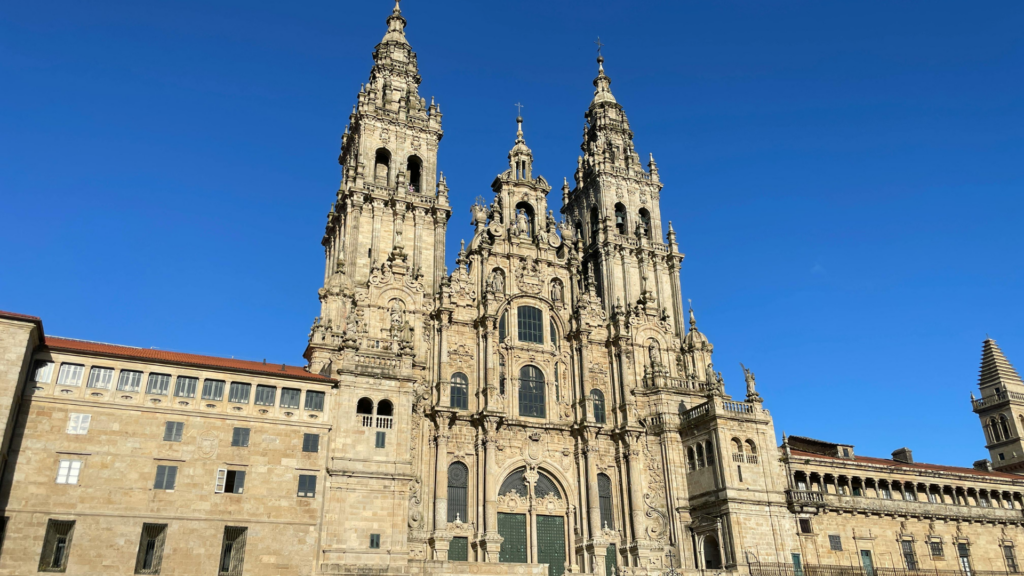
The incredible transformation of the discovery site, evolving from a humble Roman burial place into the imposing Baroque temple that welcomes thousands of pilgrims today.
The humble church of stone and mud mortar ordered to be built by the Kingdom of Asturias
Following the verification of the Apostle’s remains, King Alfonso II “the Chaste” ordered the construction of a humble church of stone and mud mortar, directly atop the ruins of the primitive Roman mausoleum. A few decades later, Monarch Alfonso III “the Great” built a larger temple in the Mozarabic style, which was sacked and vandalized in 997 AD by the troops of the Muslim leader Almanzor, who nonetheless respected the tomb.
The Consecration of the Great Baroque Cathedral and the Pórtico de la Gloria
The construction of the cathedral began to take shape in 1075, under the reign of Alfonso VI and the driving force of Archbishop Diego. Construction began on a cathedral with a Latin cross plan and pure Romanesque style, which was completed in the 12th century with the installation of the masterful Pórtico de la Gloria, carved by Master Mateo. With the rise of Counter-Reformation architecture in the 17th and 18th centuries, the temple covered its Romanesque structure with the imposing Baroque facade of the Obradoiro.