What are the secondary routes of the Camino de Santiago and why choose them?
The secondary routes of the Camino de Santiago are historical routes that record a low flow of pilgrims. These paths were used as alternatives to the main routes for climatic, commercial, or military security reasons. Thus, they could connect different peripheral regions with the main ways or with Santiago de Compostela.
Choosing these routes offers the pilgrim several advantages, such as the absence of crowds and authenticity in the welcome—the neighbors’ hospitality is genuine and warm.
The Winter Way
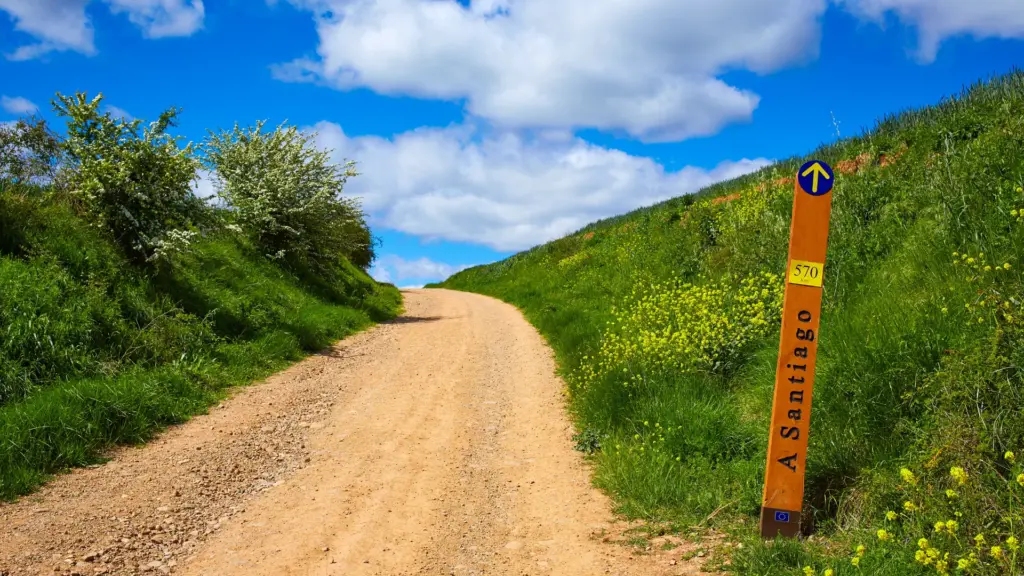
It is an excellent option for gravel or mountain bikes (MTB), as it runs largely along well-compacted agricultural tracks and secondary roads with very little traffic. Its hostel infrastructure is fully developing, which guarantees finding a spot without the usual midday rushes.
The Winter Way is one of the secondary routes of the Camino de Santiago with the highest influx of pilgrims thanks to its strategic value. This route was born as a variant used by medieval pilgrims to bypass the snowfalls and the winter isolation of the mountain passes. This route crosses breathtaking landscapes, offering a leg-breaking profile.
- Starting point: Ponferrada (León).
- Ending point: Santiago de Compostela (via Lalín).
- Total distance: 260 kilometers.
The Camino de San Salvador
For pilgrims who want a pure and tough high-mountain challenge, the best option is the Camino de San Salvador. This route connects the Castilian Plateau with the Asturian coast, crossing the Cantabrian Mountain Range from south to north through the Pajares pass. In ancient times, it was a mandatory detour for medieval pilgrims who wanted to visit the relics in the Holy Chamber of Oviedo.
It is a demanding route with steep slopes. From a cyclist’s point of view, with heavy panniers you will have to push your bike more than once.
- Starting point: León.
- Ending point: Oviedo (Asturias).
- Total distance: 120 kilometers.
The Ebro Way
The Ebro Way is a river route that follows the reverse course of the Ebro River. It begins in the Mediterranean rice fields and moves forward crossing Aragón and Zaragoza, until it links up with the French Way at Logroño.
This route is comfortable during the first stages thanks to its “false flat” profile. The cyclist’s worst enemy on this route is the cierzo wind in Aragón. Furthermore, it has a very austere and municipal network of hostels, requiring prior planning.
- Starting point: Deltebre (Tarragona).
- Ending point: Logroño (La Rioja).
- Total distance: 450 kilometers.
The Sorian Way
The Sorian Way is an inland route that crosses the province of Soria to connect with the French Way in Santo Domingo de la Calzada. It is a rarely traveled Path, ideal for pilgrims who enjoy absolute solitude. Its terrain combines plains exposed to the wind, requiring physical preparation and good management of water bottles.
- Starting point: Tarazona (Zaragoza) or Ágreda (Soria).
- Ending point: Santo Domingo de la Calzada (La Rioja).
- Total distance: 175 kilometers.
The Via Augusta
The Via Augusta is a route that travels across the southern peninsula, using the ancient Roman road that linked the Pyrenees with Cádiz, connecting with the Via de la Plata in Seville. It is a fantastic route if planned in spring or autumn, avoiding the central months of summer due to extreme temperatures.
- Starting point: Cádiz.
- Ending point: Seville.
- Total distance: 170 kilometers.
the Forgotten Way
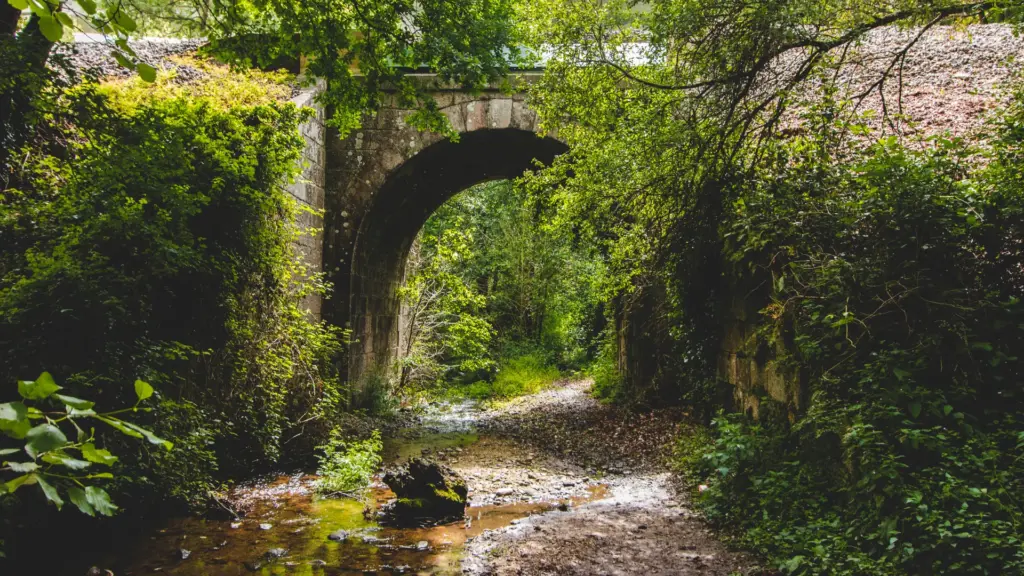
Also known as the Old Camino de Santiago (or the Mountain Way), it is one of the oldest routes in existence. It traverses flanking the southern slope of the Cantabrian Mountain Range and was the route used between the 9th and 12th centuries to protect pilgrims from Muslim attacks on the Plateau.
It consists of a low-to-mid mountain journey, solitary and wild. You will journey through mining valleys, beech forests, and secondary Roman roads. Services are scarce and scattered.
- Starting point: Bilbao (Biscay).
- Ending point: Villafranca del Bierzo (León).
- Total distance: 680 kilometers.
The Catalan Way
The Catalan Way guides pilgrims who begin their route at the Monastery of Montserrat, leading them through the Catalan inland and the plains of Urgell until they either join the Ebro Way in the town of Pina de Ebro or continue straight towards Logroño.
It combines a varied terrain, featuring demanding mountain climbs alongside comfortable and flat tracks as you head into Lleida and the Aragonese Monegros. It boasts excellent signage and a decent hospitality infrastructure.
- Starting point: Monastery of Montserrat (Barcelona).
- Ending point: Fuentes de Ebro / Logroño.
- Total distance: 325 kilometers (up to the Ebro junction).