What is the Catalan Route of Saint James (Camino Catalán de Sant Jaume)?
The Catalan Route of Saint James (Camino Catalán de Sant Jaume) is the Jacobean route that channels the flow of pilgrims from the northeastern tip of the Iberian Peninsula inland, with the goal of connecting with the French Way. This route begins at the Monastery of Sant Pere de Rodes (Girona) and covers nearly 500 kilometers.
For the pilgrim, this route is demanding and full of great contrasts. The first stages combine mountainous stretches and lush valleys with tough climbs. However, upon reaching Lleida, the terrain flattens out completely. The biggest challenge of the Catalan Route of Saint James is the weather and the solitude.
What is the origin of the Catalan Route of Saint James (Camino Catalán de Sant Jaume)?
The origin of the Catalan Route of Saint James (Camino Catalán de Sant Jaume) dates back to the High Middle Ages (10th and 11th centuries). Cap de Creus and Port de la Selva acted as entry ports for pilgrims arriving by sea. After disembarking, the first thing they had to do was ascend to the Monastery of Sant Pere de Rodes to give thanks and ask for protection.
From this point, pilgrims took advantage of the ancient route of the Roman Via Augusta heading inland. Over time, the Crown of Aragon secured the path by building bridges, monasteries, and hospitals.
Route, Distances, and Kilometers: Stages of the Catalan Route of Saint James
The Catalan Route of Saint James is structured into 19 stages until reaching the Ebro Valley, although these stages are usually grouped together when traveling by bicycle.
- Stage 1: Sant Pere de Rodes – Figueres (25.3 Km)
- Stage 2: Figueres – Báscara (17.7 Km)
- Stage 3: Báscara – Girona (34.7 Km)
- Stage 4: Girona – Amer (26.3 Km)
- Stage 5: Amer – Sant Esteve d’en Bas (21.9 Km)
- Stage 6: Sant Esteve d’en Bas – Santa Maria de Corcó (20.1 Km)
- Stage 7: Santa Maria de Corcó – Vic (19.9 Km)
- Stage 8: Vic – L’Estany (20.4 Km)
- Stage 9: L’Estany – Artés (22.1 Km)
- Stage 10: Artés – Manresa (18.6 Km)
- Stage 11: Manresa – Monastery of Montserrat (23.3 Km)
- Stage 12: Monastery of Montserrat – Igualada (21.9 Km)
- Stage 13: Igualada – Cervera (39.6 Km)
- Stage 14: Cervera – Castellnou de Seana (27.3 Km)
- Stage 15: Castellnou de Seana – Lleida (32.7 Km)
- Stage 16: Lleida – Fraga (33 Km)
- Stage 17: Fraga – Candasnos (26 Km)
- Stage 18: Candasnos – Bujaraloz (22.4 Km)
- Stage 19: Bujaraloz – Fuentes de Ebro (40.9 Km)
What is the infrastructure of hostels and services like on the Catalan Route of Saint James (Camino Catalán de Sant Jaume)?
On the Catalan Route of Saint James, you will find a modest, welcoming, and authentic accommodation network, as this route does not suffer from overcrowding. Regarding lodging, pilgrims will mostly depend on municipal and parochial hostels, supplemented by small hotels, inns, and rural guesthouses.
When it comes to services on this route, managing your supplies upon entering Aragon becomes a critical factor. In the Monegros steppe, the distances between towns stretch out with no water fountains, no shade, and no services whatsoever, making it absolutely essential to carry full water bottles and energy bars.
Sights and Monuments on the Catalan Route of Saint James
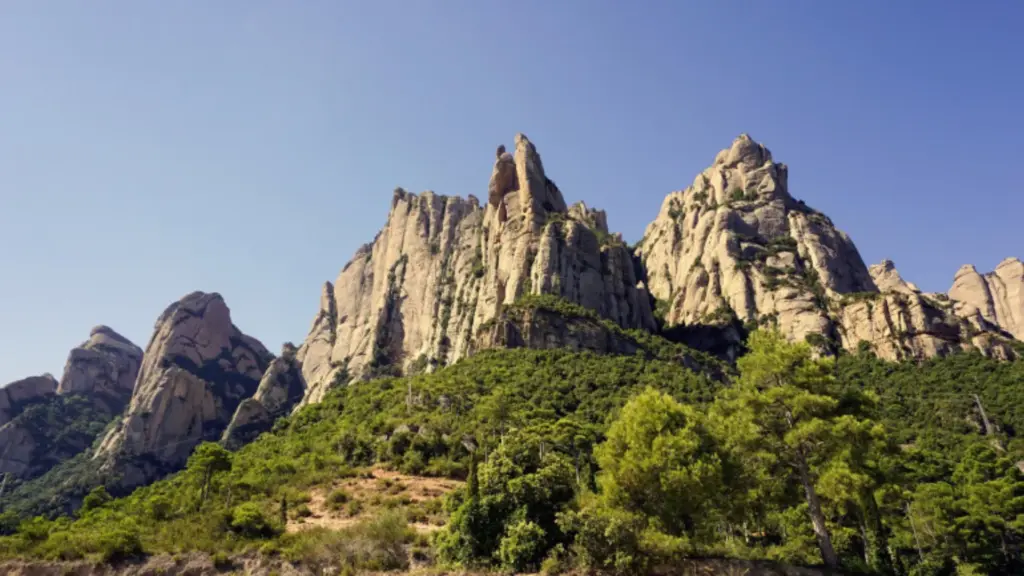
This route features a wide variety of landscapes accompanied by an impressive monumental heritage:
- Monastery of Sant Pere de Rodes (Girona): The starting point of this Jacobean route. A Catalan Romanesque monastery perched on the mountain with views of the sea.
- Cathedral of Santa Maria (Girona): A famous cathedral known for possessing the widest Gothic nave in the world.
- Plaza Mayor and Roman Temple (Vic): The center of Osona’s capital features a historic arcaded square and the remains of an impressive 2nd-century Roman temple.
- Monastery of Montserrat: A Benedictine sanctuary, located in Catalonia, embedded within unique rocky formations.
- La Seu Vella (Lleida): A cathedral that dominates the city from a fortified hill. It features an open Gothic cloister with views of the plain, making it one of the most beautiful in Europe.
- Church of San Pedro (Fraga): A temple of Romanesque origin that marks a historical and cultural transition along the route.