What is the Soria Way?
The Soria Way is a Jacobean route of approximately 230 kilometers that connects the Ebro Valley and the Castilian Plateau. The main purpose of this route is to connect the Ebro Way with the Wool Route (Ruta de la Lana) and the French Way, crossing the province of Soria and parts of Zaragoza and Burgos from east to west.
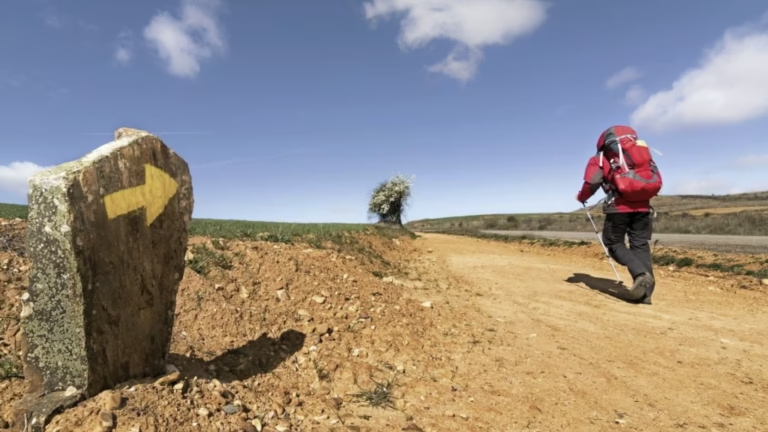
Topographically, it is a demanding route. It is not known for having major mountain passes, but it runs mostly at an altitude of over 1,000 meters. This setting results in a terrain of moors, dirt tracks that can become muddy, and a very harsh climate.
What is the historical origin of the Soria Way?
The origin of the Soria Way was not religious in its beginnings, but rather commercial and military. The itinerary is based on Roman roads, primarily the Via XXVII of the Antonine Itinerary, which connected Caesaraugusta (Zaragoza) with Asturica Augusta (Astorga).
In the Middle Ages, with the rise of the Camino de Santiago, Christians from the kingdoms of Aragon, Catalonia, and the Levant used this route to head towards Burgos. Upon arrival, they joined the French Way, which was already the safest and main route to the tomb of the Apostle.
Route, Distances, and Kilometers: Where Does It Start and Where Does It Go?
The Soria Way begins in the town of Gallur, the point where it branches off from the Ebro Way. From this town, it heads west, entering the province of Soria, and ends in the province of Burgos at the Monastery of Santo Domingo de Silos, where it merges with the Wool Route (Ruta de la Lana).
For pilgrims, this route is divided into about 8 stages of moderate difficulty. For cyclists, depending on their luggage, these are usually grouped into 3 or 4 days.
- Stage 1: Gallur – Borja (21 km)
- Stage 2: Borja – Tarazona (22 km)
- Stage 3: Tarazona – Ágreda (22 km)
- Stage 4: Ágreda – Pozalmuro (26 km)
- Stage 5: Pozalmuro – Soria (24 km)
- Stage 6: Soria – Abejar (28 km)
- Stage 7: Abejar – San Leonardo de Yagüe (22 km)
- Stage 8: San Leonardo de Yagüe – Santo Domingo de Silos (34 km)
What are the infrastructures and hostels like on the Soria Way?
The Soria Way is a minority route where the infrastructure is not as comfortable as on other main routes. It is a journey for proactive pilgrims; you will face areas with severe depopulation, so restocking requires carrying water and food in your luggage, as many villages do not have shops, bars, or water fountains.
As for infrastructure, there is no network of public pilgrim hostels. Staying the night requires using the local tourist accommodation: guest houses, inns, rural cottages, and sports centers. For the pilgrim, the golden rule on this route is to always call and book accommodation days in advance.
Places and Monuments on the Soria Way
The austerity of services on this route is compensated for by its wonderful monumental and natural heritage. You will travel through areas that were once borders between kingdoms and where the footprint of Romanesque art is truly impressive.
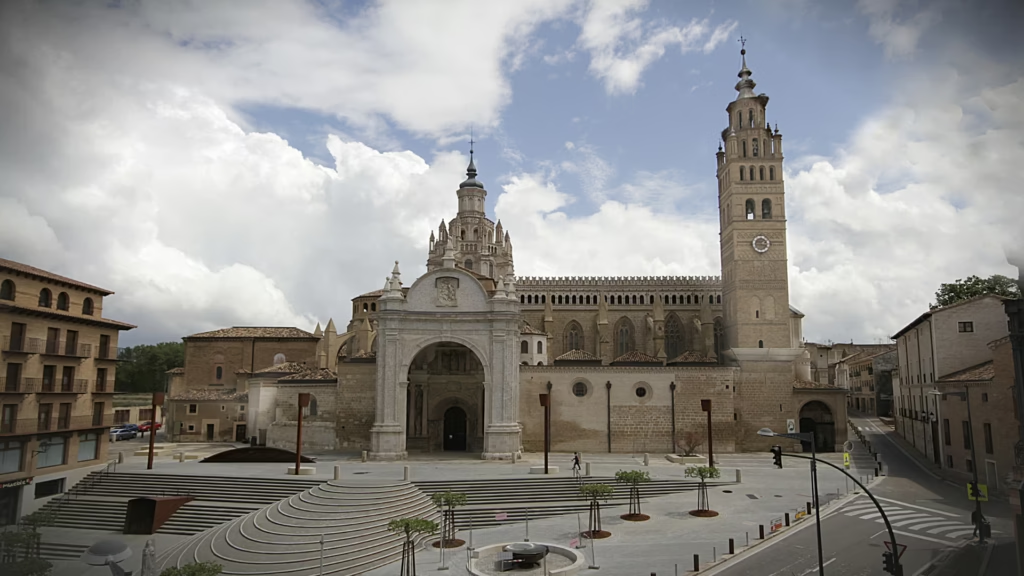
- Catedral de Santa María de la Huerta (Tarazona): A cathedral that architecturally showcases a perfect blend of Gothic, Mudéjar, and Renaissance styles.
- La Villa de las Tres Culturas (Ágreda): A town famous for preserving tangible remains of the historical coexistence among Christians, Jews, and Muslims, featuring the Palacio de los Castejones and the Moorish quarter.
- Arcos de San Juan de Duero (Soria): Remains of the monastery of the Order of the Hospitallers of St. John of Jerusalem, featuring an open-air Romanesque cloister that is unique for its interlocking arches.
- Parque Natural del Cañón del Río Lobos: In the final stretch of the route, the landscape turns into a limestone canyon inhabited by griffon vultures. Hidden inside is the enigmatic Templar Hermitage of San Bartolomé.
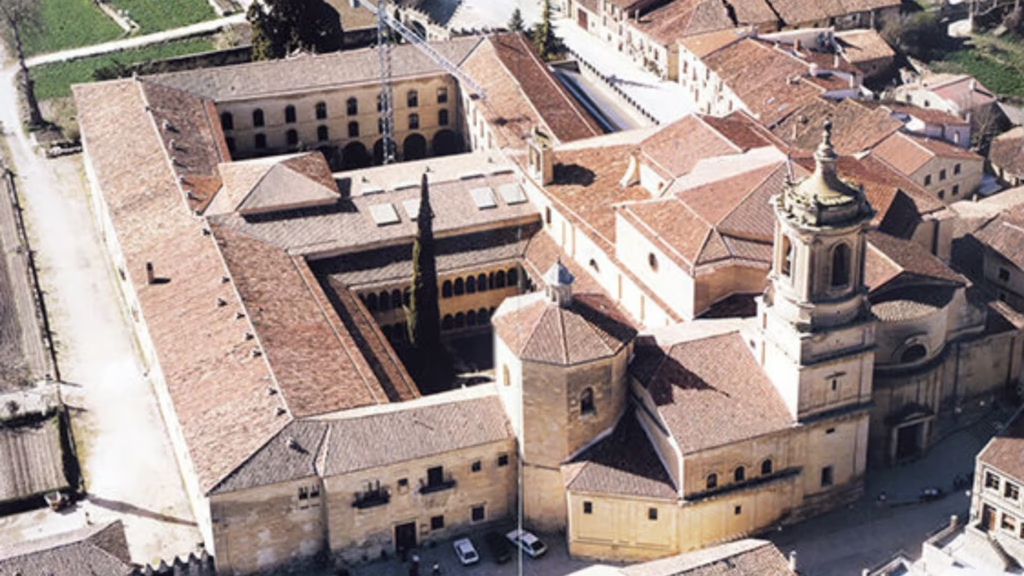
- Monasterio de Santo Domingo de Silos: A Benedictine abbey known for the beauty of its Romanesque cloister and for the Gregorian chants of its monks.