What were pilgrim hospitals on the Camino de Santiago?
Pilgrim hospitals were charitable and welfare establishments that provided lodging, food, and care to pilgrims traveling the Camino de Santiago. Their appearance dates back to the Middle Ages, between the 11th and 13th centuries, coinciding with the rise of pilgrimages. They were institutions of Christian charity, linked to monasteries, military orders, or promoted by the royalty and local nobility.
This network of hospitals stretched along the Jacobean routes, specifically on the most difficult stretches. The distance between hospitals was usually one day’s walk, which allowed pilgrims to rest and recover peacefully each day.
The most important medieval hospitals on the Camino de Santiago
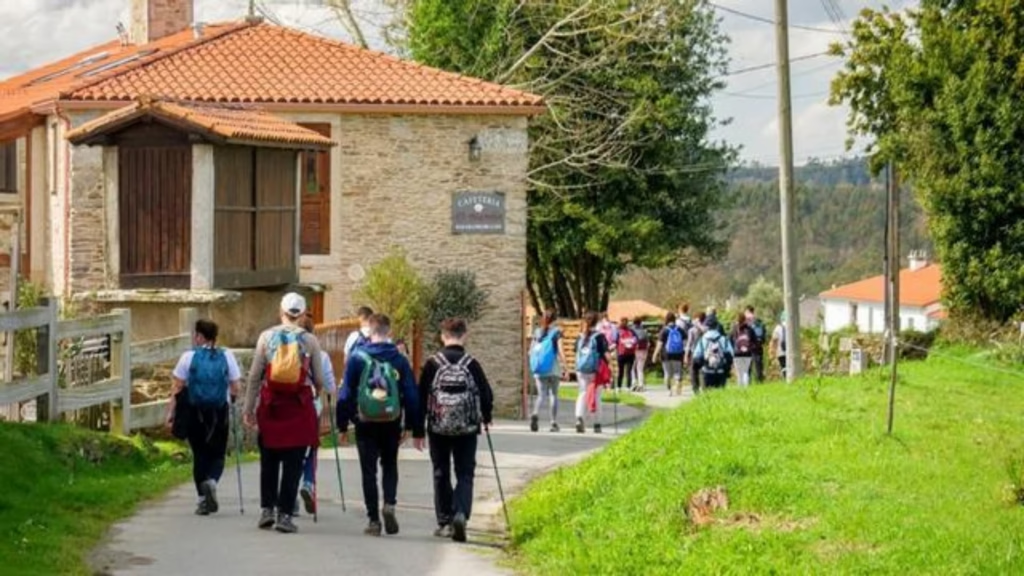
On the Jacobean routes, hospitals emerged that became reference points for pilgrims. These are three of the most notable ones.
Hospital of Santa Cristina de Somport (Aragonese Pyrenees)
The Hospital of Santa Cristina de Somport is located at an altitude of 1,635 meters at the Somport pass in the Aragonese Pyrenees. It was the main welcome point for pilgrims crossing the Pyrenees on the Aragonese Way, located on one of the toughest and most dangerous routes. The hospital was run by a community of friars, and it is believed to have had capacity for over 500 pilgrims. Currently, you will only find ruins of what was one of the largest monumental complexes.
Hospital of San Juan Bautista de Benavente (Zamora)
The Hospital of San Juan Bautista de Benavente, known as Hospital de la Piedad, was inaugurated in the 12th century to help pilgrims on the French Way during their passage through Benavente. Its origin is attributed to a confraternity of clergy and laypeople dedicated to assisting pilgrims. The hospital was protected by the Catholic Monarchs. This hospital remained active until the 19th century, and currently houses the Interpretation Centre of the Cities of the Camino de Santiago.
Hospital of Ligonde (Lugo)
The Hospital of Ligonde, in Lugo, was a pilgrim hospital founded by the Order of Saint John of Jerusalem. The Romanesque church of Santiago de Ligonde, dating from the 12th century, is all that remains standing. Its doorway is a great example of Galician Romanesque, with decoration that combines influences from Compostela and elements from the workshop of Master Mateo. The church is presided over by a relief depicting the Pietà, and it was declared a National Monument in 1931.
How did pilgrim hospitals on the Camino de Santiago operate?
Pilgrim hospitals usually depended on a religious order or the Crown, and their management fell to a hospitalero or steward, who was the highest authority at the centre. Several employees worked at the pilgrim hospital: some were in charge of cooking and cleaning, others helped the sick, and there were those who dedicated themselves to collecting alms. Funding came from donations, land rents, loans, and sometimes from the pilgrims’ alms.
When a pilgrim arrived at the hospital, after being welcomed, the pilgrim had to wash their hands and feet, and then received a bed and a hot meal. Large hospitals offered a full menu, although most hospitals could only provide basic food. Additionally, basic medical assistance was offered: they treated wounds, removed thorns, and cared for pilgrims with fever and illnesses.
The decline of medieval hospitals
From the 14th century onwards, pilgrim hospitals on the Camino de Santiago began to experience a decline, caused by economic and demographic crises. Specifically, the Protestant Reformation, particularly in the 16th century, affected pilgrimages: many northern Europeans stopped travelling to Santiago, which reduced the hospitals’ income.
The 19th-century confiscations, especially that of Mendizábal in 1836, caused the hospitals’ assets to be seized and sold. Furthermore, many buildings fell into ruins or were converted into houses, barns, or stables.
The rebirth of hospitality: modern hostels
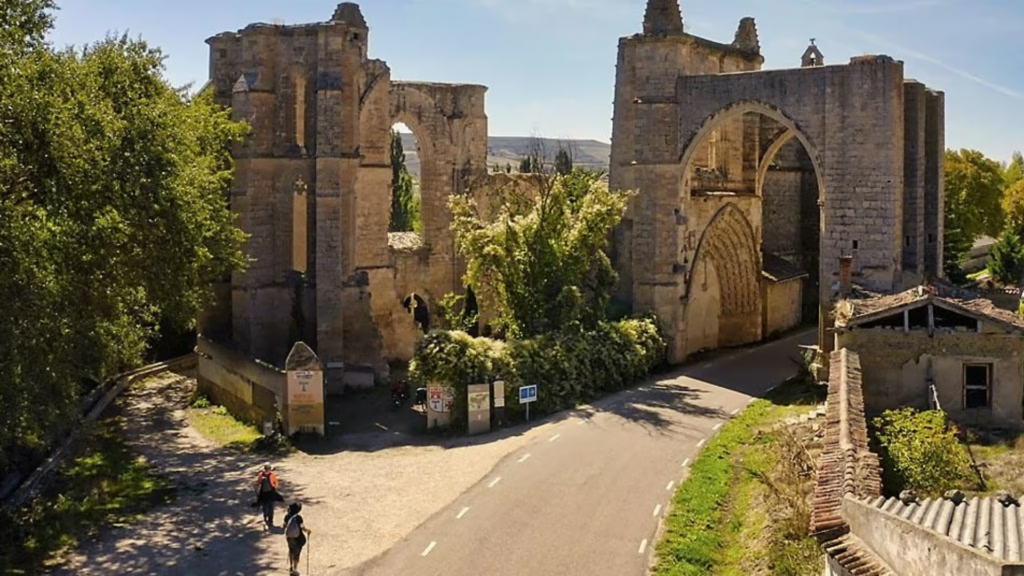
In the 1980s, with the resurgence of Jacobean pilgrimages, medieval hospitality was reborn with the help of modern hostels. The Association of Friends of the Camino de Santiago and the Spanish Federation of Associations of Friends of the Camino were the first to create a network of public hostels where pilgrims could rest, wash their clothes, and regain their strength, in exchange for a voluntary donation.
Currently, the hostel network is extensive and varied, and although the model has changed, the spirit of hospitality remains the same as in the Middle Ages.
Examples of hospitals that are still preserved
Despite the passage of time, some pilgrim hospitals have survived to the present day.
- The Hospital de la Reina in Ponferrada. The Hospital de la Reina is one of the best-preserved on the French Way. It was founded in the 15th century on the initiative of Queen Isabella the Catholic in 1492, with the aim of providing medical and health care for the poor and pilgrims. Currently, it remains an active hospital with 35 specialities.
- The ruins of Santa Cristina de Somport. The Hospital of Santa Cristina de Somport was one of the most outstanding in Christendom, and is currently in ruins. This place remains a pilgrimage destination for many hikers crossing the Somport pass.
- The Romanesque doorway of the church of Ligonde. The Romanesque church of Santiago de Ligonde, in Lugo, is the only vestige that remains of the pilgrim hospital founded by the Order of Saint John. Its doorway is an example of Galician Romanesque. The church was declared a National Monument in 1931 and can be visited.