What is the Pórtico de la Gloria?
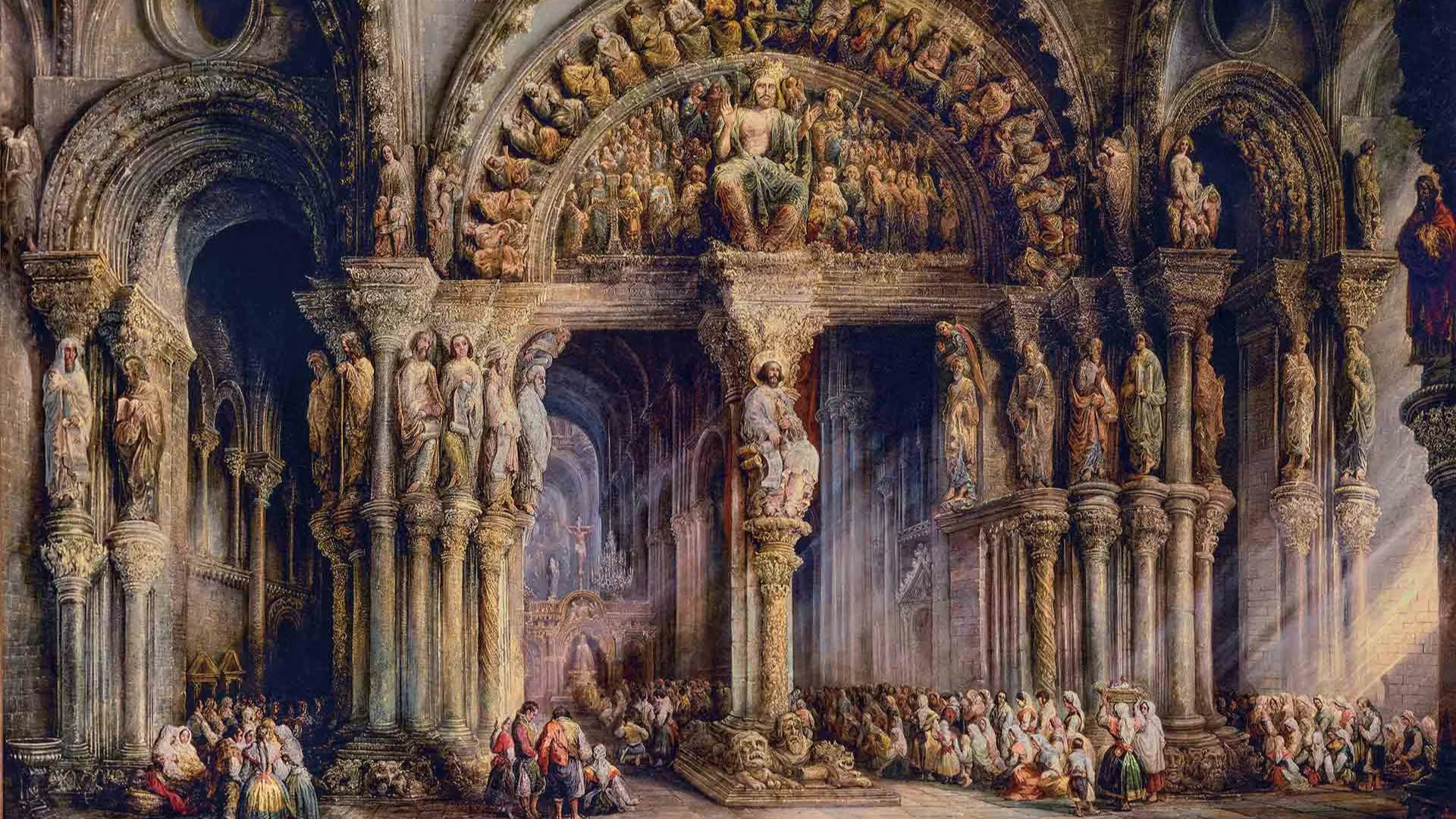
The Pórtico de la Gloria is the monumental doorway that gives access to the main nave of the Cathedral of Santiago de Compostela from the Plaza del Obradoiro. It is a unique work from an architectural point of view, made in granite and marble, and it combines architecture with sculpture.
The Pórtico de la Gloria is made up of three arches that correspond to the three naves of the Cathedral.
- The central arch is the largest and is presided over by the figure of Christ in Majesty, surrounded by the Evangelists and the prophets.
- The side arches, on both sides of the central one, are dedicated to the souls of Purgatory and to the righteous.
The whole ensemble culminates in the mullion, where the figure of the Apostle Santiago is placed, and in the columns and capitals that support the arches.
Who made the Pórtico de la Gloria?
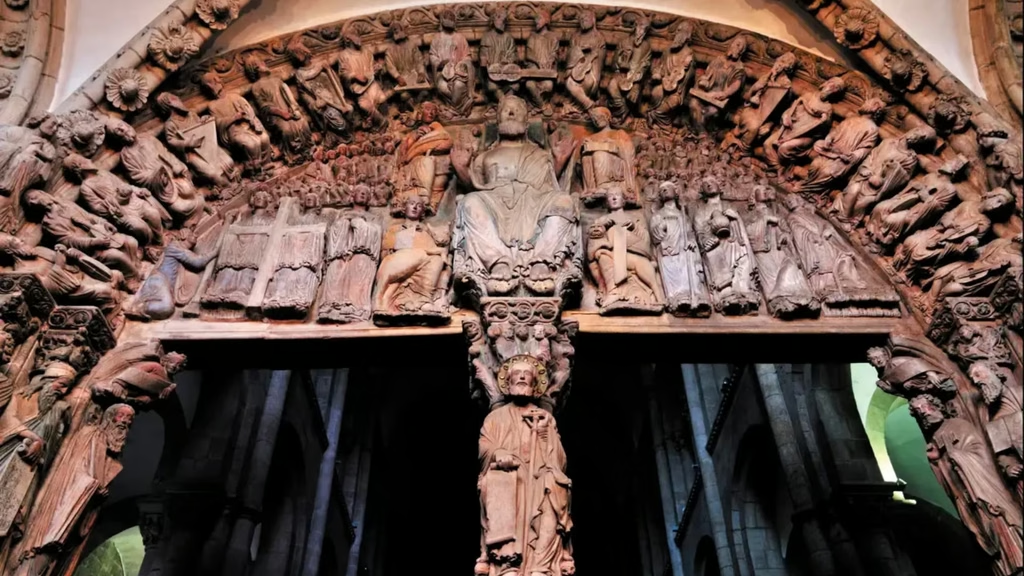
The Pórtico de la Gloria was created by Master Mateo, one of the most outstanding sculptors of European Romanesque art. Mateo worked on the Cathedral of Santiago between 1168 and 1188, and his work represented a revolution in Romanesque sculpture because of its naturalism, its expressiveness and his mastery of technique.
Master Mateo directed a workshop in which he trained numerous sculptors and stonemasons, who spread his style throughout the north of the Iberian Peninsula. His great influence can be seen in works such as the Pórtico de la Gloria, the crypt that bears his name and the stone choir of the Cathedral. Mateo’s figure is documented in the Pórtico, where he appears kneeling on the mullion, looking towards the main altar.
The meaning of the Pórtico de la Gloria
The Pórtico de la Gloria is a representation of the Apocalypse of Saint John and of the Last Judgement. Each figure has a specific meaning within the ensemble. Here are the most notable elements:
- Christ in Majesty: He presides over the central arch. He shows the wounds of the crucifixion and is surrounded by the four Evangelists.
- The Apostles: They surround Christ on the central arch, with their attributes and symbols.
- The Prophets: They appear on the side arches and on the jambs, announcing the coming of the Messiah.
- The mullion: In the centre, the figure of the Apostle welcoming the pilgrims. Beneath his feet, Master Mateo is depicted kneeling.
- The Elders of the Apocalypse: Located on the archivolts, 24 elders with musical instruments surround the ensemble.
- The souls of Purgatory and the righteous: On the side arches, the souls awaiting the resurrection are represented.
History of the Pórtico de la Gloria
The Pórtico de la Gloria was built between 1168 and 1188 by Master Mateo, commissioned by King Ferdinand II of León and Archbishop Pedro Suárez de Deza. This work replaced the previous Romanesque doorway, which had become too small with the crowds of pilgrims.
Over the centuries, the Pórtico underwent various interventions and transformations:
- In the 16th century, a stone choir was added that partially concealed the doorway.
- In the 18th century, the Baroque façade of the Obradoiro was built, which protected the Pórtico from the weather.
- In the 20th century, various restorations were carried out to slow down its deterioration.
The restoration of the Pórtico de la Gloria
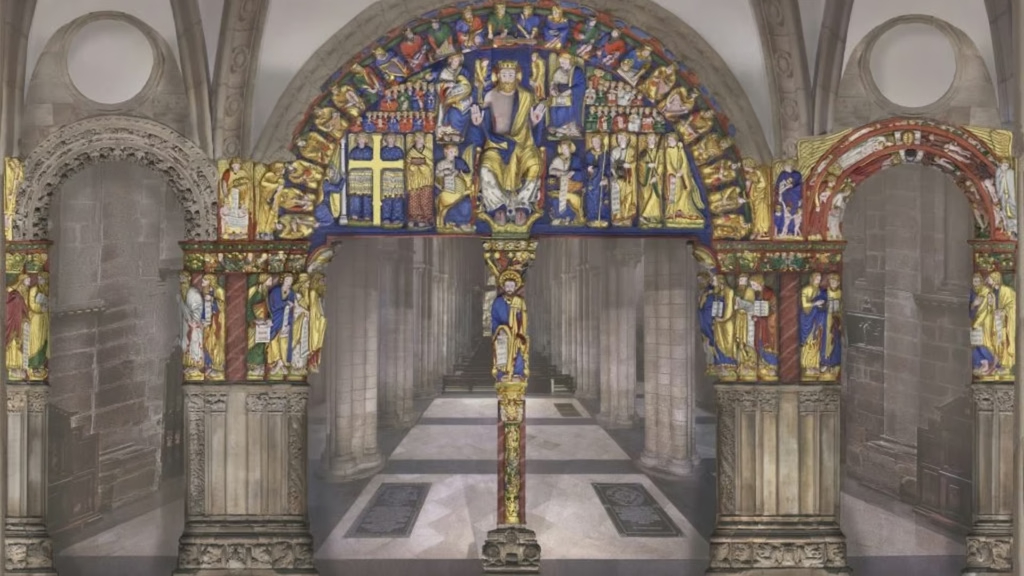
The restoration of the Pórtico de la Gloria was carried out between 2009 and 2018. The process was highly detailed and multidisciplinary and involved a team of experts in conservation, art history and chemistry. The main aim was to recover the original appearance of the work and slow down its deterioration.
During this restoration, it was discovered that the Pórtico de la Gloria was originally polychrome, that is, its figures were painted in vivid colours. The various studies made it possible to recover some traces of polychromy and to learn what its original appearance was like. In addition, the stones were cleaned and consolidated, and later additions that altered the view were removed.
How to visit the Pórtico de la Gloria
The Pórtico de la Gloria is inside the Cathedral of Santiago; access is included with the general visit to the Cathedral. However, the number of visitors is limited in order to protect the work, so it is advisable to book in advance, especially in peak seasons.
The visit to the Pórtico is carried out in small groups and with a guide, and lasts approximately 30 minutes. During the visit, the history, meaning and restoration of the work are explained. You must not touch anything or take photos with flash. Access to the Pórtico may be restricted during liturgical celebrations.