What were the military orders?
The military orders were religious and military institutions founded in the Middle Ages, whose members combined monastic life with armed combat. Their members were called knight friars, who took vows of poverty, chastity and obedience. On the other hand, they also wielded the sword in defence of the faith and of pilgrims. Their origin goes back to the Crusades, when the first orders arose to protect pilgrims travelling to the Holy Land.
On the Iberian Peninsula, the military orders were established in the 12th century, in the context of the Reconquista. The kings granted them lands, castles and privileges in exchange for military help. The orders became an essential pillar of royal power and an essential instrument for the defence of the territory.
The main military orders on the Camino de Santiago
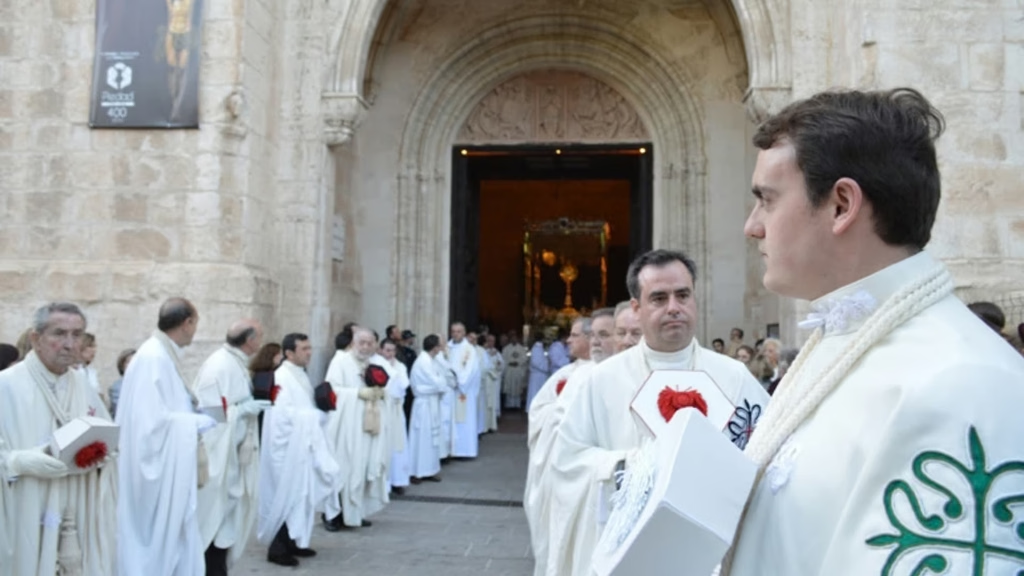
The military orders had a strong presence along the Camino de Santiago; each order had its own characteristics and functions:
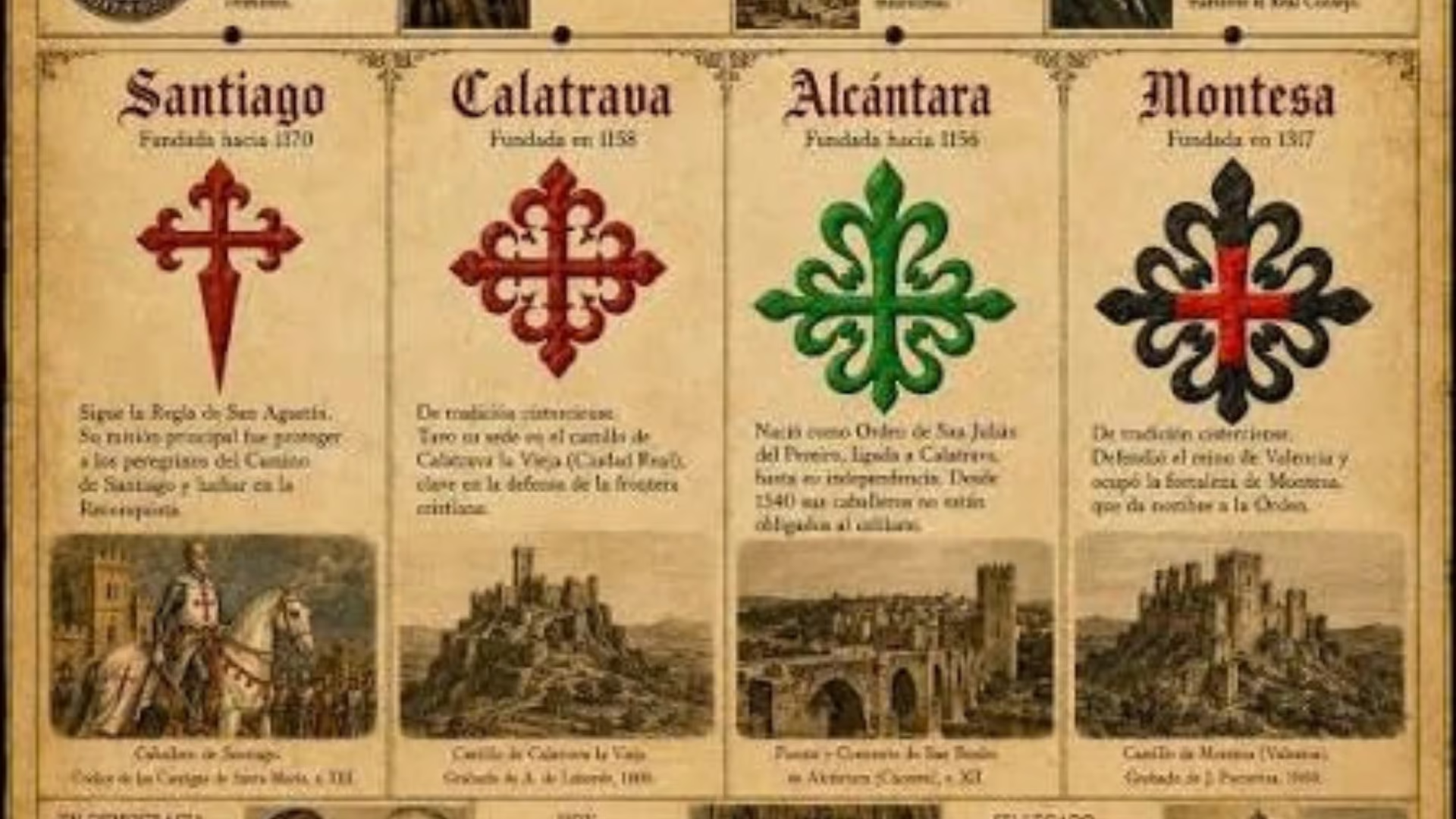
- The Order of Santiago: It was founded in the 12th century to protect pilgrims going to Compostela and to defend the southern frontier. It was the order most closely linked to the Camino, with commanderies all along the route.
- The Order of the Templars: Founded in Jerusalem in 1118, it reached the Iberian Peninsula in the 12th century and established itself at strategic points on the Camino Francés, such as Ponferrada and Puente la Reina.
- The Order of Saint John of Jerusalem: Popularly known as the Hospitallers, it devoted itself to the care of sick pilgrims and to the management of hospitals.
- The Order of Calatrava: It originated in Castile and had a presence on different sections of the Camino and in border areas.
- The Order of Alcántara: Of Extremaduran origin, it took part in the defence of the Jacobean routes in the western Iberian Peninsula.
Functions of the military orders on the Camino de Santiago
The military orders performed multiple functions along the Camino de Santiago. These are the main functions:
- Protection of pilgrims: Escorting walkers on the most dangerous sections and defending them from attackers and bandits.
- Surveillance of the roads: Patrolling routes and maintaining security at mountain passes.
- Management of hospitals and hostels: Caring for sick or tired pilgrims in their commanderies and hospitals.
- Custody of castles and fortresses: They defended the strategic points of the Camino and guaranteed control of the territory.
- Administration of properties and donations: They managed the lands and rents they received from funding
- Collection of tolls and fees: They controlled passage over bridges and roads, charging taxes that financed their activities
Commanderies and castles of the military orders on the Camino de Santiago
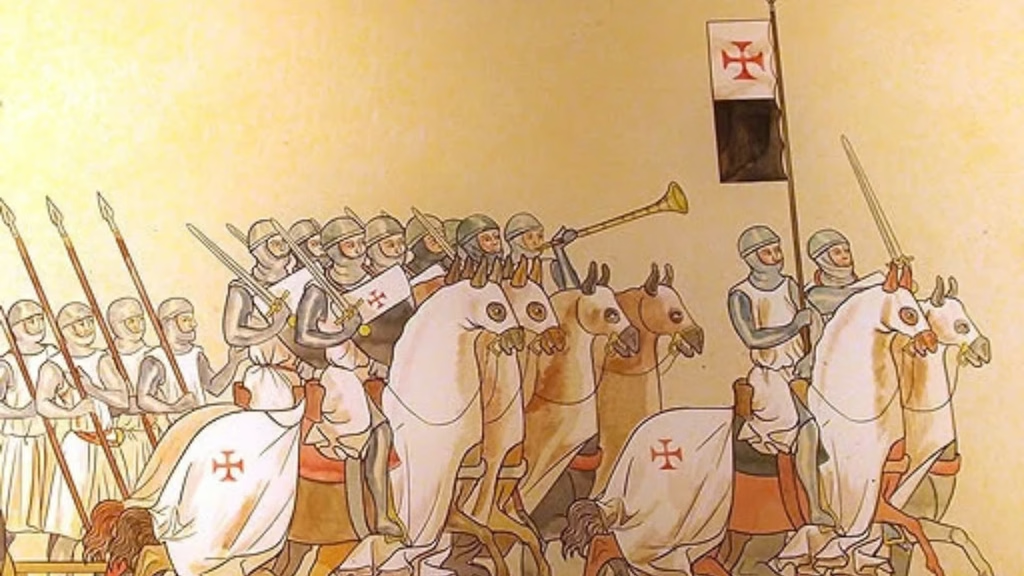
The military orders created commanderies and castles along the Camino de Santiago, many of which are preserved and can be visited:
- Ponferrada Templar Castle: The most outstanding fortress of the Order of the Temple. Built in the 12th century, it dominated the passage towards Galicia.
- Commandery of Puente la Reina: The Templars controlled the crossing of the river Arga together with the knights of the Order of Santiago.
- San Marcos de León: One of the most important commanderies of the Order of Santiago. It is currently a Parador de Turismo.
- Commandery of Portomarín: It administered the crossing of the river Miño and cared for the pilgrims entering Galicia.
Questions about the military orders on the Camino de Santiago
Which was the most important military order on the Camino de Santiago?
The Order of Santiago was the most important and the most closely linked to the Camino, since its main mission was to protect pilgrims and defend the Jacobean route. It was followed in importance by the Templars and the Hospitallers.
Are there any military orders on the Camino today?
The military orders as such disappeared, but some of their successor institutions, such as the Order of Malta (heir to the Hospitallers), are still active and maintain hostels and charitable work on the Camino.