What role did the Franciscans play on the Camino de Santiago?
The Franciscans played an essential role on the Camino de Santiago from their arrival in the 13th century. Their main function was the material and spiritual assistance of pilgrims. Their work focused on three ideas: welcome in convents and hospitals, preaching and the administration of the sacraments.
The presence of the Franciscans spread along the main pilgrimage routes, where they founded convents in strategic locations. These centres served as places of rest and as assistance centres for sick pilgrims. The Franciscan Rule, based on poverty and hospitality, fitted perfectly with the needs of the route.
In addition, they stood out in the creation of pilgrim hospitals, institutions that provided accommodation, food and basic care to those who arrived exhausted or ill.
Historical context of the Franciscans on the Camino de Santiago
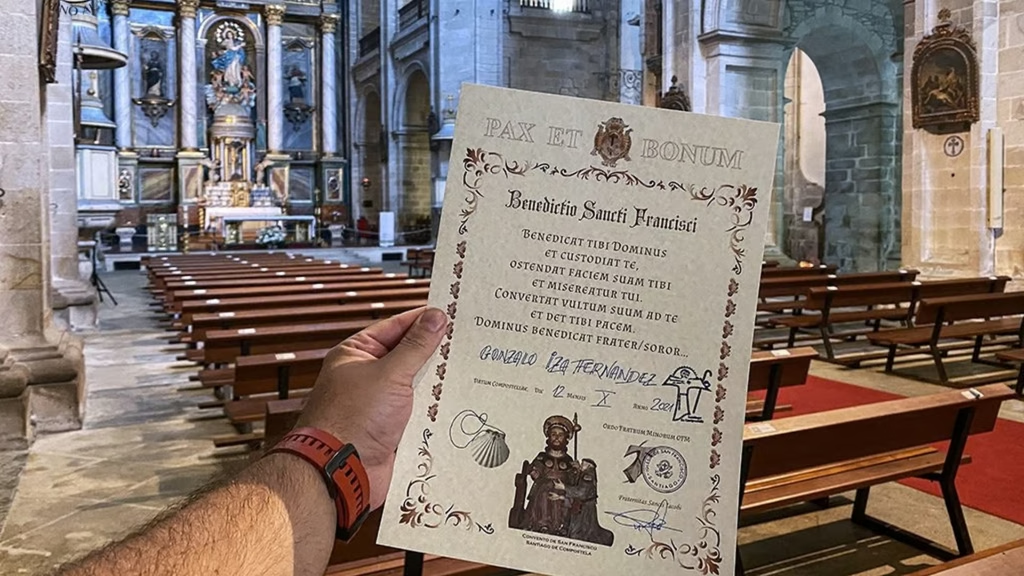
The Order of Friars Minor was founded by Saint Francis of Assisi in 1209 and approved by Pope Innocent III in 1210. Its expansion across Europe was extremely rapid: within a few decades, the Franciscans had established themselves in the main cities and towns of the Iberian Peninsula. Their arrival took place around 1217-1220, coinciding with the rise of pilgrimage to Compostela.
The 13th century was their golden age on the Camino de Santiago; the order founded convents, hospitals and hostels. Many of these infrastructures were financed by the monarchy or by nobles, in order to strengthen popular religiosity.
During the 14th and 15th centuries there were ups and downs due to the Black Death, wars and economic crises. Later, in the 16th and 17th centuries, the order lost much of its influence on the Jacobean routes, but it maintained its presence until the disentailment of the 19th century, which led to the closure of numerous establishments.
The Franciscans’ charitable work with pilgrims
The Franciscans’ charitable work was very diverse and covered a great many acts. In the convents and hospitals, the Franciscans offered:
- Accommodation and food: Pilgrims could spend the night in the convents and receive hot meals.
- Care for the sick: The Franciscans looked after the sick or injured, and provided them with basic care.
- Spiritual comfort: They provided confession, mass and spiritual accompaniment to pilgrims.
- Help for the poorest: The Franciscans cared for poor pilgrims, who could not pay for accommodation.
- Information and guidance: they helped pilgrims plan their routes and gave them information about the Camino de Santiago.
Franciscan convents on the Camino de Santiago
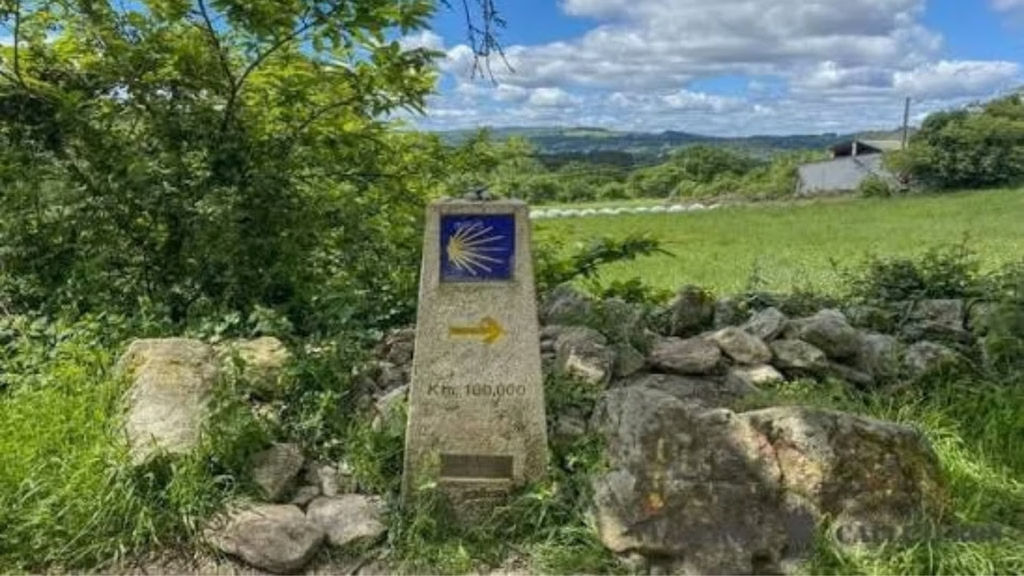
Along the Jacobean routes, numerous convents were built, many of which are still preserved today:
- Convent of San Francisco de Santiago de Compostela: It was founded in the 13th century and is one of the most important Franciscan convents on the Camino de Santiago.
- Convent of San Francisco de León: It is located right on the Camino Francés and was a centre for welcoming pilgrims.
- Convent of San Francisco de Burgos: Founded in the 13th century, one of the first in Castile.
- Convent of Pamplona: Located on the Camino Francés.
- Convent of San Francisco de Ourense: On the Camino Sanabrés, it was a centre for assisting pilgrims.
The Franciscan mark on the heritage of the Camino de Santiago
The Franciscan mark on the heritage of the Camino de Santiago is significant. You will find convents, churches and hospitals that form part of the landscape of the Jacobean route, and many of these places have been restored and converted for new uses. Some may now be pilgrim hostels, hotels or cultural centres, but they preserve their history.
In addition, this mark can be seen in the spirituality and hospitality of the Camino de Santiago. The spirit of welcome and service to others is still present in many places on the Iberian Peninsula that cater to pilgrims.