The importance of carrying a first-aid kit for the Camino de Santiago
It is essential to have a first-aid kit for the Camino de Santiago; it is necessary to be prepared for the pilgrim’s ailments. It is important to carry a first-aid kit for its immediate response capability. If you are crossing an isolated mountain in León or Galicia, having a band-aid, an antiseptic, or a painkiller on hand allows you to solve the problem immediately.
On the other hand, the kit gives you security; knowing that you are self-sufficient for basic first aid allows you to focus 100% on the journey and forget about the logistical stress of having to seek emergency assistance.
What does the pilgrim’s first-aid kit contain?
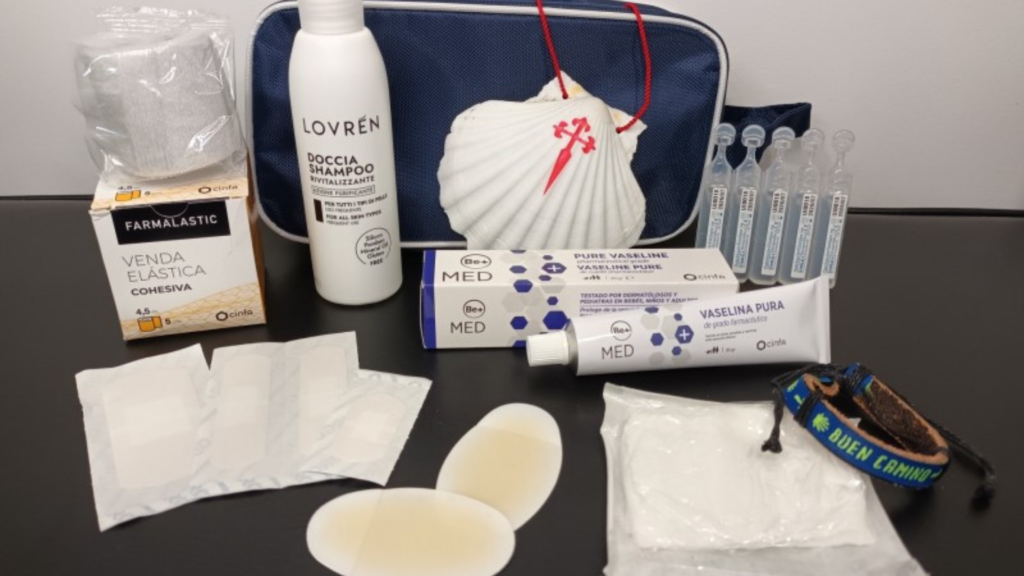
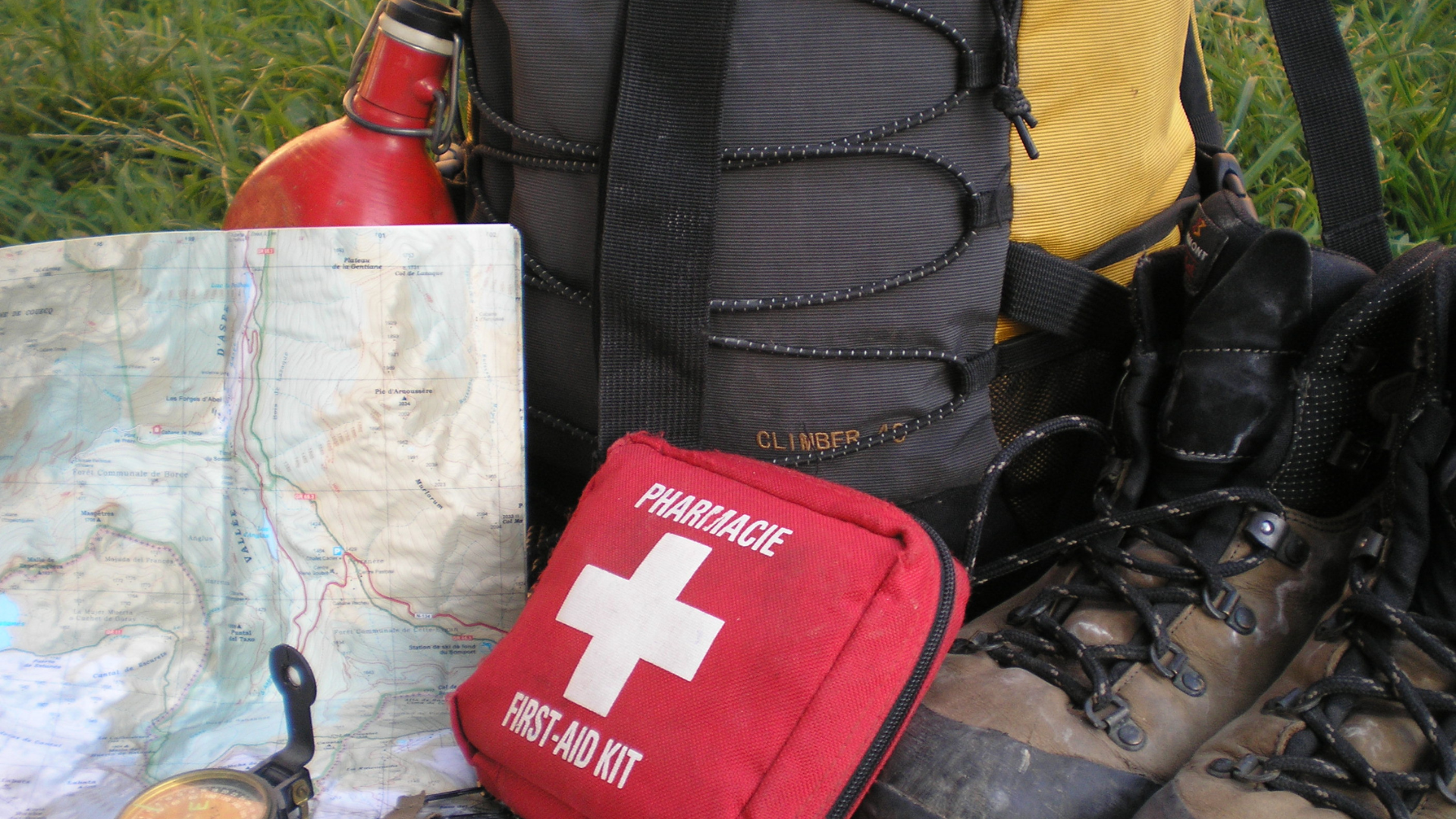
Organizing the contents of the first-aid kit for the Camino de Santiago requires a great deal of practicality. The main thing is to cover the most common eventualities on the route, such as wounds, muscle problems, and skin wear.
Basic wound care material
The most important items in the kit are products for cleaning and protecting small wounds or scrapes. It is advisable to include saline solution in single-dose format and a small bottle of antiseptic to prevent infections in wounds.
It should also contain covering material, a couple of sterile gauze pads, cloth tape, and a pack of band-aids in different sizes.
The blister kit
Blisters are the pilgrim’s main enemy, so it is essential to carry hydrocolloid dressings that act as a second skin, protect against continuous friction, and relieve pain.
For cases of extreme blisters, the traditional remedy remains essential. In your kit, add a hypodermic needle and some cotton thread; this will pierce the blister, drain the fluid, and leave the thread in place so the wound can dry overnight.
Essential medications
Carrying a small supply of basic medications will help you have a good night at the hostel. Painkillers and anti-inflammatories are vital for mitigating joint pain, contractures, and headaches after a tough day.
Do not forget to take care of your digestive system, which can suffer due to changes in water and diet between regions. Carry a stomach protector and anti-diarrheal tablets as a precaution.
Creams and muscle prevention
Prevention is always the best ally on the Camino de Santiago; a jar of petroleum jelly is one of the best products. Apply it every morning to your feet, armpits, thighs, and groin; it reduces friction and prevents chafing from forming.
Additionally, for the end of each stage, include a jar of hot/cold muscle cream to massage your calves, quadriceps, lower back, and neck, restoring circulation for the next day.
Necessary extras for cyclists
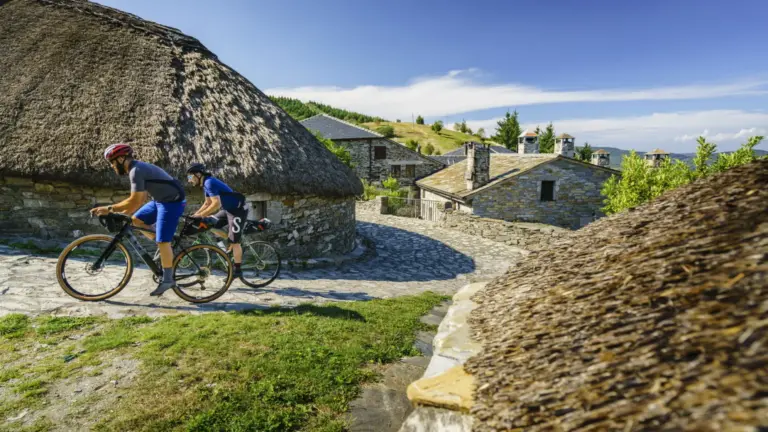
For cyclists, who suffer a different type of wear and tear, it is necessary to add other products to the first-aid kit for the Camino de Santiago. Include an anti-friction cream for the chamois of your bib shorts, to avoid saddle chafing.
Additionally, on a bicycle you can suffer scrapes or more serious wounds from falls. For this reason, add a couple of large dressings and an elastic bandage to cover external abrasions on elbows or knees.
Where to store the first-aid kit for the Camino de Santiago in your luggage?
Comfort is the most important thing; the kit is useless if it is at the bottom of your luggage. If you are walking, carry it in the “top lid” or outer pocket of your backpack; if you are cycling, the best place is the handlebar bag or the top of your panniers to keep it within easy reach.
To avoid any problems, always put it inside a zip-lock bag or a waterproof toiletry case, so you won’t get any surprises.