The French Way. The queen of routes with legendary landscapes.
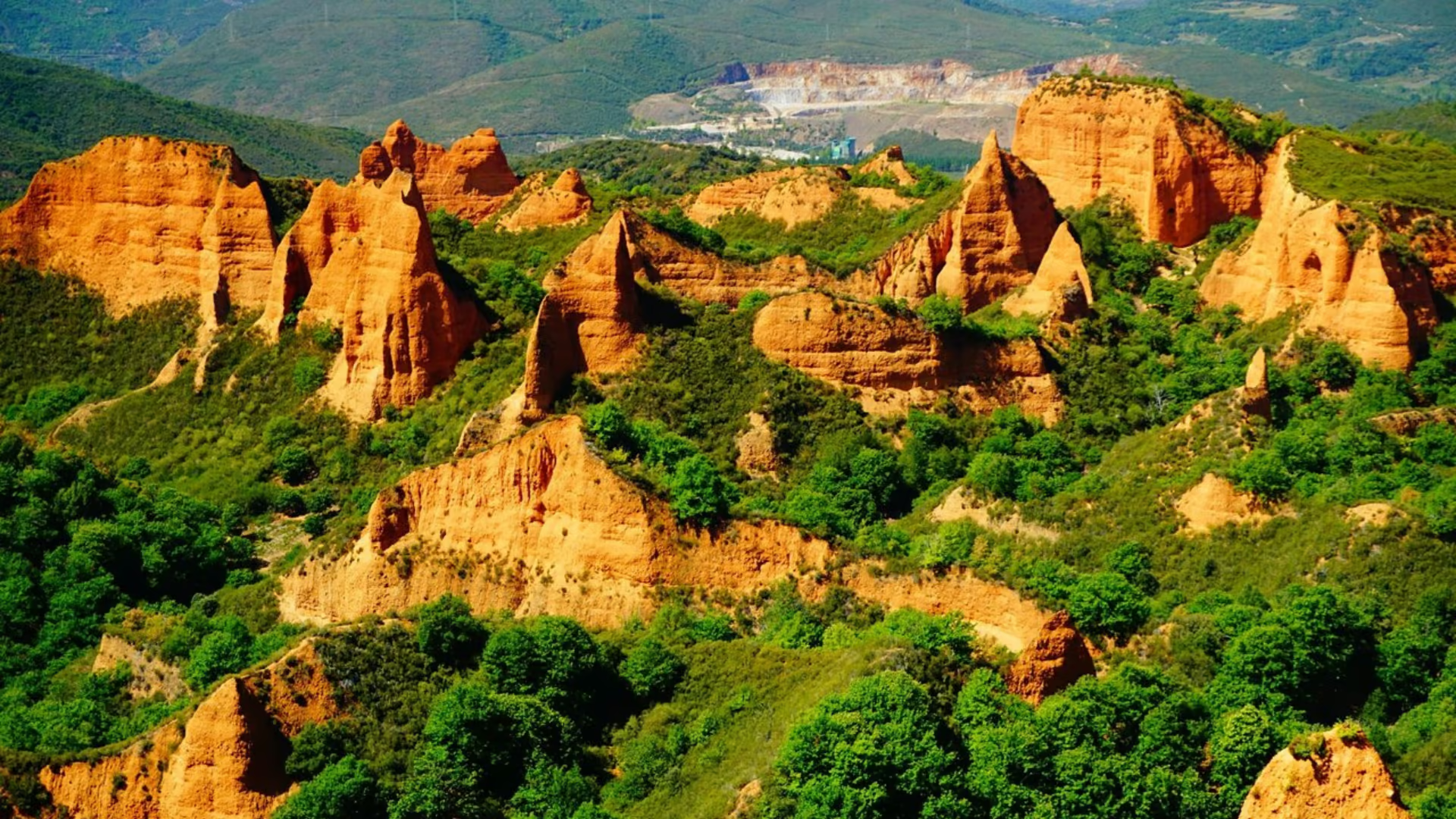
Las Médulas
Las Médulas, declared a UNESCO World Heritage Site, consist of a cultural and natural landscape created by Roman mining. Its reddish earth and rock formations, eroded by ancient gold extraction techniques, create a landscape that contrasts with the green of the surrounding chestnut trees. This site is located on the Winter Way, a variant of the French Way.
The Órbigo Bridge
The Órbigo Bridge is a masterpiece of medieval engineering that has become a symbol of the French Way. It spans 100 meters in length and features semicircular arches, offering a unique view over the Órbigo River and the Leonese floodplain.
The Villameca Reservoir
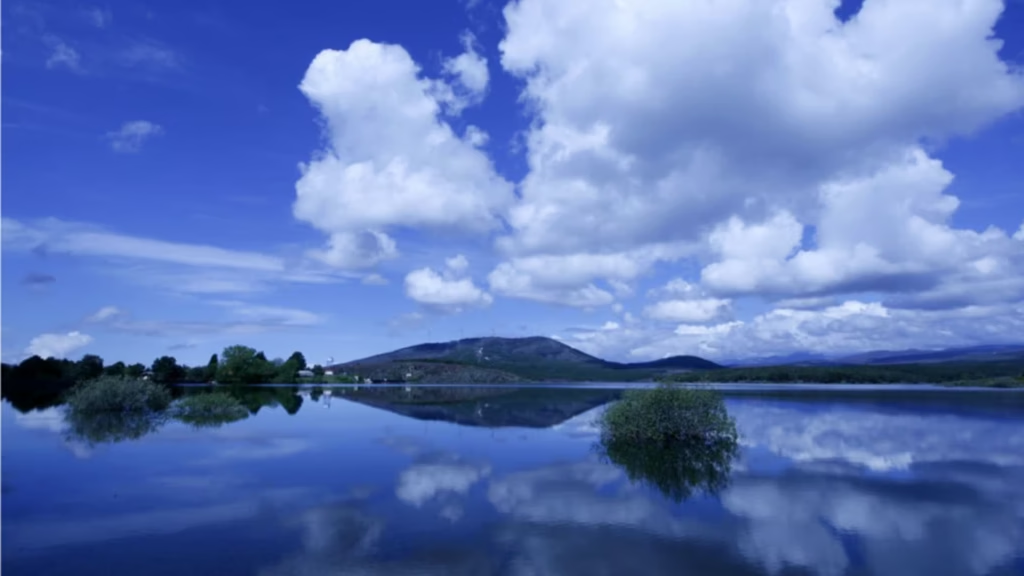
The Villameca Reservoir is located in the town of Santa Colomba de Somoza, in the region of Maragatería. This reservoir is surrounded by farmland and mountains, providing a landscape of great beauty and tranquility in the middle of the plateau.
Mount Irago
Mount Irago is known for its toughness and beauty, crowned by the famous Iron Cross. Here, you will find panoramic views of the Bierzo region and the mountains of León. Although it is a challenging stretch, it is rewarded with the landscape of valleys and mountains.
The Iron Cross
At the summit of Mount Irago stands the Iron Cross, one of the most symbolic places on the entire Camino de Santiago. The Iron Cross is a scenic and spiritual landmark, where pilgrims leave a stone brought from their place of origin as part of a ritual.
The Northern Way. Cliffs and the Cantabrian Sea.
The Flysch of Zumaia
On the Northern Way, as you enter the Basque Country, you will find the Flysch of Zumaia, one of the most remarkable geological landscapes in Europe. It consists of a succession of vertical rock layers that overlook the sea, forming cliffs.
El Cabo de Peñas
Upon arriving in Asturias, we come across Cabo de Peñas, the northernmost point of the region. It features imposing cliffs, over 100 meters high, that rise above the Cantabrian Sea, offering stunning views. The blue of the sea blends with the green of the Asturian meadows, creating a unique landscape.
The Beach of the Cathedrals
In Galicia lies one of Spain’s most famous natural monuments: the Beach of the Cathedrals (Playa de las Catedrales). This beach is famous for its imposing arches and rock formations that rise out of the sea; it is only fully accessible during low tide.
Cabo Vilán Lighthouse
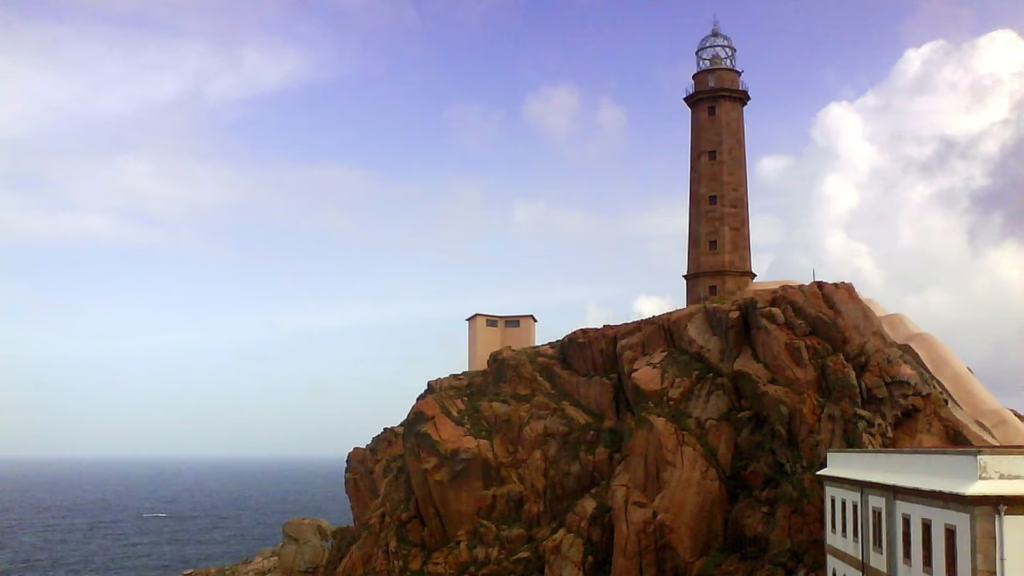
Cabo Vilán Lighthouse is located on the Atlantic Ocean and was the first electric lighthouse in Spain. It offers stunning views of the cliffs and open sea of the Costa da Morte, especially on stormy days, when the waves crash forcefully against the rocks.
The Portuguese Way. Between vineyards and the Miño River
The Miño River Estuary
Entering Galicia via the Portuguese Way offers you stunning views, thanks to the Miño River estuary. This wide estuary, where the river’s freshwater meets the ocean’s saltwater, is one of the most important wetlands in Spain.
Mount Santa Tecla
Mount Santa Tecla offers one of the best views on the Portuguese Way; from its summit, you can see the entire A Guarda estuary. Additionally, the mountain is home to an important Celtic hillfort, which adds historical and archaeological value, making it a magical place for pilgrims.
The Silver Way. Roman Heritage.
Cornalvo Natural Park
Cornalvo Natural Park, located on the Silver Way (Vía de la Plata), covers more than 10,000 hectares. It is a protected area with great biodiversity and a reservoir of Roman origin.
The Alcántara Reservoir
The Alcántara Reservoir, on the Tagus River, bathes the feet of the famous Alcántara Bridge, a masterpiece of Roman engineering. The combination of the bridge, the crystal-clear water, and the rugged landscape of Extremadura creates a monumental scene.