What does Ultreia et Suseia mean?
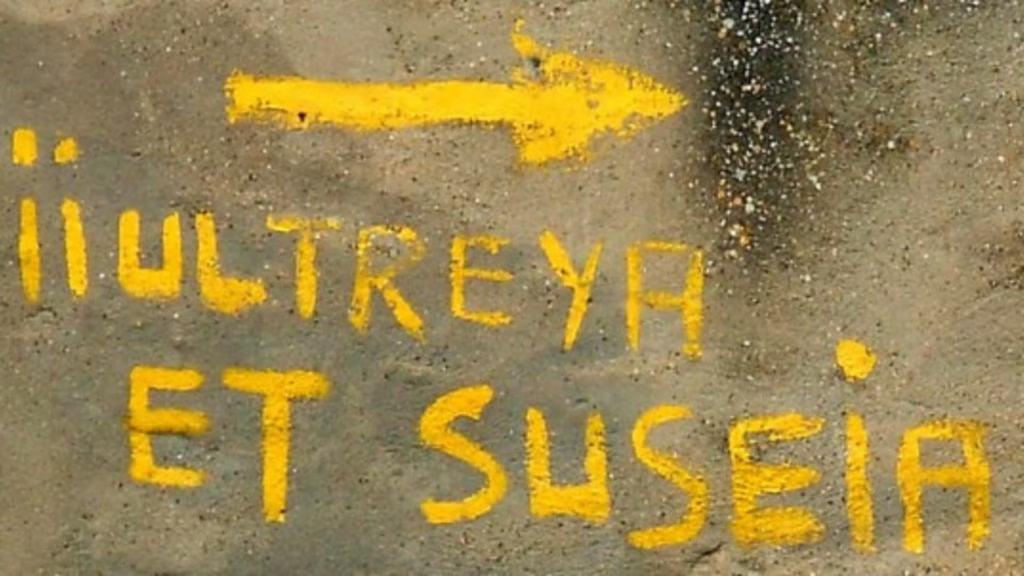
These two terms, “Ultreia” and “Suseia,” form a complete greeting among pilgrims.
- “Ultreia” (or ultreya), comes from the Latin “ultra” (beyond) and the interjection “eia”, and means “let’s go further”, “keep going” or “cheer up”.
- “Suseia” (or suseia), is the response, composed of “sus” and “eia”, which translates as “and higher” or “and beyond”.
Together, these words form a dialogue: one pilgrim says “Ultreia” (“keep going”) and the other responds “Et Suseia” (“and beyond”), encouraging each other to continue the journey. It is the medieval origin of “Buen Camino”.
Historical origin of Ultreia et Suseia
The origin of this greeting dates back to the 12th century and is documented in the Codex Calixtinus, the first guide to the Camino de Santiago. It is the oldest surviving Jacobean greeting and reflects the spirit of help and camaraderie that has always characterized pilgrims.
Ultreia et Suseia in the Codex Calixtinus: the three appearances
This ancient greeting “Ultreia et Suseia” appears up to three different times within the Codex Calixtinus.
- Appendix II: It appears in the “Dum pater familias”, known as the “Song of the Flemish Pilgrims” or “Ultreia Chant”, with the stanza: “Herru Santiagu, Got Santiagu, E ultreia, e suseia, Deus adiuva nos”.
- Appendix I: It appears in the hymn “Ad honorem regis summi” with the stanza “E ultreia esus eia decantemus iugiter”
- Book I: It appears in chapter XXVI, in Pope Callixtus’s mass for July 25, with the stanza “suseia, ultreia”.
These three pieces of evidence confirm the importance of the expression in the Jacobean history and tradition of the 12th century.
The “Song of the Pilgrims” or Ultreia Chant
The “Song of the Flemish Pilgrims” (Dum pater familias) is the most famous chant associated with Ultreia. It is considered a medieval hymn that pilgrims sang during their journey, and whose chorus has endured for eight centuries:
Herru Santiagu, Got Santiagu, E ultreia, e suseia, Deus adiuva nos.
It consists of a mix of Latin, Provençal, and Old German, which conveys the international character of medieval pilgrimages.
The greeting among medieval pilgrims
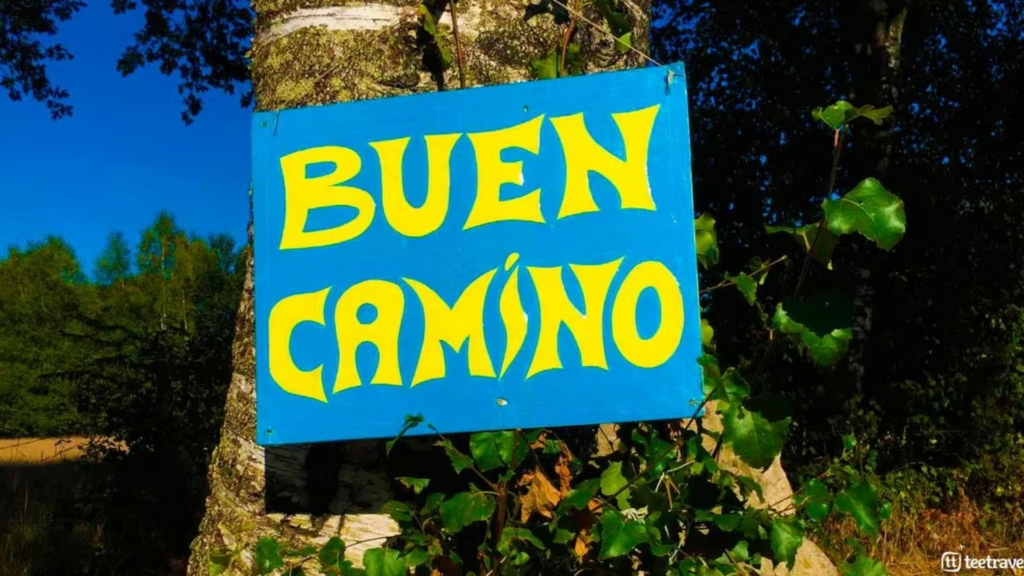
In the Middle Ages, “Ultreia et Suseia” was the most common greeting among pilgrims doing the Camino de Santiago. When the pilgrim said “Ultreia”, the other replied “Et Suseia”, completing a greeting that was a safe-conduct in areas where the language was unknown.
This greeting was a gesture of courtesy and an act of mutual recognition as members of the pilgrim community. In some places, the complete greeting was “Ultreia, suseia, Santiago” (“keep going, beyond is Santiago”). Nowadays, although the most common greeting is “Buen Camino”, the term “Ultreia” remains a living expression in the Jacobean sphere.
Frequently asked questions about “Ultreia et Suseia”
Does “Ultreia” mean “Hallelujah”?
It is a popular belief without historical foundation. Although in the Middle Ages pilgrims could use the expression with a sense of spiritual joy, “Ultreia” does not mean “Hallelujah”. Its etymological origin is clear: it comes from the Latin “ultra” (beyond) and the interjection “eia”. The confusion may come from the festive context of the chants in the Codex Calixtinus.
Is it still used today?
Yes, especially among veteran pilgrims, Jacobean associations, and at cultural or religious gatherings. Although “Buen Camino” is the most widespread greeting, “Ultreia” remains a traditional greeting with great symbolic weight and is commonly seen in signage and in the language of more experienced pilgrims.
What is its relationship with the Cursillo de Cristiandad?
The Cursillos de Cristiandad movement adopted the word “Ultreya” to designate its post-cursillo meetings, giving it a sense of follow-up and perseverance in faith. This relationship is purely symbolic, with no direct link to the Camino de Santiago beyond the borrowing of the word.