Why was the Camino de Santiago a judicial punishment?
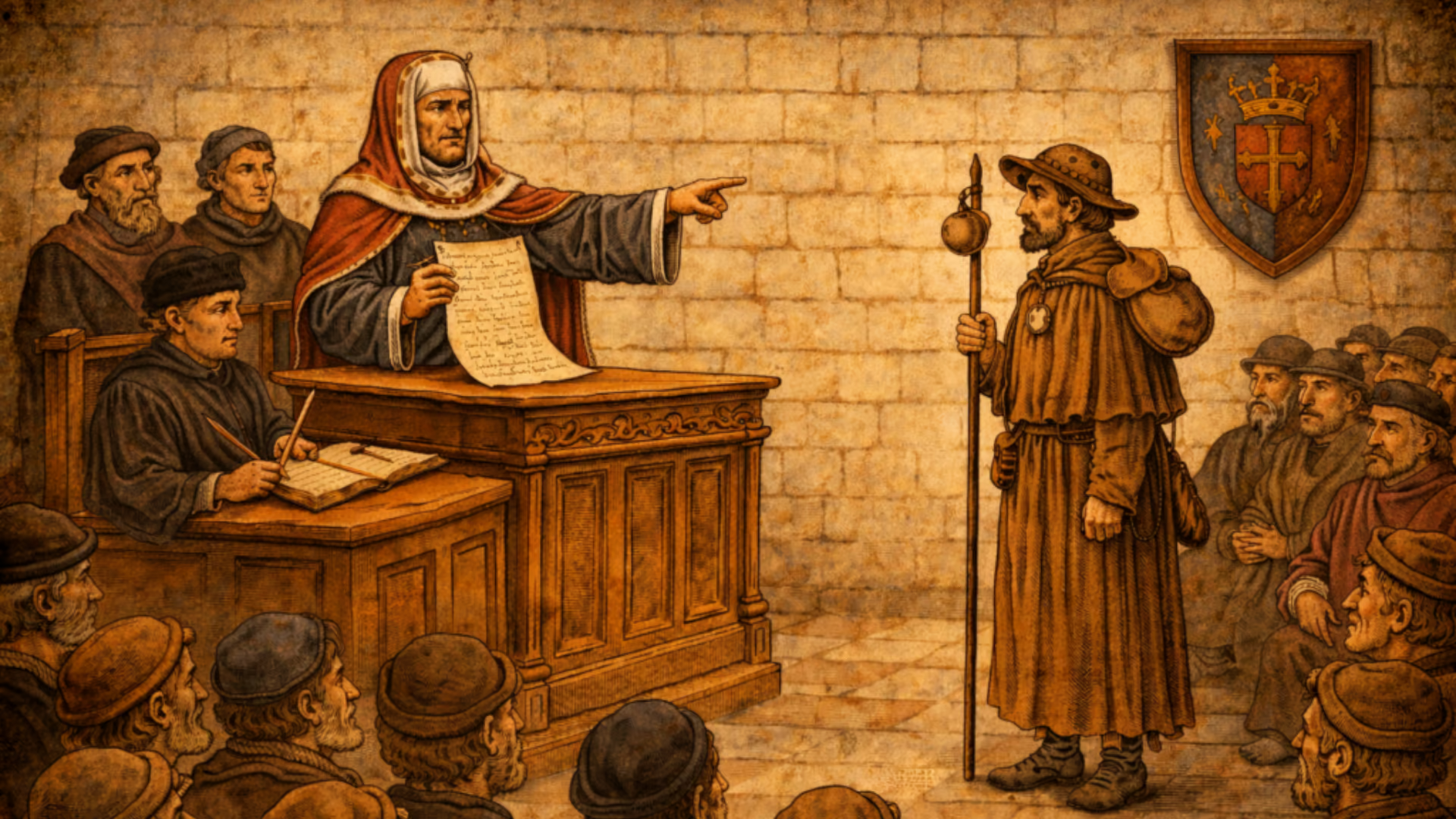
Pilgrimage as a punishment has its origin in medieval canon law. In this era, the Church had great power, and spiritual punishments were as feared as physical ones. Pilgrimage to Santiago, Rome or Jerusalem was considered a form of expiation: the condemned person had to travel a long journey, suffering hardships and demonstrating repentance, to obtain forgiveness for their sins.
Over time, the courts began to impose pilgrimage as a punishment for serious crimes, specifically those that attacked life or the faith. For this very reason, the punishment fulfilled a dual function:
- Punish the offender
- Remove the offender from the community for a time, avoiding conflicts and revenge.
Crimes punished with the penalty of pilgrimage
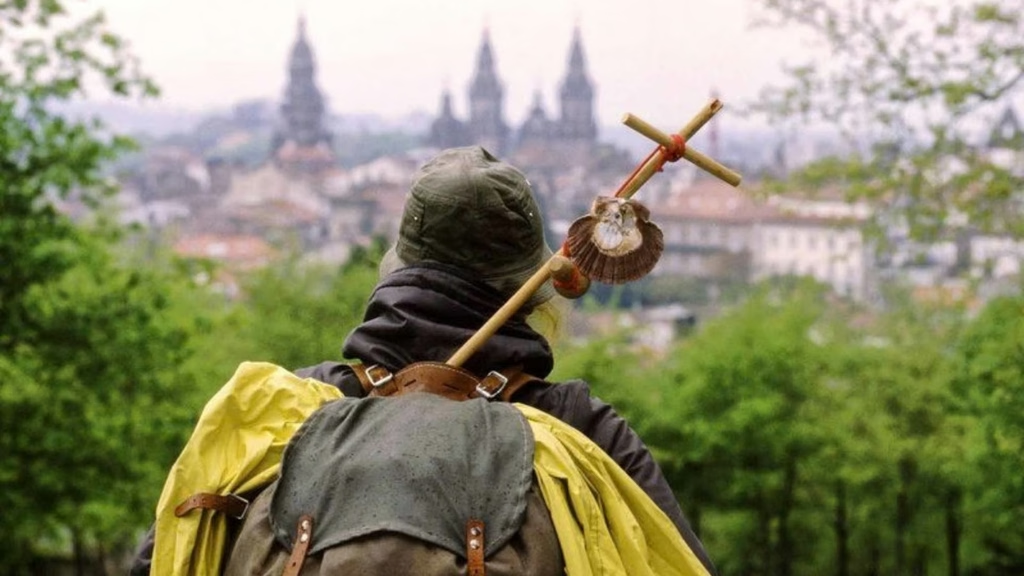
In the past, not all crimes were punished with pilgrimage. The penalty was imposed for serious offences, and the duration and conditions varied depending on the seriousness of the crime and the court’s decision. These are the most common crimes that were punished with the penalty of pilgrimage:
- Homicide: Usually punished with a long and penitential pilgrimage, as it was one of the most serious crimes.
- Heresy: Those convicted of this crime had to make a pilgrimage to Santiago, Rome or Jerusalem as a sign of repentance and to reintegrate into the Christian community.
- Robberies and thefts.
- Insults and slander: In some cases they could be sentenced to pilgrimage for serious verbal offences.
- Adultery: It was not common, but it could be punished with a penitential pilgrimage.
- Forgery of documents.
How the penalty of pilgrimage to Santiago was served
The penalty of pilgrimage did not consist only of making a pilgrimage to Santiago; the condemned person had to comply with a series of conditions imposed by the court. The process began with the sentence, which specified the destination, the deadline and the conditions of the journey.
The condemned person generally had to travel the Camino on foot, by their own means, and sometimes in penitent’s clothing. They had to confess and take communion in certain churches, and bring proof of their pilgrimage: a stamped credential, a certificate from the Cathedral of Santiago or witnesses. If they did not complete the pilgrimage within the established deadline, they could be punished with more severe penalties.
Historical examples of forced pilgrimages
The case of those convicted of homicide
One of the best-known cases is that of those convicted of homicide in the Crown of Castile. At the end of the Middle Ages, the courts imposed a pilgrimage to Santiago on murderers as a form of expiation. The condemned person had to travel the French Way from their place of origin, and present themselves at the Cathedral of Santiago to obtain the certificate. On some occasions, the pilgrimage was repeated over several years.
The forced pilgrimage of heretics
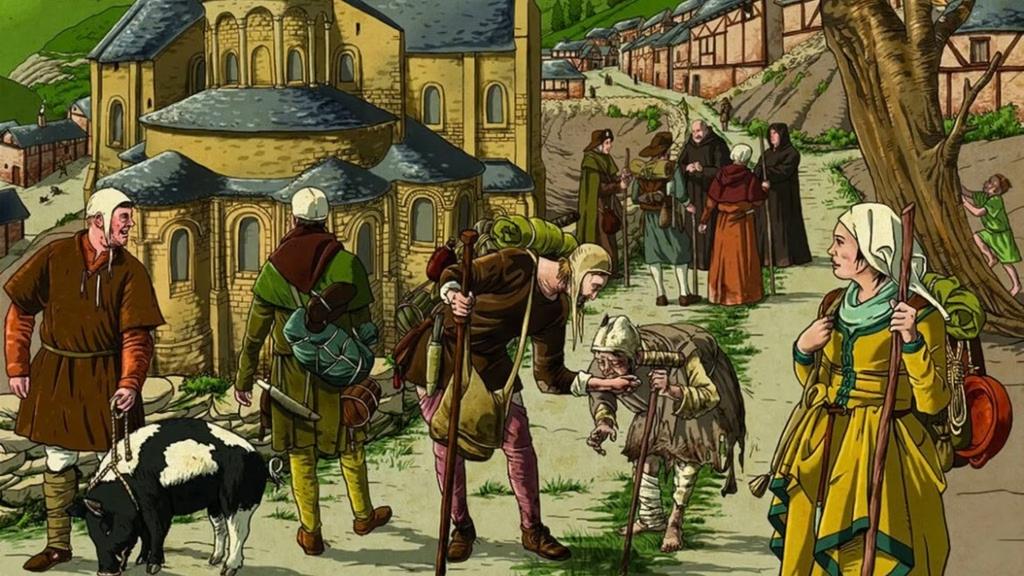
People convicted of heresy could be sentenced to make a pilgrimage to Santiago. In some cases, the penalty had a doctrinal component: the heretic had to demonstrate repentance and submission to the Catholic Church. The pilgrimage was accompanied by other penalties such as: public abjuration or confiscation of property.
The disappearance of the penalty of pilgrimage
The penalty of pilgrimage to Santiago de Compostela began to disappear from the 16th century onwards. The decline of the Camino was contributed to by the Protestant Reformation, the decline of pilgrimages and changes in criminal law. The courts began to impose less costly and more efficient practices: galleys, forced labour or prison.
During the 18th century, pilgrimage as a punishment fell into disuse until it disappeared. The Spanish Penal Code of 1822 no longer included pilgrimage among the applicable penalties. Currently, the Camino de Santiago is a voluntary experience, but for centuries it was a feared sentence.