What is the Camino de Santiago del Ebro?
The Camino del Ebro is a Jacobean route of approximately 450 kilometers that crosses the northeast of the Iberian Peninsula. The route begins around the Ebro Delta and follows the river upstream, crossing four autonomous communities: Catalonia, Aragon, Navarre, and La Rioja. The route ends in Logroño, where the Camino del Ebro joins the French Way.
What is the historical origin of the Camino del Ebro?
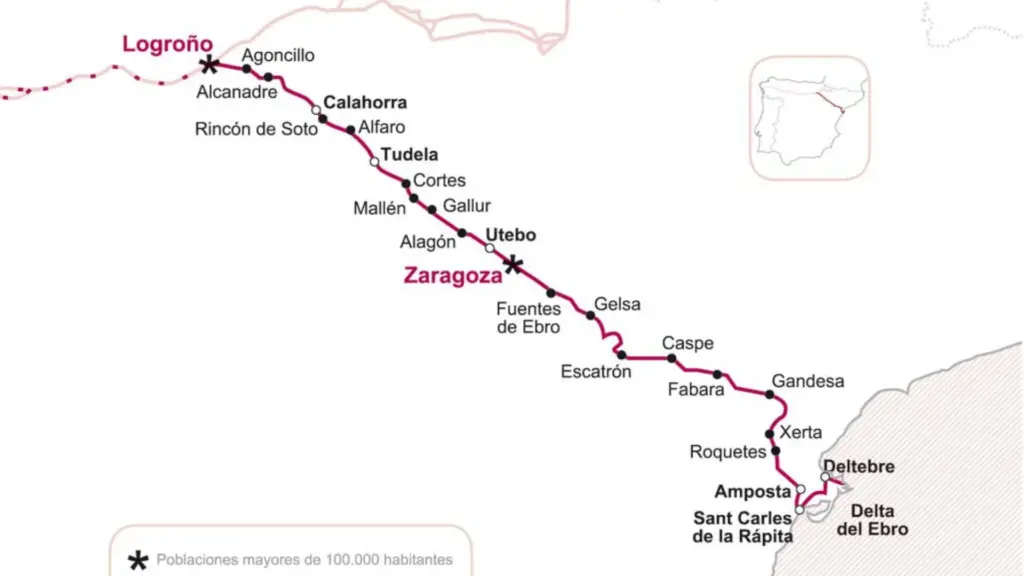
The historical origin of the Camino del Ebro dates back to the beginning of the Reconquista and the medieval surge in pilgrimages starting in the 10th century. Following the landing of travelers, merchants, and soldiers on the coast of Tarragona, the Ebro riverbed established itself as a safe and logical communication highway to head into the interior of the peninsula.
The spiritual weight of the route was reinforced by the emergence of medieval Christian faith centers along the banks of the Ebro, most notably the Basilica of El Pilar in Zaragoza and the Cathedral of Tudela. Over time, the Camino del Ebro gradually lost popularity compared to the French Way.
Route, Distances, and Kilometers: Where Does It Start and Where Does It Go?
On the Camino del Ebro, the official itinerary on foot is divided into about 18 days. For cyclists, these distances are usually grouped into 5 or 6 stages.
- Stage 1: Deltebre – Tortosa (40 km)
- Stage 2: Tortosa – Benifallet (29 km)
- Stage 3: Benifallet – Móra d´Ebre (28 km)
- Stage 4: Móra d´Ebre – Flix (26 km)
- Stage 5: Flix – Mequinenza (34 km)
- Stage 6: Mequinenza – Fayón – Fabara (25 km)
- Stage 7: Fabara – Caspe (21 km)
- Stage 8: Caspe – Escatrón (31 km)
- Stage 9: Escatrón – Quinto (32 km)
- Stage 10: Quinto – El Burgo de Ebro (30 km)
- Stage 11: El Burgo de Ebro – Zaragoza (18 km)
- Stage 12: Zaragoza – Torres de Berrellén (21 km)
- Stage 13: Torres de Berrellén – Alagón – Luceni (21 km)
- Stage 14: Luceni – Gallur – Mallén (21 km)
- Stage 15: Mallén – Cortes – Tudela (23 km)
- Stage 16: Tudela – Alfaro (24 km)
- Stage 17: Alfaro – Calahorra (25 km)
- Stage 18: Calahorra – Alcanadre – Logroño (51 km)
What are the infrastructure and albergues like on the Camino del Ebro?
On the Camino del Ebro, the infrastructure is austere, scattered, and municipal. The pilgrim network on this route is very limited. Accommodations usually depend on local town halls. Furthermore, it is practically mandatory to call the town hall a few hours in advance so they can come open up for you and stamp your credential.
On the other hand, on this route, you will face long days exposed to the sun, where you will walk for more than 30 kilometers without crossing a single water fountain or shop.
Places and Monuments along the Camino del Ebro
By taking this route, you will delve deeper into the Mudéjar, Roman, and medieval heritage of the peninsula. The Camino del Ebro features a showcase of monuments and landscapes.
- Ebro Delta Natural Park: An immense plain of rice fields, dunes, and coastal lagoons that offer a beautiful visual landscape.
- Cathedral of Santa María de Tortosa: A Catalan Gothic-style cathedral built next to the river. It features a Baroque facade and a medieval cloister.
- Templar Castle of Miravet: A fortress of Islamic origin renovated by the Order of the Temple in the 12th century.
- Basilica of El Pilar (Zaragoza): A Baroque basilica with majestic domes covered in colorful tiles that reflect on the waters of the Ebro.
- Aljafería Palace (Zaragoza): An 11th-century fortified palace that represents Hispano-Muslim art in northern Spain.
- Cathedral of Santa María de Tudela: A 12th-century Romanesque and Gothic cathedral built over a former mosque, well-known for its Judgment Door (Puerta del Juicio).
- Collegiate Church of San Miguel (Alfaro): A temple built of brick, famous for hosting the largest urban colony of white storks on its roofs.
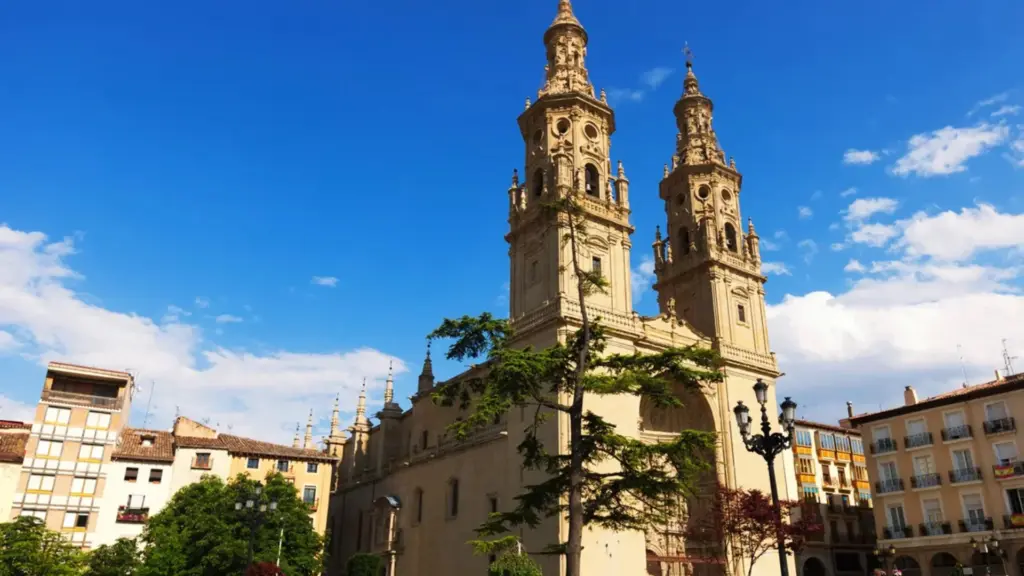
- Co-cathedral of Santa María de la Redonda (Logroño): A Gothic temple with openwork Baroque towers, which signals to the pilgrim the connection with the French Way.