What were female military orders?
Female military orders were communities of consecrated women who were part of the military orders, although with a different status and different functions. They were not women warriors, but nuns, sisters and commanderesses who took on a religious, administrative and welfare role.
The military orders were not simply protection institutions; they were also religious organisations with a hospitaller and spiritual dimension. Women joined in order to attend to that dimension: prayer, management of the patrimony, education and the reception of the knights’ families.
The origin of the female branches in the military orders
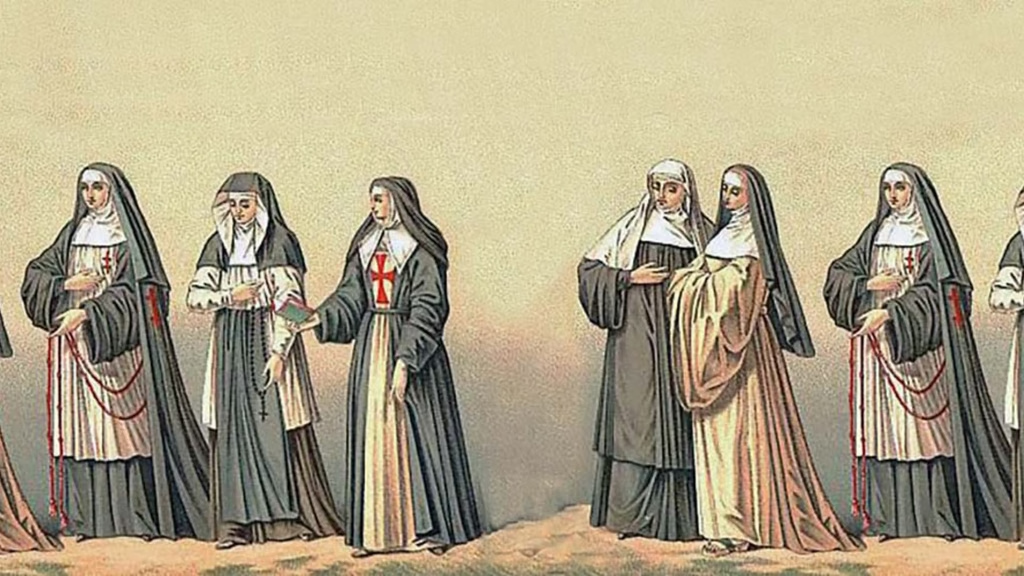
The female branches originated in the 12th century, in a context of spiritual renewal. The Gregorian reform had promoted a greater role for women in religious life, and the military orders needed structures to attend to the spiritual and material needs of their members and their families.
The Order of Santiago was the pioneer. From its foundation, it allowed the presence of married knights. This decision created the need to establish female convents where the wives and daughters of the knights could stay during military campaigns, Lent or Advent. The first Santiaguista female foundation was at the monastery of Santa Eufemia de Cozuelos, in 1186.
Female military orders in the Iberian Peninsula
In the Iberian Peninsula, the female presence in the military orders was concentrated in two institutions: the Order of Santiago and the Order of Saint John. These are the most notable aspects:
- The Order of Santiago: It was the only Hispanic military order that accepted the institutionalisation of women from its origins. It came to have up to six female monasteries, the first and most important being that of Santa Eufemia de Cozuelos, founded in 1186.
- The Order of Saint John of Jerusalem: Its main female foundation on the Iberian Peninsula was the monastery of Santa María de Sigena, founded in 1188 by Queen Sancha of Castile. It was a double monastery (with a male and a female community), where the prioress had authority over the men, and it became a royal pantheon and the archive of the chancery.
- The Order of the Temple: Although it had no female branches, documentary sources reveal a significant presence of women linked to the order in the Crown of Aragon and Navarre, mainly as donors, benefactresses or relatives of the knight friars.
The daily life of the sisters and nuns of military orders
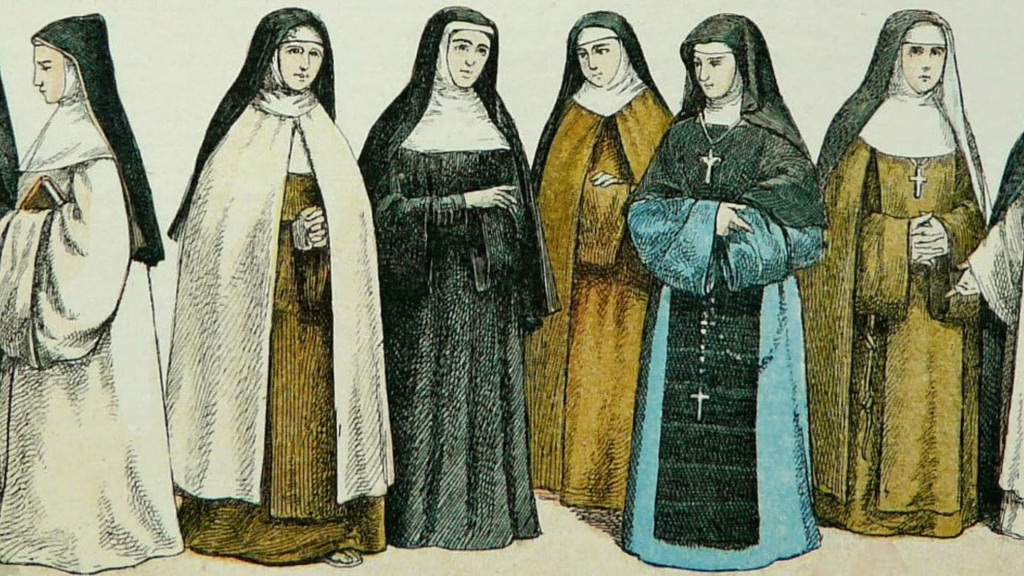
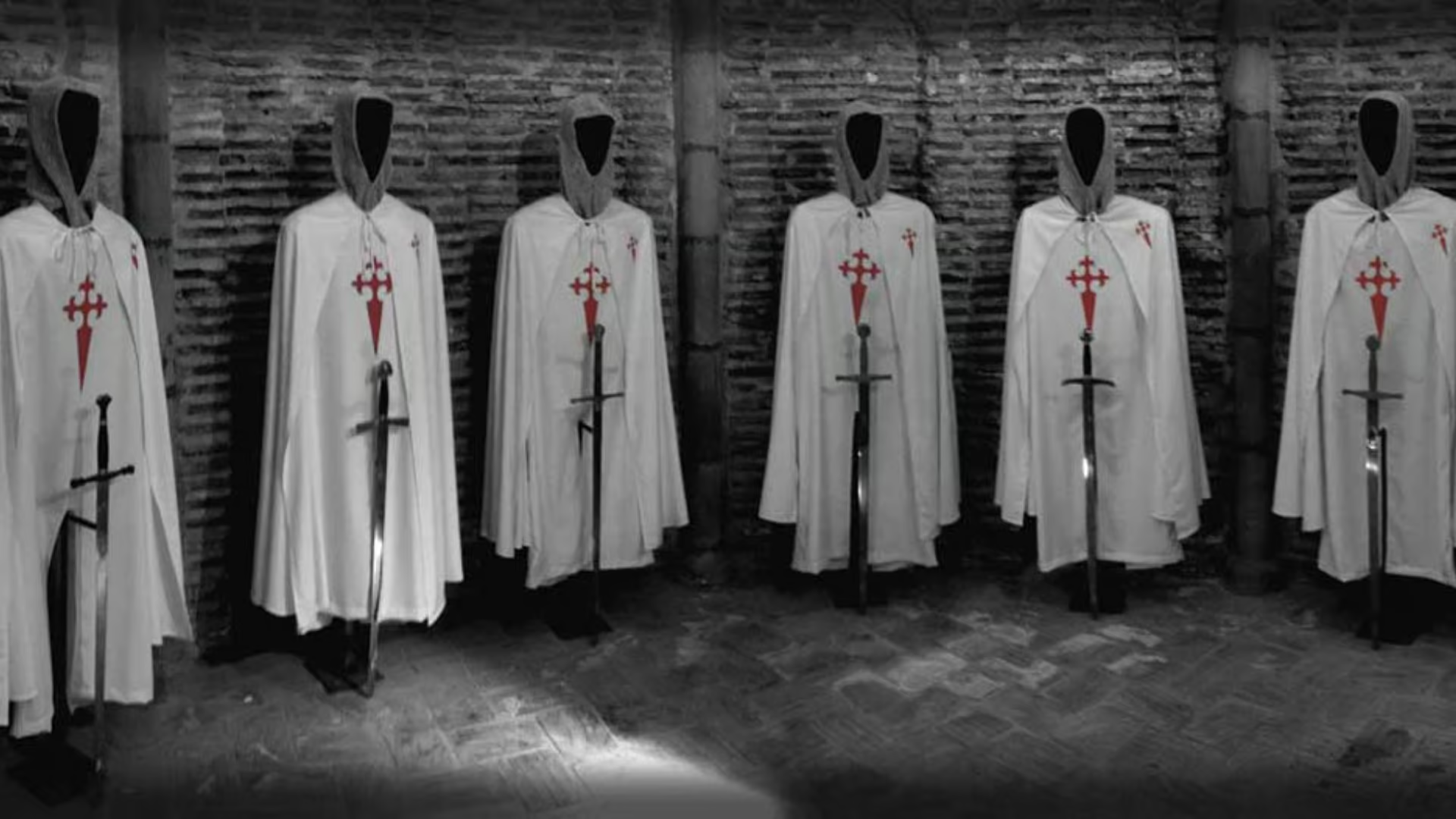
The lives of the sisters and nuns of the military orders were marked by prayer, work and the management of the patrimony. Specifically, in the monastery of Santa Eufemia de Cozuelos, the sisters took vows of obedience, poverty and conjugal chastity, a vow that distinguished them from other orders. They wore the white habit with the cross of Santiago embroidered in red, and their day was organised around the canonical hours, mass and processions.
Dentro existían una jerarquía clara:
- The commanderess was the highest authority: she combined in her person the spiritual power of the abbess and temporal power.
- The sisters: below the commanderess, and they performed different tasks: administrators, archivists, key-keepers, storekeepers, cooks, counsellors, correctors, hebdomadaries, readers, novice mistresses, portress, sacristan and vicar.
Most came from the middle and lower nobility, and many were daughters or widows of knight friars.
Questions about female military orders
Could women fight in the military orders?
No. Women integrated into the military orders did not fight. Their role was religious, administrative and welfare-related. The only Hispanic order with an institutionalised female branch was that of Santiago, and its sisters never took up arms.
Do the Commanderesses of Santiago survive today?
Yes. The Commanderesses of Santiago still exist as a religious order of contemplative life. In 2025 they celebrated their 850th anniversary, and they have convents in Spain, India and Equatorial Guinea, with nearly a hundred nuns. Their life is still marked by prayer, work and discreet service, keeping alive the charism of their medieval origins.