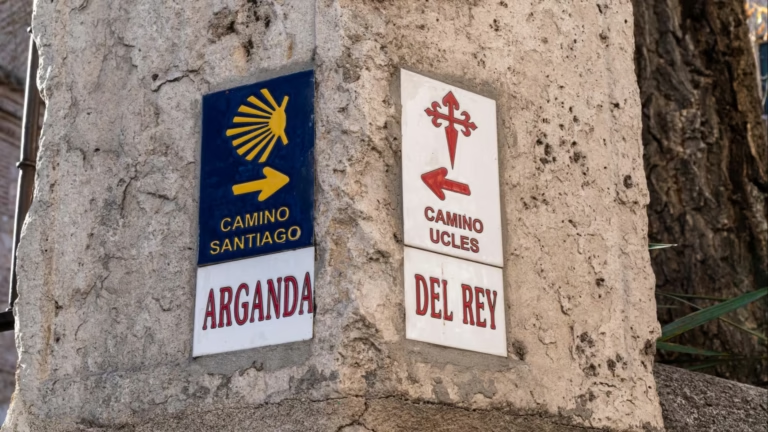
What is the Best Footwear for the Camino de Santiago? The Big Decision
It must be made clear that there is no such thing as the perfect footwear for the Camino de Santiago. The final choice should depend on three factors:
- The chosen Camino de Santiago route
- The time of year you walk the Camino de Santiago
- The mode of transportation used to do the Camino de Santiago
To avoid making a mistake, the recommendation lies in looking for three qualities: breathability, support, and previous breaking-in. One of the biggest mistakes made by pilgrims is showing up at kilometer zero with a brand-new pair of shoes. It is essential to have trained in them during the preceding months.
The Right Socks for the Camino de Santiago

Camino de Santiago footwear is useless if you pair it with the wrong socks. Blisters are caused by constant friction and the buildup of moisture on the skin. The best choice for pilgrims is technical socks made from merino wool or high-wicking synthetic fibers like Coolmax. Merino wool is a natural thermoregulator that keeps the foot dry, dissipates heat, and has antibacterial properties. Make sure to choose a seamless model around the toe area.
Footwear for Walking the Camino de Santiago
If you are walking the Camino de Santiago, the current market offers three alternatives; each one caters to a different profile and specific weather conditions.
Mid-cut boots
Hiking boots used to be the official uniform of the pilgrim. Nowadays, their use has been relegated to specific situations. They are the best option if you plan to do the Camino de Santiago in the middle of winter. In addition, they offer unmatched protection against ankle twisting and rock impacts. The big disadvantage of this footwear is its excessive weight and rigidity.
Trail Running Shoes
The most popular choice among modern walkers due to its versatility and comfort. This type of footwear combines lightness and flexibility for running with the lugged sole and technical grip of a hiking boot. They offer spectacular shock absorption on hard surfaces, reducing fatigue in the knees and tendons. Being more breathable, they keep the foot cool and dry throughout the day.
Hiking sandals
Technical hiking sandals with a high-grip sole (such as Vibram) and adjustable straps have positioned themselves as one of the top choices for the summer months. The big advantage of sandals is that they eliminate enclosed friction points. They are the best footwear for flat, clear trails like the Camino de la Costa or the Portuguese Camino.
Footwear for Cycling the Camino de Santiago
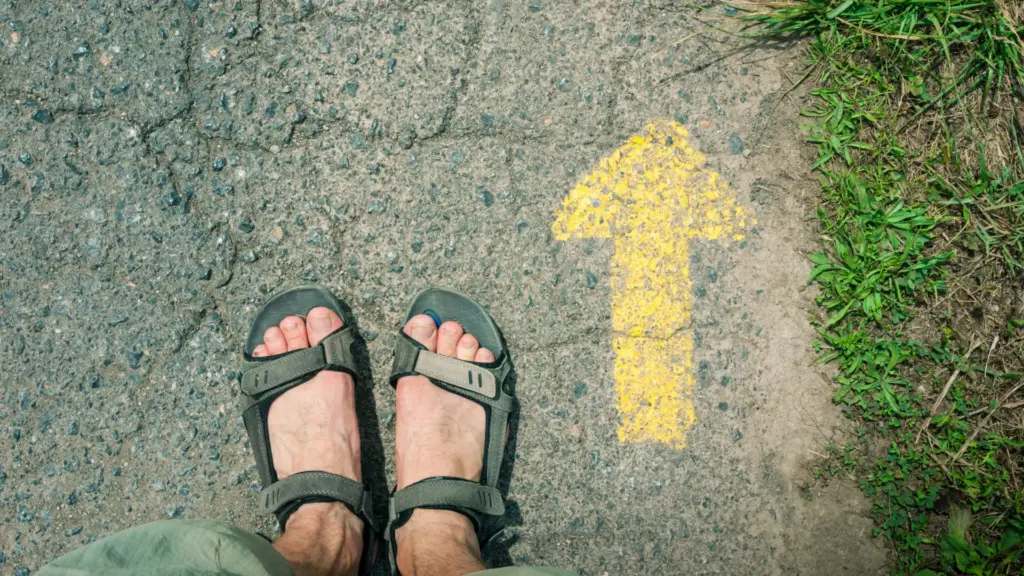
For cyclists, choosing footwear for the Camino de Santiago means prioritizing pedaling efficiency and versatility to handle the sections on foot.
Cycling shoes with SPD cleats (MTB/Gravel)
Mountain bike (MTB) or gravel models are the ideal technical option. This footwear incorporates a metallic cleat recessed into the lugged rubber sole. This helps you pedal clipped into the clipless pedal, while allowing you to easily dismount and push your bike on Galicia’s steepest climbs.
Flat-pedal cycling shoes
Flat-pedal touring shoes are the ideal choice when being clipped into the bike feels uncomfortable, or if the trip is more leisurely, cultural, and recreational. They look just like standard sneakers, but they hide a midsole with an optimized stiffness index that distributes pedal pressure to prevent discomfort on the sole of your foot.
Camp shoes for the Camino de Santiago
When you finish the stage, it is necessary to have a lightweight, comfortable, and easy-to-carry secondary pair of shoes.
- Rubber flip-flops. An essential item, their main function is hygiene in communal areas. They are mandatory for accessing the showers and bathrooms in the hostels.
- “Crocs”-style sandals or barefoot shoes. At the end of the afternoon, it is recommended to let your toes breathe with barefoot shoes, lightweight clogs, or “Crocs”-style sandals. This last option is the most popular among pilgrims thanks to its lightness, buoyancy, and ability to be worn both with and without socks.