What is the Uclés Way?
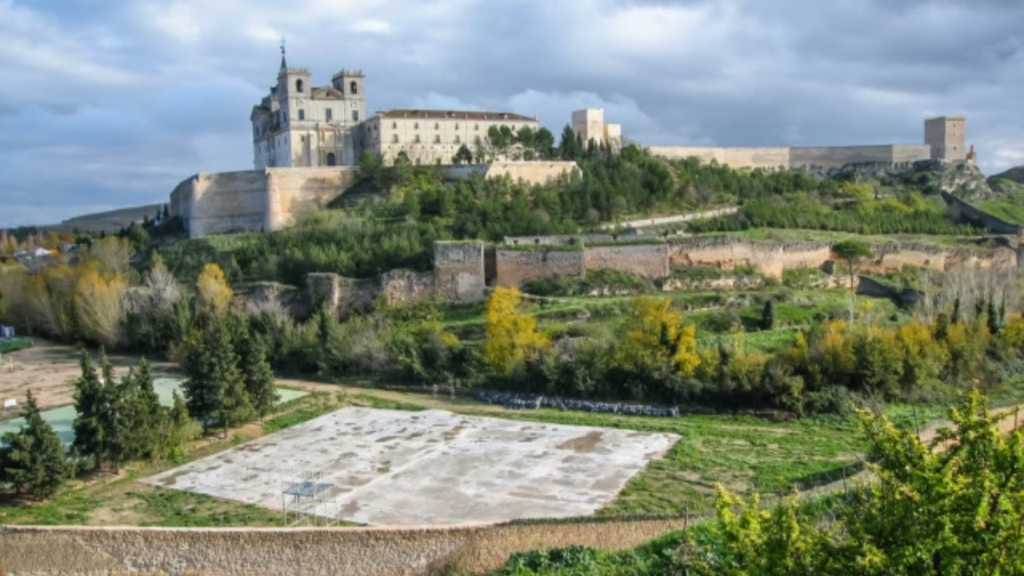
The Uclés Way is a Christian pilgrimage route that is related to the Apostle, but it does not officially belong to the Camino de Santiago. The route begins at the Church of Santiago in Madrid and ends in the province of Cuenca, at the Monastery of Santiago de Uclés, built by the Order of Santiago.
In 2010, Manuel Rossi, a pilgrim, learned of the existence of this route thanks to the priest Julián de Cuenca and decided to rescue it from oblivion. After a year, the Uclés Way officially re-emerged with new signage and its own credential.
What is the historical origin of the Uclés Way?
The Uclés Way has an origin linked to the Monastery of Uclés. Its beginnings date back to the period of Muslim rule, when a fortress was built on the hill of the town of Uclés. After the conquest of these lands by King Alfonso VIII, he ceded the fortress to the Order of Santiago in 1174.
The Order of Santiago was created in the 12th century with the aim of protecting pilgrims on the Camino de Santiago and fighting against the Muslims. In 1529, under the reign of Charles I, construction began on the monastery that stands today. After the Napoleonic invasion and the confiscations, the monastery became a hospital and a prison, until 1949, when it recovered its religious function.
Route, distances, and kilometers: Where does the Uclés Way start and where does it pass through?
The Uclés Way has a length of approximately 145 kilometers. The route runs from the Church of Santiago and San Juan Bautista right in the center of Madrid to the Monastery of Santiago in Uclés. It is officially divided into 11 stages:
- Stage 1: Madrid – Rivas-Vaciamadrid (26,6 – 28,6 km)
- Stage 2: Rivas-Viciamadrid – La Poveda (4,3 – 4,5 km)
- Stage 3: La Poveda – Arganda del Rey (3,6 km)
- Stage 4: Arganda del Rey – Morata de Tajuña (16,5 – 17,8 km)
- Stage 5: Morata de Tajuña – Perales de Tajuña (7,1 km)
- Stage 6: Perales de Tajuña – Tielmes (8,3 km)
- Stage 7: Tielmes – Carabaña (9,2 km)
- Stage 8: Carabaña – Estremera (15,5 – 15,9 km)
- Stage 9: Estremera – Barajas de Melo (25 – 26,2 km)
- Stage 10: Barajas de Melo – Huelves (13,9 km)
- Stage 11: Huelves – Monasterio de Uclés (9 km)
Signposting of the Uclés Way
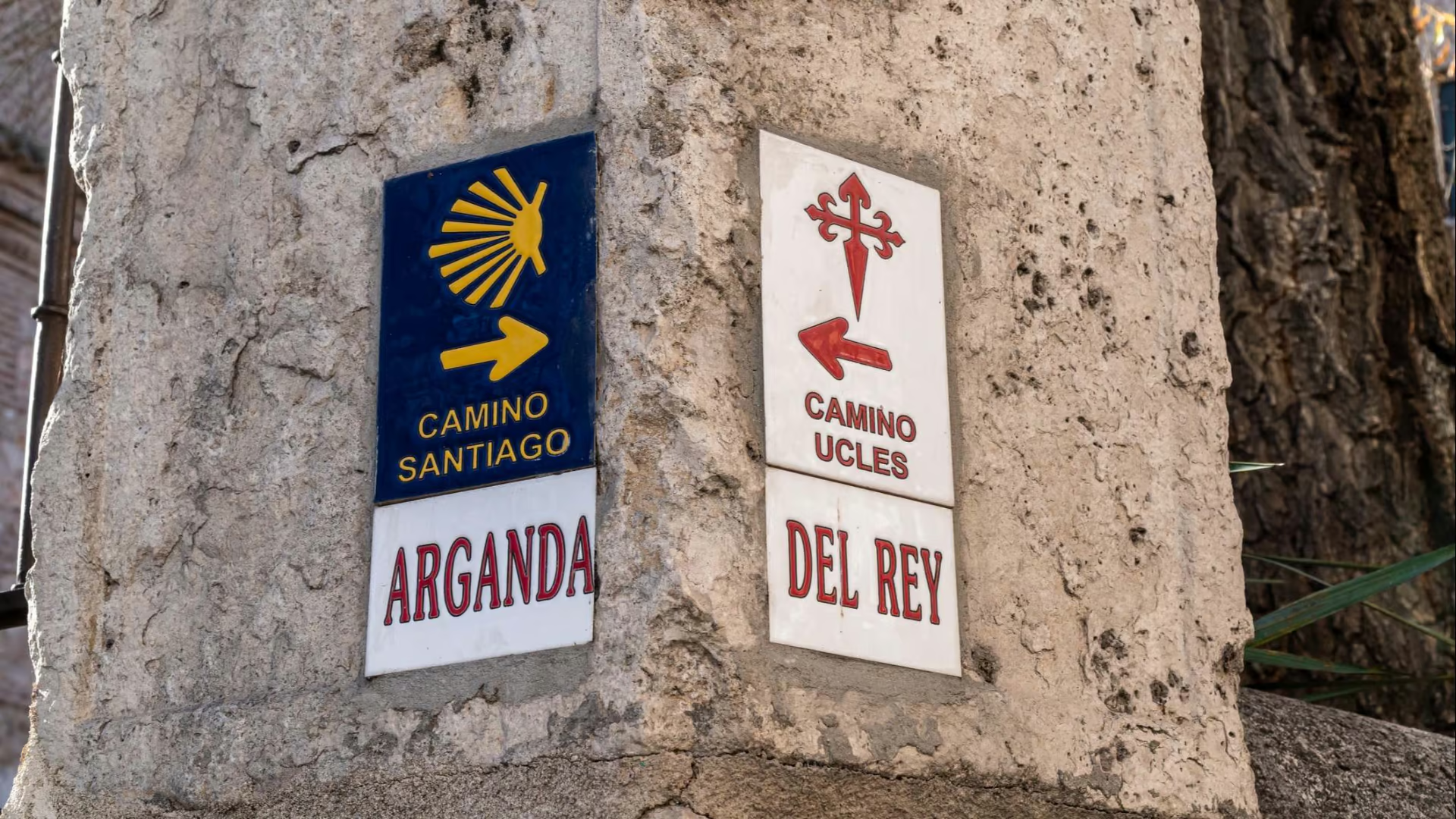
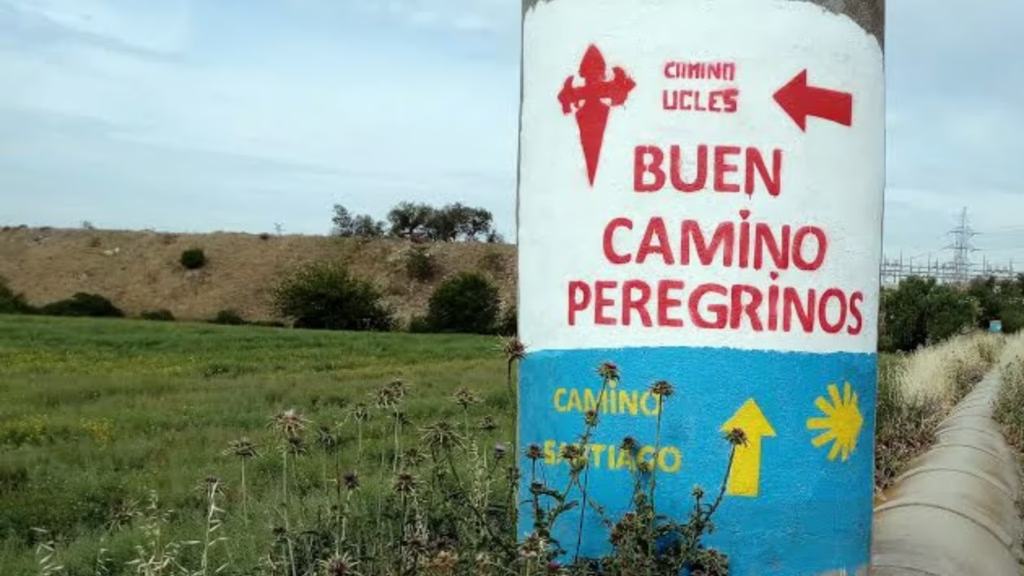
The signposting of the Uclés Way is very distinctive. You will be guided along the route by red arrows with the Cross of Saint James, the symbol of the Order of Santiago.
The signs were placed by hand by Manuel Rossi, the person responsible for the recovery of the Way. Since then, the signposting has been improved with the help of local councils. Currently, there are more than 10,000 markers distributed along the route.
One of the most peculiar details: if you decide to do the Uclés Way in reverse (from Uclés to Madrid), the signposting you will find will be that of the Camino de Santiago (yellow arrows and scallop shells). Thanks to this system, pilgrims can make a pilgrimage from the Monastery of Uclés to Santiago de Compostela.
The Uclés Way Credential: The Uclessiana
The Uclés Way has its own credential, which can be obtained through the Friends of the Uclés Way Association for a price of 4 euros, which goes towards the maintenance and signposting of the route.
To obtain the credential, you must get it stamped at each stage; it is mandatory to get a stamp in each of the eleven towns along the Way. Upon arriving at the Monastery of Uclés, you can request the Uclessiana, a certificate that proves you have completed the pilgrimage.
Places and monuments along the Uclés Way
On the Uclés Way you will find a combination of historical, architectural, and natural heritage throughout all its stages:
- Tajuña Greenway: an old railway line that runs through the towns of the Tajuña valley.
- Church of Nuestra Señora de los Remedios (Estremera): A 16th-century church, declared a Historical-Artistic Monument in 1982.
- Parish Church of San Juan Bautista (Barajas de Melo): A 15th-century church with a Plateresque façade.
- Palacete Fuente Alcázar (Barajas de Melo): A 19th-century mansion.
- Puerta Paredes Cliff: A spectacular formation caused by water erosion.
- Monastery of Uclés (Uclés): popularly known as “El Escorial de La Mancha,” it combines Plateresque, Herrerian, and Churrigueresque styles.
- Uclés City Walls: remains of the ancient fortress that are preserved to this day.