What are pilgrim confraternities?
A pilgrim confraternity is an association of Catholics whose main purpose is the worship of the Apostle James and assistance to pilgrims. Confraternities have a religious nature and their activity takes place within the sphere of the Church.
Confraternities are governed by their own statutes and have a board of directors. The members of the confraternity, called cofrades, undertake to take part in the confraternity’s activities (liturgical acts, collective pilgrimages and work welcoming pilgrims). Most confraternities were re-founded or created in the 19th and 20th centuries, coinciding with the resurgence of the Jacobean pilgrimage.
Historical origin of the pilgrim confraternities
Pilgrim confraternities emerged in the Middle Ages, as pilgrims arriving in Santiago needed spiritual and material assistance. These associations were established in the main cities of the Camino de Santiago and in the places of origin of the pilgrims, where they organised collective pilgrimages and arranged masses for deceased members.
Many confraternities were linked to guilds, which contributed funds for hospitals and hostels. Others were born at the hands of religious orders that organised pilgrim hospitals. Over time, the confraternities multiplied throughout Europe, generating a network of assistance that covered the main Jacobean routes.
Functions of the pilgrim confraternities
The pilgrim confraternities have varied their functions depending on the historical period, but they have always maintained a dual character: welfare and spiritual. Main functions of the pilgrim confraternities:
- Material assistance: They managed hospitals and hostels where they provided shelter, food and basic care.
- Spiritual assistance: They organised religious acts in honour of the Apostle James and in memory of deceased members.
- Organisation of pilgrimages: They promoted and coordinated collective pilgrimages.
- Financial aid: They covered the expenses of poor or sick pilgrims.
- Welcoming pilgrims: they received pilgrims and offered them support and guidance.
- Promotion of the Jacobean cult: They promoted devotion to the Apostle James.
Most important pilgrim confraternities in Spain
Throughout history, there have been numerous pilgrim confraternities; some have disappeared, but others remain active and play an important role on the Camino de Santiago.
The Confraternity of Santiago de Compostela
The Confraternity of Santiago de Compostela is one of the oldest and most prominent. Its headquarters are located in the Cathedral of Santiago and its main function is welcoming pilgrims and organising liturgical acts in honour of the Apostle James. The members take part in the various Jacobean celebrations.
The Confraternity of the Apostle James in Madrid
The Confraternity of the Apostle James, based in Madrid, is one of the most active. They are responsible for organising pilgrimages to Compostela, activities and work assisting pilgrims. Being linked to the capital of Spain, it becomes a bridge between the Camino de Santiago and urban society.
Historic confraternities in other cities
On the other hand, we can find historic confraternities in cities such as Burgos, León, Astorga, Ponferrada and Lugo. Most of them were founded in the Middle Ages and have been recovered in recent decades. Their main function is the promotion of the Camino de Santiago and assistance to pilgrims.
The work of the confraternities today
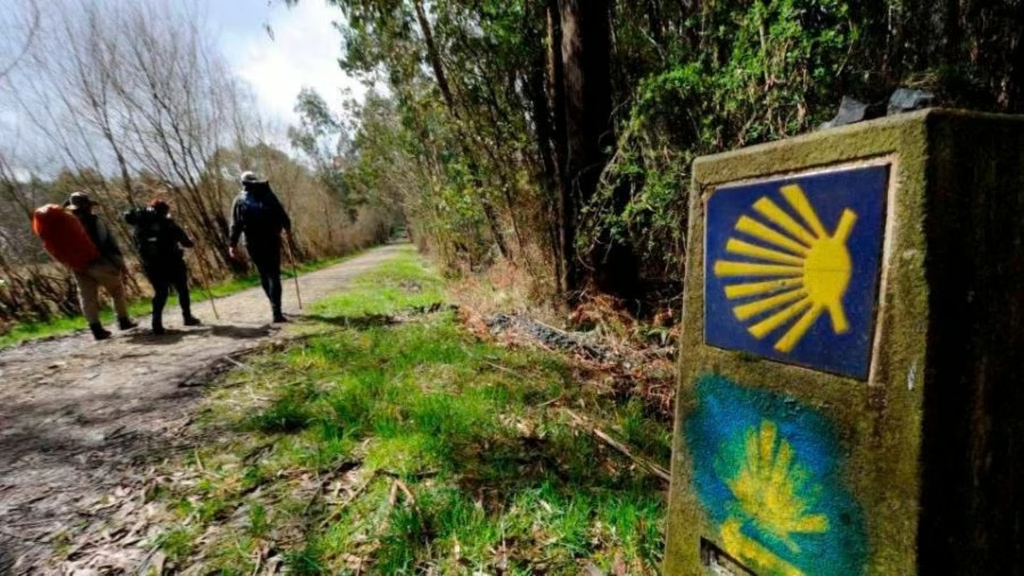
Currently, pilgrim confraternities play a key role on the Camino de Santiago, a spiritual role and their commitment to Jacobean hospitality.
Most confraternities manage hostels, organise collective pilgrimages and take part in welcoming pilgrims when they arrive in Santiago. Their work becomes more visible during the celebrations of the Compostelan Holy Year, when they increase their activities and their presence. In addition, the confraternities keep alive the tradition of the pilgrim’s mass.
Frequently asked questions about pilgrim confraternities
How can I join a pilgrim confraternity?
To join a pilgrim confraternity, you must contact the confraternity in your city or locality. Generally, you are required to be a practising Catholic and pay an annual fee. Some confraternities require having done the Camino de Santiago as a condition.
What is the difference between a confraternity and an Association of Friends of the Camino?
The main difference is their nature: confraternities are religious associations canonically established, with purposes of worship and spiritual assistance, while Friends of the Camino associations are civil non-profit entities, with cultural purposes and the promotion of the Jacobean route.
Which is the oldest pilgrim confraternity?
The oldest known pilgrim confraternity is the Confraternity of Santiago de Compostela, whose origins date back to the Middle Ages. However, many historic confraternities disappeared and were re-founded in later periods, so it is difficult to establish which is the oldest still active.