What is the Camino de Madrid?
The Camino de Madrid is one of the lesser-known Jacobean routes. It links Madrid with Sahagún (León), where it joins the Camino Francés, and is approximately 320 kilometres long. Compared with other, more crowded routes, on this one you will find silence and hospitality.
The route crosses three Autonomous Communities (the Community of Madrid, Castile and León and a section of Segovia). The popularity of this route has increased over the years, since it is the perfect option for those seeking solitude, but it demands more rigorous planning.
What is the historical origin of the Camino de Madrid?
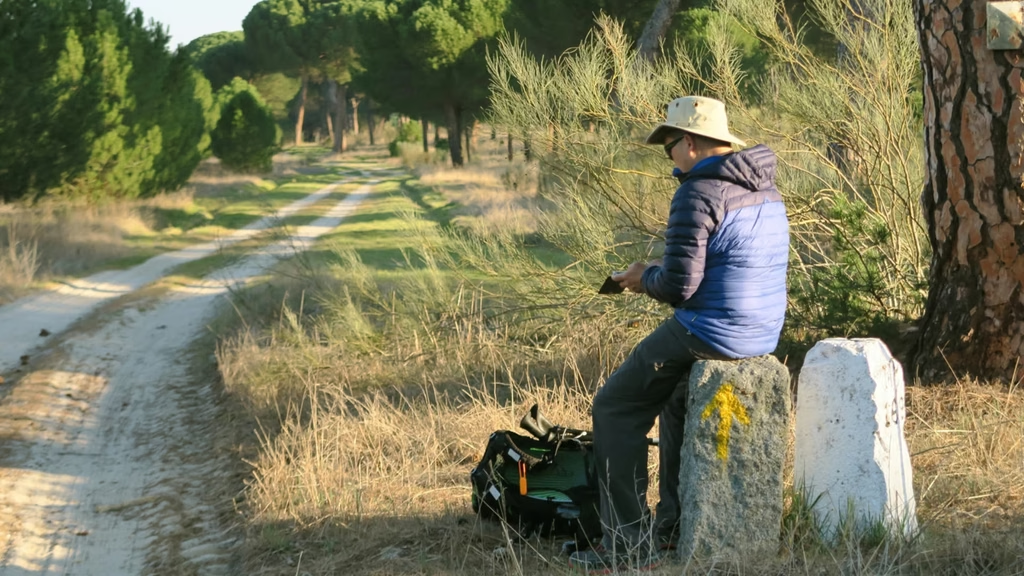
The origin of the Camino de Madrid goes back to the Middle Ages, when pilgrims arriving from the south of the Iberian Peninsula or from Madrid made their way to Santiago through the meseta
Over time, the route fell into oblivion. At the end of the 20th century, various associations of friends of the Camino de Santiago began to recover and signpost the itinerary. In 1996, the Association of Friends of the Camino de Santiago of Madrid was founded, which was essential for the recovery of the route.
Today, the Camino de Madrid is officially recognised and has its own credential, a stamp in various villages and a limited network of hostels.
Route, distance and kilometres: Where does the Camino de Madrid start and which places does it pass through?
The Camino de Madrid starts in the capital, at the Church of Santiago, and ends in Sahagún (León), where it joins the Camino Francés. This route is approximately 320-330 kilometres long, divided into 13-14 stages:
- Stage 1: Madrid – Tres Cantos (22 km)
- Stage 2: Tres Cantos – Colmenar Viejo (13 km)
- Stage 3: Colmenar Viejo – Manzanares el Real (17 km)
- Stage 4: Manzanares el Real – Cercedilla (18 km)
- Stage 5: Cercedilla – Segovia (32 km)
- Stage 6: Segovia – Santa María la Real de Nieva (32 km)
- Stage 7: Santa María la Real de Nieva – Nava de la Asunción (22 km)
- Stage 8: Nava de la Asunción – Coca (22 km)
- Stage 9: Coca – Villeguillo (22 km)
- Stage 10: Villeguillo – Alcazarén (22km)
- Stage 11: Alcazarén – Puente Duero (22 km)
- Stage 12: Puente Duero – Peñaflor de Hornija (25 km)
- Stage 13: Peñaflor de Hornija – Medina de Rioseco (22 km)
- Stage 14: Medina de Rioseco – Sahagún (38 km)
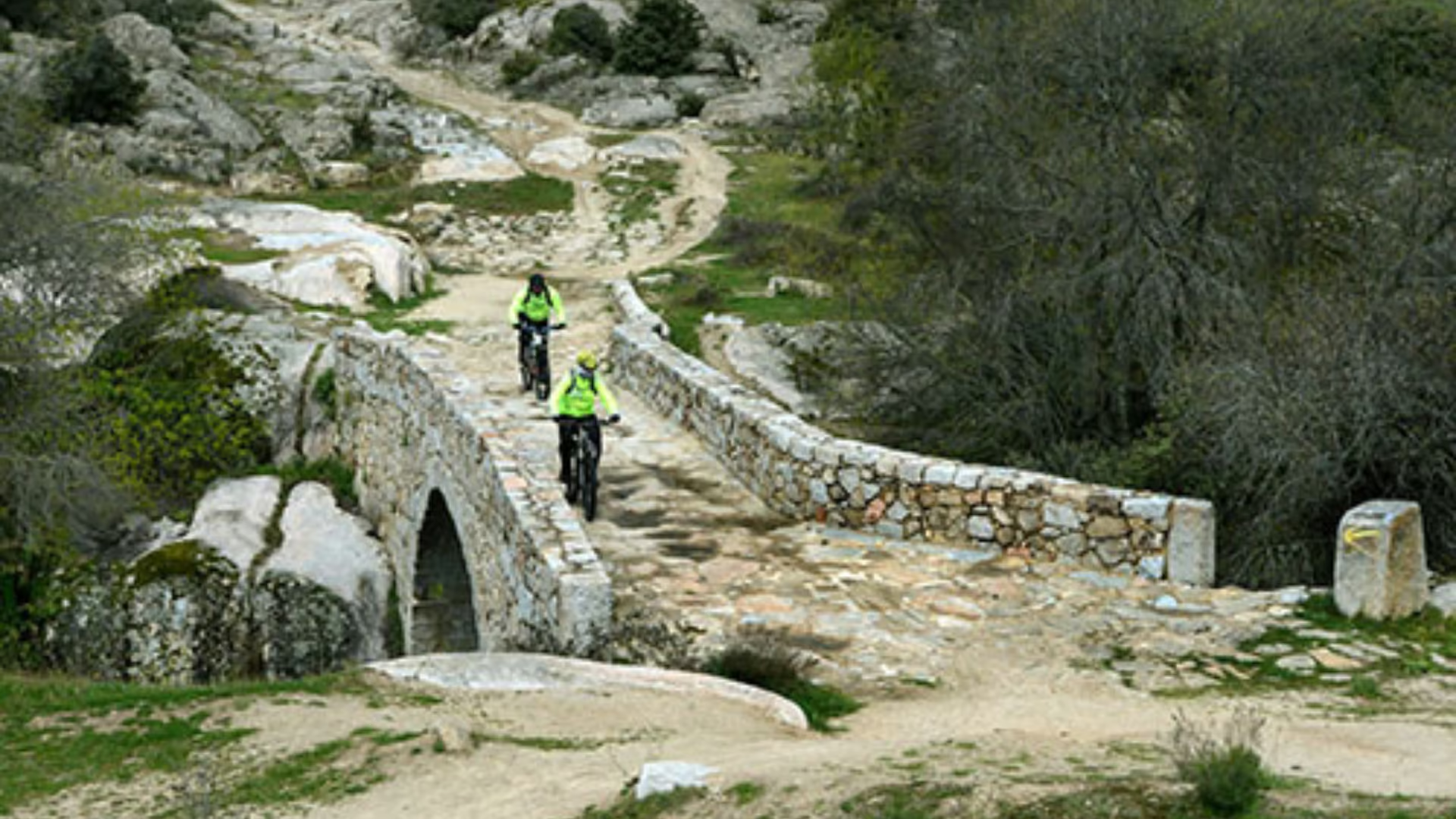
It should be borne in mind that some pilgrims choose to split stage 5 and stage 14 into two. For cyclists, the Camino de Madrid is straightforward; the only demanding stage is the one through the Sierra de Guadarrama.
What are the infrastructures and hostels like on the Camino de Madrid?
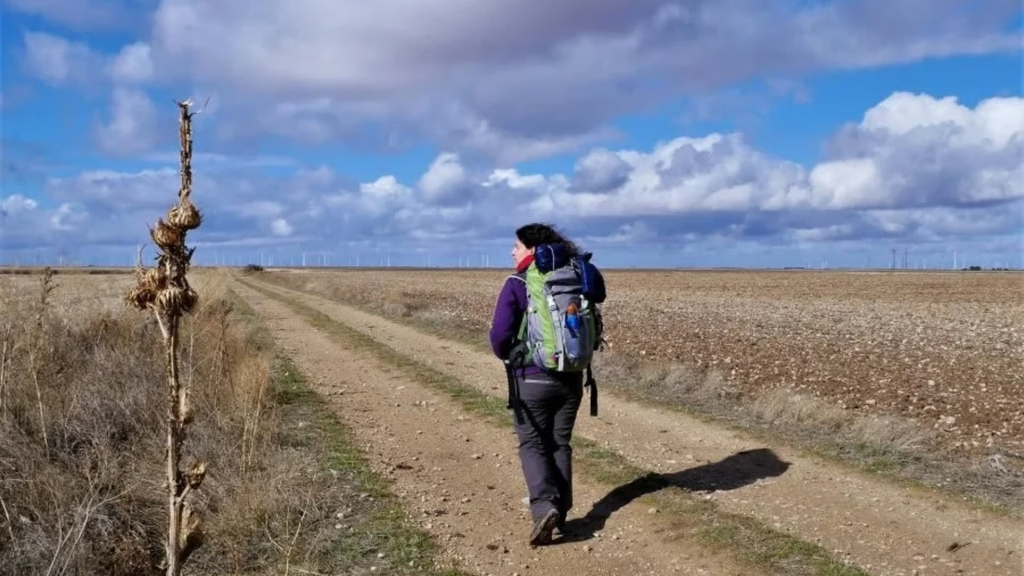
As the Camino de Madrid is a less crowded route, it has fewer hostels than other main routes. Many hostels are municipal or donation-based, and some only open in certain seasons. In the Community of Madrid they are very scarce and you have to rely on guesthouses; from Segovia onwards the situation improves.
Generally speaking, the infrastructures are limited, and you find long sections with no services, so it is recommended to carry water and some food. And always call the hostel beforehand to confirm that it is open.
Places and monuments of the Camino de Madrid
The Camino de Madrid crosses varied landscapes and has a notable artistic and monumental heritage, although less well known than other routes. Here are the most outstanding places and monuments:
- Church of Santiago (Madrid): located in the very heart of Madrid’s historic centre.
- Tres Cantos: the El Cañaveral archaeological site and natural surroundings.
- Colmenar Viejo: the Basilica of the Assumption of Our Lady.
- Manzanares el Real: the Castle of the Mendoza family.
- Cercedilla: near the Sierra de Guadarrama National Park.
- Segovia: Roman aqueduct, cathedral and Alcázar.
- Santa María la Real de Nieva: the church-monastery of Santa María, with a Gothic cloister and Romanesque façade.
- Coca: 15th-century Mudéjar castle.
- Alcazarén: Church of Santiago.
- Puente Duero: medieval bridge over the river Duero.
- Medina de Rioseco: churches of Santiago and Santa María.
- Sahagún: Monastery of San Benito.