Why are there such hard stages on the Portuguese Camino de Santiago?
The Portuguese Camino is gentler than other Camino de Santiago routes, featuring a flatter profile and more manageable distances. However, this does not mean it lacks tough stages, as a stage’s difficulty depends on several factors: total elevation gain, distance, terrain conditions, and the availability of services.
A key factor on the Portuguese Camino is distance. Some stages exceed 30 kilometers, forcing long hours of walking and causing significant fatigue. Furthermore, the terrain is extremely varied.
Porto to Vilar do Pinheiro stage
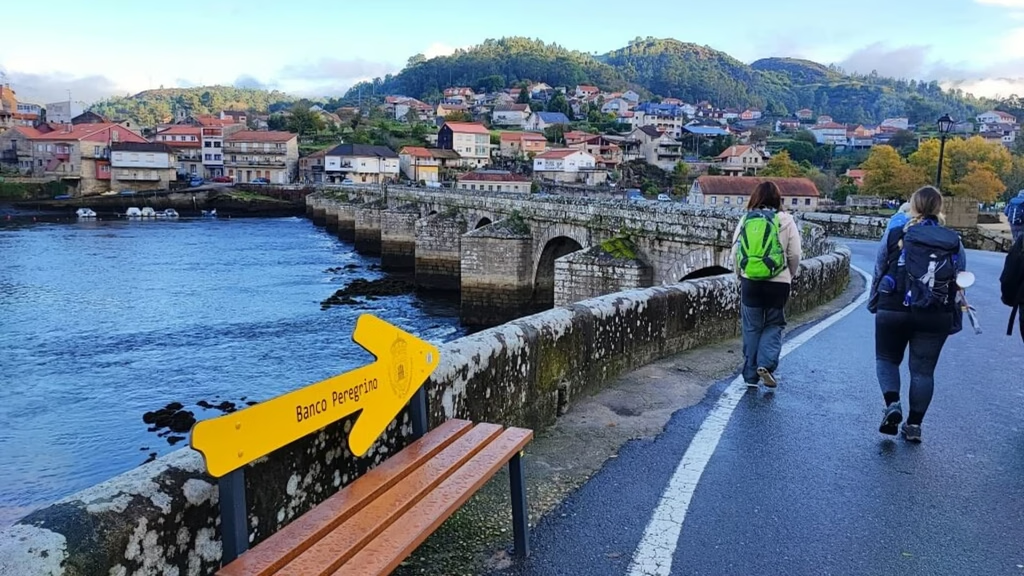
For many pilgrims, the first stage of the Portuguese Camino is the toughest due to its urban nature. You have to leave the city of Porto on foot, passing through neighborhoods, crossing industrial estates, and walking on sidewalks and busy roads. This stage is about 22 kilometers long, with hard and monotonous terrain.
On the other hand, waymarking in the urban section can be confusing. Most pilgrims choose to take the Porto metro to Fórum Maia to skip the urban stretch.
Barcelos to Ponte de Lima stage
This stage is over 30 kilometers long and is considered one of the longest and toughest on the Camino. The terrain is varied: asphalt sections, dirt tracks, and rural trails, with constant climbs and descents that wear on the body.
This stage has few services, which increases its difficulty. Most pilgrims recommend splitting it into two days by staying overnight in an intermediate town.
Ponte de Lima to Rubiães stage
This 18-kilometer stage features the climb up Alto da Portela Grande, with steep gradients and significant elevation gain. The terrain is uneven, with rocky sections and tree roots that demand careful footwork.
The descent to Rubiães is not easy: the downhill is very steep and hard on the knees after the effort of the climb. This stage requires good physical condition and footwear with good grip.
Tui to Redondela stage
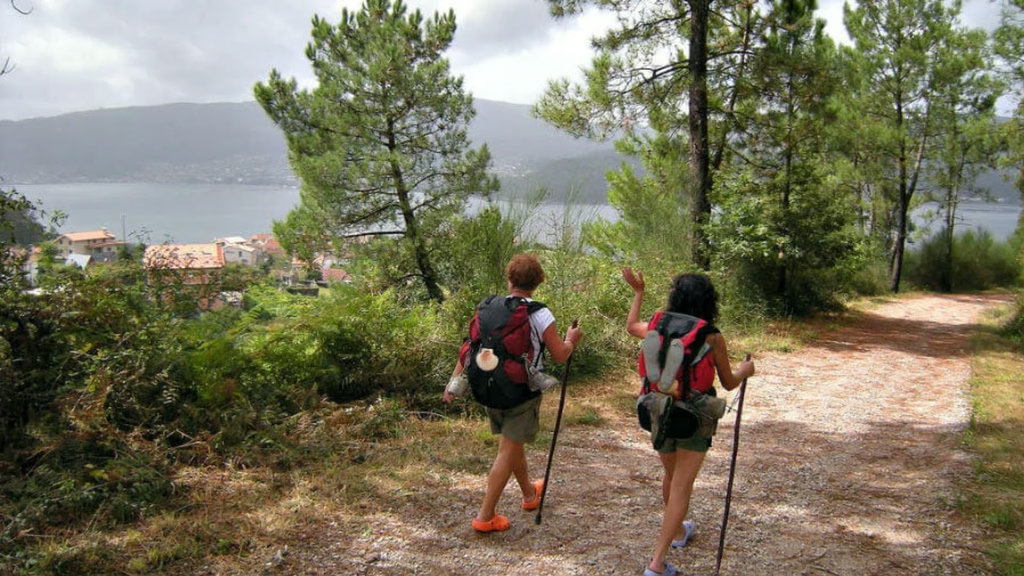
Entering Galicia via Tui is demanding. This stage is about 30 kilometers long and includes the climb to Alto da Cruz, a mountain pass. The terrain is highly varied, featuring asphalt sections, dirt tracks, and trails winding through forests and vineyards.
The descent to Redondela is long and technical, with steep sections that can be hazardous if the terrain is muddy. Most pilgrims split the stage into two.
Pontevedra to Caldas de Reis stage
This stage of about 30 kilometers is one of the longest. Although the profile is not mountainous, the distance and rolling hills make for a demanding day. Additionally, it features varied terrain with dirt tracks, forest trails, and asphalt sections. You will offset the effort with the beauty of the Galician forests, small villages, and rivers.
Tips to overcome the toughest stages of the Portuguese Camino de Santiago
Tackling the toughest stages of the Portuguese Camino de Santiago requires preparation and strategy. Here are the most useful tips:
- Split long stages into shorter sections: If a stage is too demanding, divide it into two manageable days.
- Start early: Waking up early lets you make the most of the cooler hours of the day, and arriving at the hostel earlier guarantees a bed.
- Hydration and nutrition: Drink water before feeling thirsty and eat a light snack every hour to help maintain your energy.
- Luggage transport: If the stages are tough, you can hire a luggage transport service.
- Use poles: Trekking poles reduce the load on your knees and help maintain balance.